

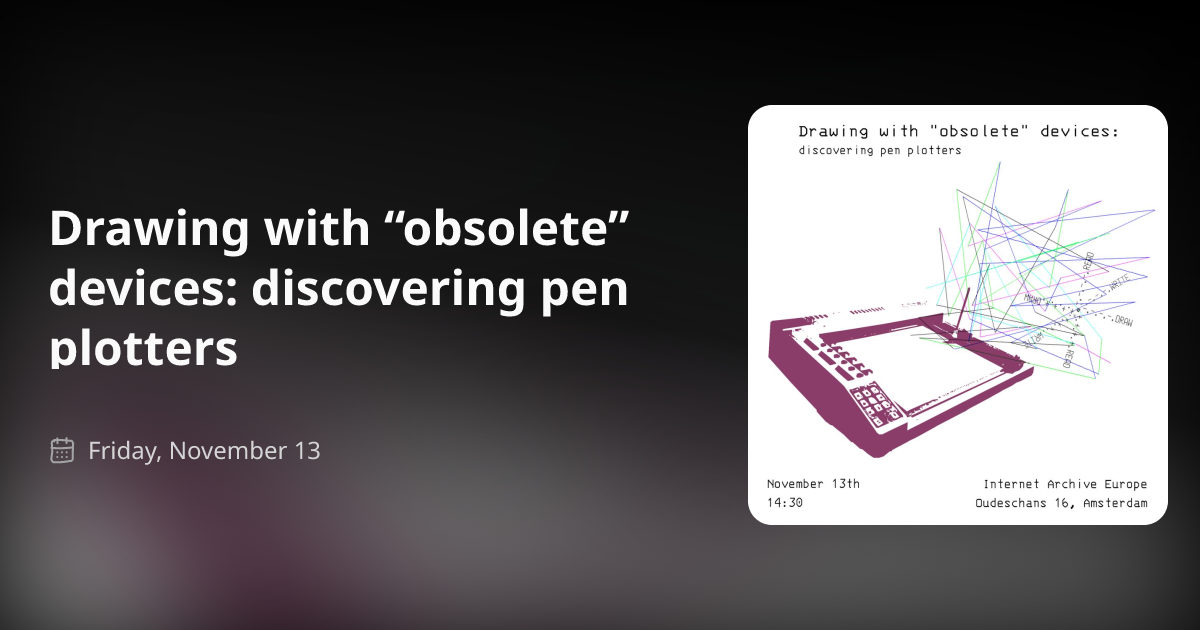
Join us for a workshop at the Internet Archive Europe where we will explore how pen plotters from the 80s work, together with artists Emanuele Arrigoni and Claudio Castro Chaponan. During the workshop, we will get to know about pen plotters by working with them hands on, reading and writing instructions from an original manual that will translate in drawings and movements of pens on paper. In the past, these devices were used in offices to produce graphs and charts, but what can we use them for today? Emanuele and Claudio are two interdisciplinary artists that share an interest in researching the maintenance and reuse of so called “obsolete” media for artistic purposes. They will share how they search for documentation material of all kinds online to learn about old machinery, how does it work and how to interact with it today beyond its intended use. The purpose of this workshop is explorative, no previous experience is required, just bring your own curiosity!
paint: a timeline — Kristen Roos
This timeline is the result of researching the origins of digital paint and draw software, and the tools that were developed to allow for hand manipulation (versus plotter drawn) drawing and painting - the mouse, light pen & drawing tablet. If we look at the software that has become commonplace today (such as adobe photoshop), which allows for painting, animation and photo manipulation in one, we can trace the roots of this software to the University and Corporate Labs that housed large computers with advanced capabilities for their time - MIT Lincoln Labs & Radiation Labs, DARPA & the Augmented Research Centre (ARC), Bell Labs, NYIT’s Computer Graphics Lab, Xerox Palo Alto Research Centre (Xerox PARC), NASA’s Jet Propulsion Labs (JPL). The artistic collaborations that grew out of these labs fueled the advent of Computer Graphics, Computer Art and Video Art from the 1960's to the 1990's.
supernote-cli: pen, paper, and a pipe
A recent NYT piece argued we need a mental fitness revolution to combat the cognitive decay caused by algorithmic feeds and generative AI. It's an efficient one-two punch. If you're not brainrotting on short form video content, you're outsourcing all of your thinking to an LLM. The result is a kind of cognitive strip-mining. What's left requires active defense. For me, one way of defending that capacity for deep work is with a pen on e-ink. Whether it's annotating a paper or starting a sketch from scratch, I'm intentionally making room for focused thought. My army of clawed Claudes and Codexes will just have to wait.
AdorkaStock Sketch
A web based app for gesture drawing, figure practice and general sketching.

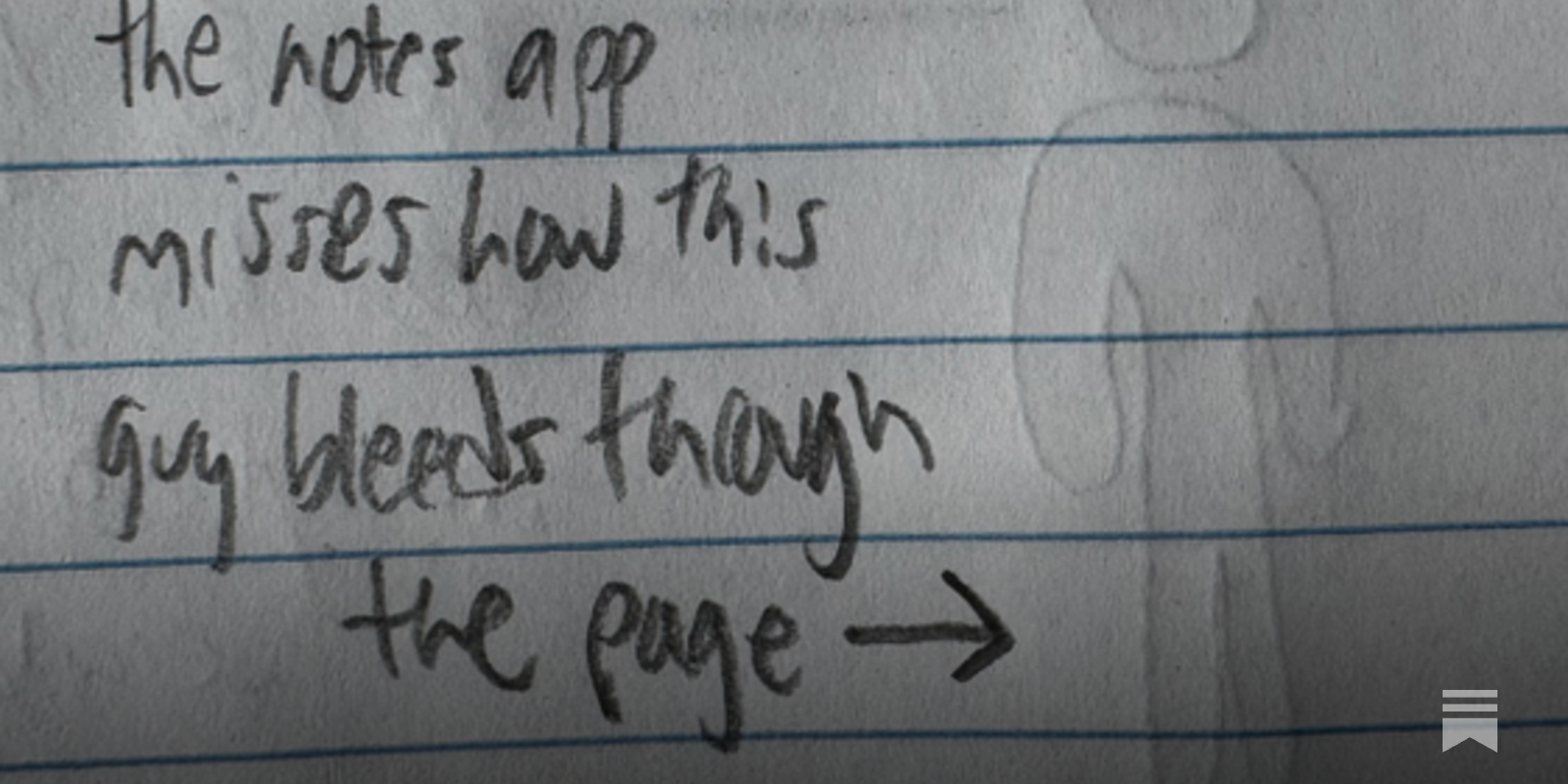
Prof. Judy Fan: Cognitive Tools for Making the Invisible Visible
Prof. Judy Fan: Cognitive Tools for Making the Invisible Visible
Early Tools for Thought, Mark Bernstein @ Tools For Thought Rocks
Tipographia
Visual archive of graphic design, typography and things printed in Portugal. A collection by...

The cinematograph, the "noematograph," and the future of AI art
From the cinematograph to the "noematograph," the Hugh-winning author explores how technology has, and may still, breed new artistic forms.


OmniCanvas - Free Infinite Canvas Notes App
Free infinite canvas notes app for visual thinkers. Organize ideas spatially with drawing, linking, and collaboration.
Emoji history: the missing years ⌘I Get Info
During my research into vintage Japanese drawing software, I came across some devices that had built in sketch or handwritten memo functions. I bought a coup...
