

Part 1 of our "Building Recurring Payments in Public" series where we give some context about what we're trying to do and why it matters.
The Rules of Recurring Payments: Every Constraint Has a Story - ATProtoFans Blog
Part 2 of our "Building Recurring Payments in Public" series where we give some context the behaviors, constraints, and definitions of recurring payments.
Scenarios That Shape Our System - ATProtoFans Blog
Part 3 of our "Building Recurring Payments in Public" series where we give describe real-world scenarios based on our behaviors, constraints, and definitions.
Payments on Protocol - Nick's Blog
atprotofans.com was a proof of concept for payments on ATProtocol built at Graze Social. This post is about what we built, why proof of payment on protocol matters, and what it makes possible.
Families' Use of Payment Instruments During a Decade of Change in the U.S. Payment System
The Federal Reserve Board of Governors in Washington DC.

Payment Depreciation: the Behavioral Effects of Temporally Separating Payments From Consumption
Abstract. Research suggests that individuals mentally track the costs and benefits of a consumer transaction for the purpose of reconciling those costs and
Credit Card Debt Puzzle: Liquid Assets to Pay Bills
Using transaction data from a US consumer payments diary, we revisit the credit card debt puzzle—a scenario in which consumers revolve credit card debt while al

Effects of Payment Mechanism on Spending Behavior: The Role of Rehearsal and Immediacy of Payments
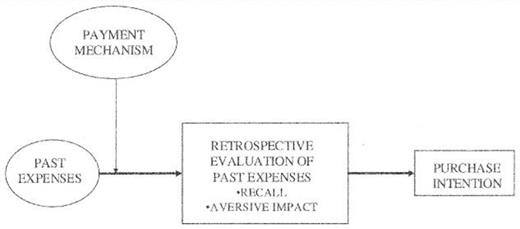
Abstract. Past expenses have been shown to influence future spending behavior by depleting available budgets. However, a prerequisite for this relationship
Why do banks reward their customers to use their credit cards?
EconStor is a publication server for scholarly economic literature, provided as a non-commercial public service by the ZBW.
Monopoly money: The effect of payment coupling and form on spending behavior.
Store Of Value vs Payment System - AVC
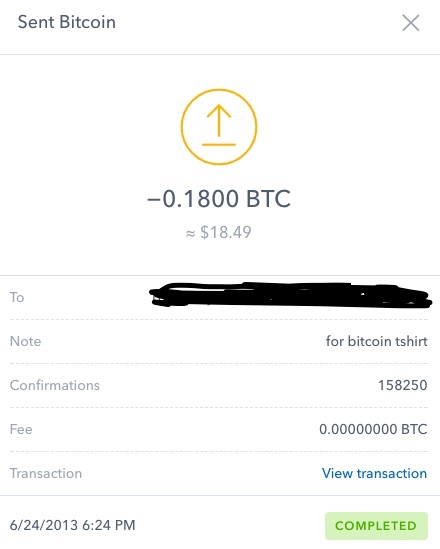
One of the debates that has raged inside and outside of the Bitcoin community since I got involved back in 2012 is whether Bitcoin was a store of value vs a means of payment. When I first started buying and owning Bitcoin, I would use it as a means of payment all the time. I […]
Locked Open: Why Anyone Can Be a Broker - ATProtoFans Blog
Part 4 of our "Building Recurring Payments in Public" series where we talk about being "locked open" and what it means to be a participant in the communities we support.
There are two questions you need to answer when building something new: who is this for, and where is the money going to come from? Some longer thoughts on my exchange with @mosh.bsky.social about the ATproto ecosystem, and its needing a business focus. numergent.com/2026-08/Project-Product-Start…
Project vs. Product, Startup vs. Business
numergent.comatproto payments take: can we do a really really simple one? discourse.atprotocol.community/t/strawman-payment-attestatio…

Strawman: payment attestation by posting the same record to the same rkey
discourse.atprotocol.community


