

Part 2 of our "Building Recurring Payments in Public" series where we give some context the behaviors, constraints, and definitions of recurring payments.
Scenarios That Shape Our System - ATProtoFans Blog
Part 3 of our "Building Recurring Payments in Public" series where we give describe real-world scenarios based on our behaviors, constraints, and definitions.
Why We're Building Recurring Payments Differently - ATProtoFans Blog
Part 1 of our "Building Recurring Payments in Public" series where we give some context about what we're trying to do and why it matters.
Payments on Protocol - Nick's Blog
atprotofans.com was a proof of concept for payments on ATProtocol built at Graze Social. This post is about what we built, why proof of payment on protocol matters, and what it makes possible.
Recurring Events
We’re about to start building recurring events for Roundabout, but before we do, I’d love to tap into the collective wisdom of the atproto community. Our existing events are stored as community.lexicon.calendar.event records. Those records don’t capture necessary information about event recurrence, so we’ll need to either extend the lexicon or use sidecar records. The data that we want to store is relatively complex. RFC 5545 is comprehensive on what recurrence rules we might want to support[1...

attested.network — Proof of Payment for ATProtocol
An open specification for decentralized, cryptographically verifiable proof of payments.
Families' Use of Payment Instruments During a Decade of Change in the U.S. Payment System
The Federal Reserve Board of Governors in Washington DC.
Locked Open: Why Anyone Can Be a Broker - ATProtoFans Blog
Part 4 of our "Building Recurring Payments in Public" series where we talk about being "locked open" and what it means to be a participant in the communities we support.

A Model of Money and Credit, with Application to the Credit Card Debt Puzzle
Abstract. Many individuals simultaneously have significant credit card debt and money in the bank. The credit card debt puzzle is as follows: given high in
Credit Card Debt Puzzle: Liquid Assets to Pay Bills
Using transaction data from a US consumer payments diary, we revisit the credit card debt puzzle—a scenario in which consumers revolve credit card debt while al

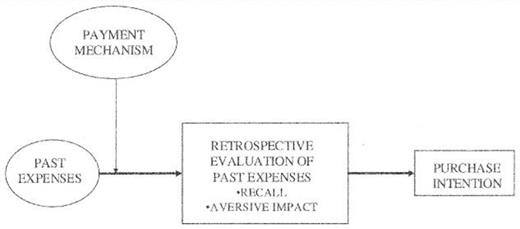
Effects of Payment Mechanism on Spending Behavior: The Role of Rehearsal and Immediacy of Payments
Abstract. Past expenses have been shown to influence future spending behavior by depleting available budgets. However, a prerequisite for this relationship
The Red and the Black: Mental Accounting of Savings and Debt
In the standard economic account of consumer behavior the cost of a purchase takes the form of a reduction in future utility when expenditures that otherwise could have been made are forgone. The reality of consumer hedonics is different. When people make purchases, they often experience an immediate pain of paying, which can undermine the pleasure derived from consumption. The ticking of the taxi meter, for example, reduces one's pleasure from the ride. We propose a “double-entry” mental accounting theory that describes the nature of these reciprocal interactions between the pleasure of consumption and the pain of paying and draws out their implications for consumer behavior and hedonics. A central assumption of the model, which we call prospective accounting, is that consumption that has already been paid for can be enjoyed as if it were free and that the pain associated with payments made prior to consumption (but not after) is buffered by thoughts of the benefits that the payments will finance. Another important concept is coupling, which refers to the degree to which consumption calls to mind thoughts of payment, and vice versa. Some financing methods, such as credit cards, tend to weaken coupling, whereas others, such as cash payment, produce tight coupling. Our model makes a variety of predictions that are at variance with economic formulations. Contrary to the standard prediction that people will finance purchases to minimize the present value of payments, our model predicts strong debt aversion—that they should prefer to prepay for consumption or to get paid for work after it is performed. Such pay-before sequences confer hedonic benefits because consumption can be enjoyed without thinking about the need to pay for it in the future. Likewise, when paying beforehand, the pain of paying is mitigated by thoughts of future consumption benefits. Contrary to the economic prediction that consumers should prefer to pay, at the margin, for what they consume, our model predicts that consumers will find it less painful to pay for, and hence will prefer, flat-rate pricing schemes such as unlimited Internet access at a fixed monthly price, even if it involves paying more for the same usage. Other predictions concern spending patterns with cash, charge, or credit cards, and preferences for the earmarking of purchases. We test these predictions in a series of surveys and in a conjoint-like analysis that pitted our double-entry mental accounting model against a standard discounting formulation and another benchmark that did not incorporate hedonic interactions between consumption and payments. Our model provides a better fit of the data for 60% of the subjects; the discounting formulation provides a better fit for only 29% of the subjects (even when allowing for positive and negative discount rates). The pain of paying, we argue, plays an important role in consumer self-regulation, but is hedonically costly. From a hedonic perspective the ideal situation is one in which payments are tightly coupled to consumption (so that paying evokes thoughts about the benefits being financed) but consumption is decoupled from payments (so that consumption does not evoke thoughts about payment). From an efficiency perspective, however, it is important for consumers to be aware of what they are paying for consumption. This creates a tension between hedonic efficiency and what we call decision efficiency. Various institutional arrangements, such as financing of public parks through taxes or usage fees, play into this tradeoff. A producer developing a pricing structure for their product or service should be aware of these two conflicting objectives, and should try to devise a structure that reconciles them.

Monopoly money: The effect of payment coupling and form on spending behavior.

Economic idea — Offset documentation
In traditional monetary systems, money is issued by the state. Participants of the market can then use the money issued by the state to buy and sell goods and services in the market.
novel funding mechanisms

funding models that doesn't depend on VC. funding models that keep things accessible and open but yet provide enough incentive for people to pay
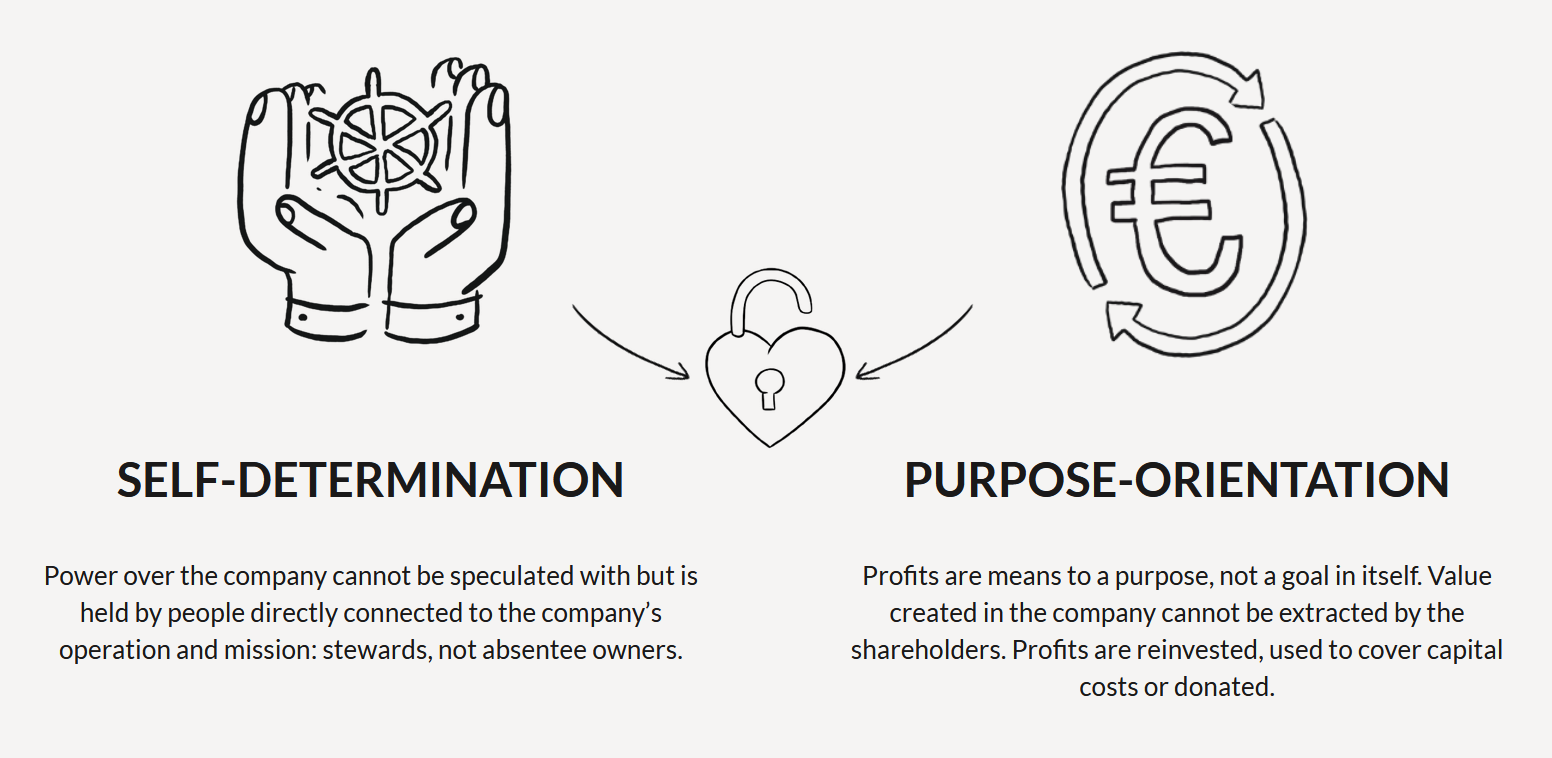
Company as a Commons

x402
Let's Talk Money - Interlinked

Home | Sovereign Tech Agency

The future is low-tech: lessons from the early 2000s ft. Jésabel DC | Config 2026
The Real Reason that Substack is Collapsing