

Part 3 of our "Building Recurring Payments in Public" series where we give describe real-world scenarios based on our behaviors, constraints, and definitions.
The Rules of Recurring Payments: Every Constraint Has a Story - ATProtoFans Blog
Part 2 of our "Building Recurring Payments in Public" series where we give some context the behaviors, constraints, and definitions of recurring payments.
Why We're Building Recurring Payments Differently - ATProtoFans Blog
Part 1 of our "Building Recurring Payments in Public" series where we give some context about what we're trying to do and why it matters.
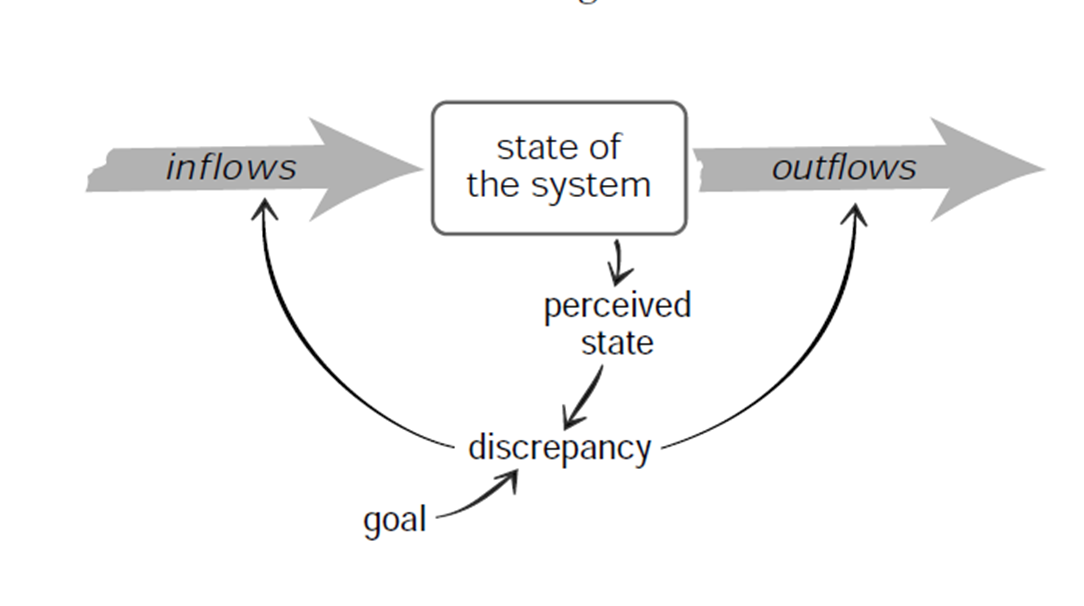
Leverage Points: Places to Intervene in a System
By Donella Meadows~ Folks who do systems analysis have a great belief in “leverage points.” These are places within a complex system (a corporation, an economy, a living body, a city, an ecosystem) where a small shift in one thing can produce big changes in everything. This idea is not unique to systems analysis — […]
Leverage Points: Places to Intervene in a System
By Donella Meadows~ Folks who do systems analysis have a great belief in “leverage points.” These are places within a complex system (a corporation, an economy, a living body, a city, an ecosystem) where a small shift in one thing can produce big changes in everything. This idea is not unique to systems analysis — […]
Feature / Product / Business: A Framework for Sustainable ATProto Projects | ATmosphereConf VODs
The ATProto community built a ton of great features and products over the past year! For our next trick, let's mature them into products and businesses. In this talk, you'll get a practical framework for understanding whether what you're building should be a feature, product, or business, plus concrete funding models at each layer to keep your work going and growing. (More in this thread: https://bsky.app/profile/mosh.bsky.social/post/3mckiat2ne22q)

Payments on Protocol - Nick's Blog
atprotofans.com was a proof of concept for payments on ATProtocol built at Graze Social. This post is about what we built, why proof of payment on protocol matters, and what it makes possible.
Economic idea — Offset documentation
In traditional monetary systems, money is issued by the state. Participants of the market can then use the money issued by the state to buy and sell goods and services in the market.
Harnessing naturally occurring data to measure the response of spending to income
Balancing your incomings and outgoings Economic theory predicts that when someone receives money should have little effect on their spending patterns. Gelman et al. constructed a data set of 60 million transactions made by 75,000 people to test this theory. People do seem to go on a mini–spending spree after they get their paychecks or pensions. However, closer inspection reveals that that's mostly explained by the convenience of linking regular payments, such as rent and utilities, to regular income. Unsurprisingly, cash-strapped people are more likely to increase their spending in response to receiving income. Science , this issue p. 212 , How do theoretical predictions of individual fiscal behaviors match up against real-world, real-time data? , This paper presents a new data infrastructure for measuring economic activity. The infrastructure records transactions and account balances, yielding measurements with scope and accuracy that have little precedent in economics. The data are drawn from a diverse population that overrepresents males and younger adults but contains large numbers of underrepresented groups. The data infrastructure permits evaluation of a benchmark theory in economics that predicts that individuals should use a combination of cash management, saving, and borrowing to make the timing of income irrelevant for the timing of spending. As in previous studies and in contrast to the predictions of the theory, there is a response of spending to the arrival of anticipated income. The data also show, however, that this apparent excess sensitivity of spending results largely from the coincident timing of regular income and regular spending. The remaining excess sensitivity is concentrated among individuals with less liquidity.
A conceptual model of ATProto and ActivityPub
If you were to design an open social networking protocol, what would that look like? Which metaphors and comparisons would you use to get a general idea of how the network functions? And what would you answer if people ask if your network is decentralised and federated?

Introducing attested.network: Proof of Payment for ATProtocol - Nick's Blog
attested.network is an open spec for decentralized proof of payments on ATProtocol, built on what we learned making atprotofans.com. It formalizes the three-party attestation model and opens it up for any app to implement.

A System for Sustainable FOSS
Disclaimers: This system is still a work in process. I look forward to reading (and incorporating!) y...

attested.network — Proof of Payment for ATProtocol
An open specification for decentralized, cryptographically verifiable proof of payments.

Another post in the Graze series. This one's about atprotofans and putting payments on protocol. Small feature set, big idea.

Payments on Protocol
ngerakines.leaflet.pub