

Independent audits of published clinical research for statistical errors, data inconsistencies, and research integrity violations.
Fabricated citations: an audit across 2·5 million biomedical papers
Scientific literature depends on the integrity of its references. Each reference implicitly asserts that a verifiable source exists and supports the claims being made. When references point to non-existent studies, readers, reviewers, and policy makers are unable to evaluate the evidence.
evidence.guide
Evidence intelligence platform: dashboards, docs, and tooling for trustworthy research quality.
Research Integrity and Peer Review
Research Integrity and Peer Review is an open access journal led by a renowned Editorial Board and occupying a unique niche in the field as the only journal ...

Covidence - Where trusted evidence gets made.
The world's leading software for managing and streamlining your systematic review. Discover how to do a systematic review in less time, while maintaining quality and accuracy.

‘PACE-Gate’: When clinical trial evidence meets open data access
Science is not always plain sailing and sometimes the voyage is across an angry sea. A recent clinical trial of treatments for chronic fatigue syndrome (the PACE trial) has whipped up a storm of controversy. Patients claim the lead authors overstated the effectiveness of cognitive behavioural therapy and graded exercise therapy by lowering the thresholds they used to determine improvement. In this extraordinary case, patients discovered that the treatments tested had much lower efficacy after an information tribunal ordered the release of data from the PACE trial to a patient who had requested access using a freedom of information request.

Research Integrity Report Tracker
Research Integrity Report Tracker saves time and money by streamlining publishing ethics and integrity reporting, investigation, and editorial action.
Introducing COSIG: The Collection of Open Science Integrity Guides
Investigating the integrity of published scientific papers is key to the scientific process, but the necessary knowledge is in short supply. We present COSIG, an open collection of meta-scientific guides enabling anyone to perform forensic peer review.
Research ethics: 3 ways to blow the whistle
Reporting suspicions of scientific fraud is rarely easy, but some paths are more effective than others.

Metaudits
Audits of how completely research is described in DataCite, Crossref, ORCID, OpenAlex and repositories. In English, Spanish and German.
Evidence appraisal: a scoping review, conceptual framework, and research agenda
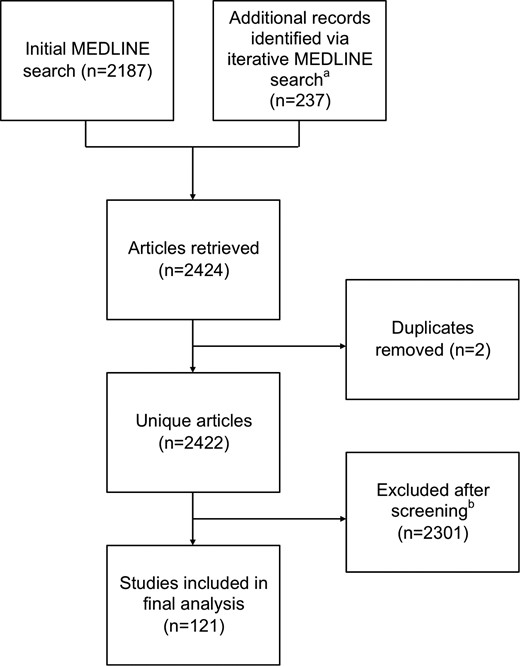
Abstract Objective Critical appraisal of clinical evidence promises to help prevent, detect, and address flaws related to study importance, ethics, validity, applicability, and reporting. These research issues are of growing concern. The purpose of this scoping review is to survey the current literature on evidence appraisal to develop a conceptual framework and an informatics research agenda. Methods We conducted an iterative literature search of Medline for discussion or research on the critical appraisal of clinical evidence. After title and abstract review, 121 articles were included in the analysis. We performed qualitative thematic analysis to describe the evidence appraisal architecture and its issues and opportunities. From this analysis, we derived a conceptual framework and an informatics research agenda. Results We identified 68 themes in 10 categories. This analysis revealed that the practice of evidence appraisal is quite common but is rarely subjected to documentation, organization, validation, integration, or uptake. This is related to underdeveloped tools, scant incentives, and insufficient acquisition of appraisal data and transformation of the data into usable knowledge. Discussion The gaps in acquiring appraisal data, transforming the data into actionable information and knowledge, and ensuring its dissemination and adoption can be addressed with proven informatics approaches. Conclusions Evidence appraisal faces several challenges, but implementing an informatics research agenda would likely help realize the potential of evidence appraisal for improving the rigor and value of clinical evidence.
A Delphi survey on attitudes to serious research misconduct: Exploring convergence vs. polarization of views of research “sleuths” and research integrity experts
Research fraud is often seen as a rare event, but evidence from self-report surveys indicates that fabrication and falsification of data are common enough to be a problem. This study assessed attit...

Post-publication critique at top-ranked journals across scientific disciplines: a cross-sectional assessment of policies and practice
Journals exert considerable control over letters, commentaries and online comments that criticize prior research (post-publication critique). We assessed policies (Study One) and practice (Study Two) related to post-publication critique at 15 top-ranked journals in each of 22 scientific disciplines ( N = 330 journals). Two-hundred and seven (63%) journals accepted post-publication critique and often imposed limits on length (median 1000, interquartile range (IQR) 500–1200 words) and time-to-submit (median 12, IQR 4–26 weeks). The most restrictive limits were 175 words and two weeks; some policies imposed no limits. Of 2066 randomly sampled research articles published in 2018 by journals accepting post-publication critique, 39 (1.9%, 95% confidence interval [1.4, 2.6]) were linked to at least one post-publication critique (there were 58 post-publication critiques in total). Of the 58 post-publication critiques, 44 received an author reply, of which 41 asserted that original conclusions were unchanged. Clinical Medicine had the most active culture of post-publication critique: all journals accepted post-publication critique and published the most post-publication critique overall, but also imposed the strictest limits on length (median 400, IQR 400–550 words) and time-to-submit (median 4, IQR 4–6 weeks). Our findings suggest that top-ranked academic journals often pose serious barriers to the cultivation, documentation and dissemination of post-publication critique.

I’ve been quiet on social media lately, but today I’m launching Audit Clinical Evidence (ACE), an initiative I’ve been developing over the past year. Take a look: auditclinicalevidence.org
@bmj.com Please look at PubPeer comments on an article you published last week. pubpeer.com/publications/C08779C45DB6E407… I think your research integrity dept shld act swiftly on this one, given clinical significance. I'm aware of even more evidence of problems so let me know if this is not sufficient.
PubPeer - Prevention of acute myocardial infarction induced heart fail...
pubpeer.com


