

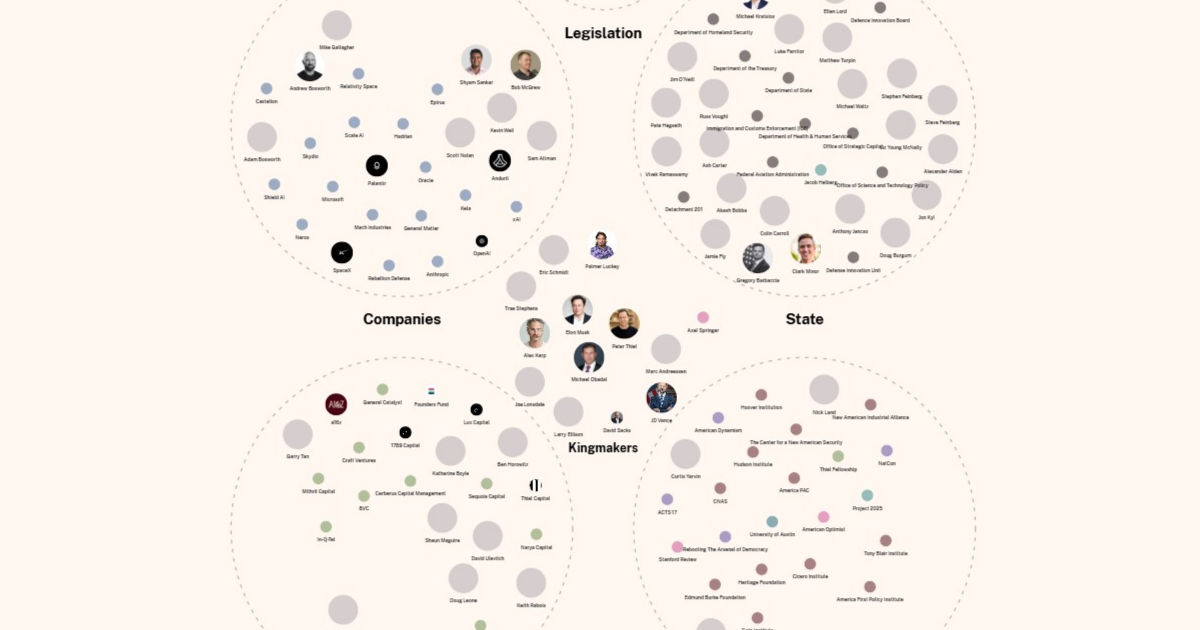
How Tech Billionaires Are Building a Post-Democratic America — And Why Europe Is Next
The Authoritarian Stack
How Tech Billionaires Are Building a Post-Democratic America — And Why Europe Is Next
The Authoritarian Stack: Mapping Big Tech’s Capture of State Power - Rosa-Luxemburg-Stiftung
A new project exposes the infrastructure of techno-oligarchic control — and why Europe must act

‘If we don’t fight back, we don’t have a future’: the journalist taking on the ‘tech fascists’ of Silicon Valley
As Elon Musk, Peter Thiel and their peers have grown richer and more influential, Gil Durán argues they have all but abandoned democracy – and found the perfect government to enable them
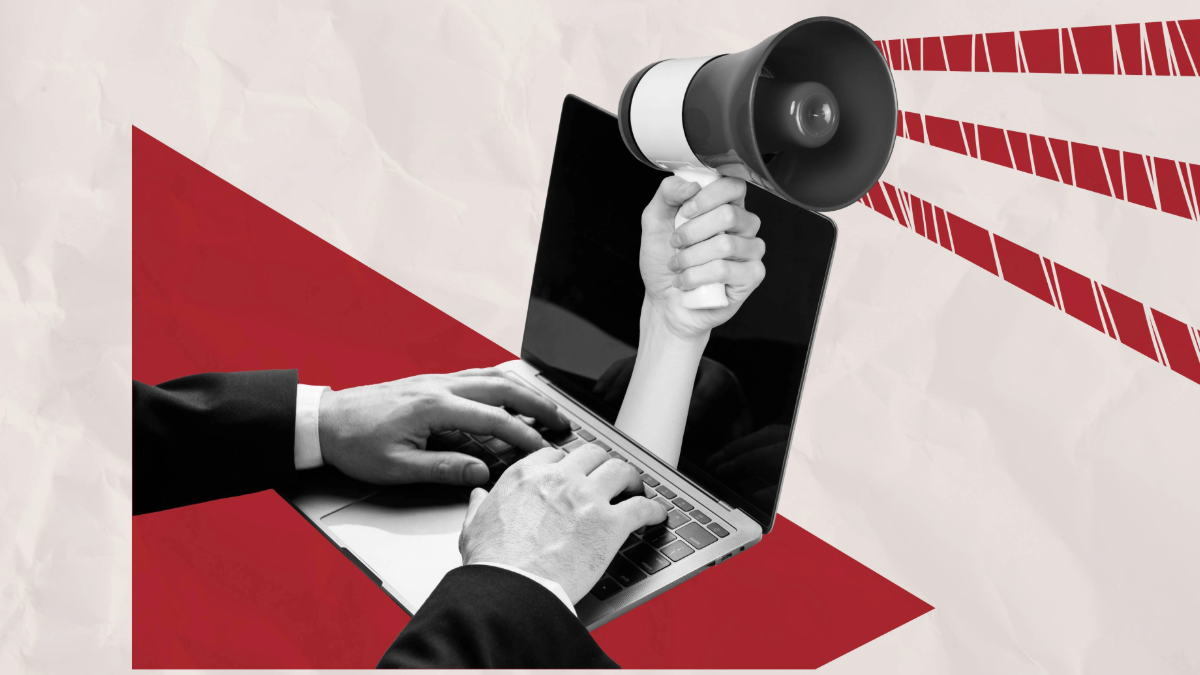
You Can’t Post Your Way Out of Fascism
Authoritarians and tech CEOs now share the same goal: to keep us locked in an eternal doomscroll instead of organizing against them, Janus Rose writes.

Fractured reality
The report examines the evolving impact of digital technologies on European democracy. In an era of a global struggle to control the information space, this report offers critical insights into the fracturing of perceived realities, the rise of the ‘fantasy-industrial complex’, and the systemic risks posed by the attention economy. It exposes how platforms algorithmically prioritise engagement over accuracy, reinforcing ideological echo chambers and amplifying mis- and disinformation that erode democratic resilience. The report highlights how structural incentives and foreign control of the most important players in the information space undermine information integrity, collective knowledge and civic discourse. In response, the report presents a number of recommendations from fostering alternative public spaces and crowd-sourced knowledge systems to reforming business models, restoring user agency, and advancing EU digital sovereignty through decentralised infrastructure
How the unholy alliance of Big Tech and the far right threatens the world
Far-right populists are the best chance for the tech oligarchs to hold onto power and wealth through the pursuit of ‘End Times Fascism’

EU-AI | Igor L.
The geopolitical landscape is shifting from physical borders to digital infrastructure. Here is a factual breakdown of how a $500 billion investment in "Sovereign AI" is changing global power dynamics. The Shift: From Land to "Substrate" Historically, a nation’s power was defined by its territory and legal systems (the Westphalian model). Today, power is increasingly tied to the compute substrate—the physical hardware and energy required to run AI. 1. Infrastructural Enclosure The "Sovereign Compute Coalition" (SCC) represents a massive consolidation of power. Major private entities are acquiring the three pillars of modern national strength: * Hardware: High-end AI chips (e.g., Nvidia). * Energy: The massive power grids needed to fuel them. * Data Centers: The physical "brains" of the digital economy. 2. The Rise of Technocracy As private companies own these essential tools, governments may find themselves in a position where they effectively "rent" their ability to govern. This moves decision-making power away from elected officials and toward those who control AI infrastructure. 3. Europe’s Strategic Response Europe is launching several initiatives to avoid becoming a "client state" of foreign tech providers. The strategy focuses on four main channels: * 8ra Initiative: Building a decentralized, multi-provider cloud-edge architecture to ensure data remains under European control and interoperable across borders. * ReArm Europe: A strategic defense package (presented in March 2025) aimed at boosting industrial competitiveness and reducing strategic dependencies in technology and defense. * Sovereign LLMs: Developing domestic models, such as Mistral, that are designed to align with European data privacy standards and cultural values. * Energy & Procurement: Using public procurement and new regulatory frameworks to create demand for homegrown, sustainable energy-efficient compute solutions. The goal of these moves is #DigitalSovereignty : the ability for a region to control its own digital destiny without relying exclusively on transnational monopolies. Data tells the real story. Are you following it? Follow #datanomics

Old Tricks, New Tech: How Legacy Media Capture Fuels Today’s Digital Authoritarianism
Marius Dragomir and Minna Aslama Horowitz discuss how digital authoritarianism is rising as states and Big Tech align, threatening independent media.
W Social, public institutions and the theater of European digital sovereignty | Hacker News
And weirdly, there was never a peep about this in the press - while the W Social launch was on national news and a bunch of high-profile EU politicians immediately joined. What's going on here?
Billionaires Gone Wild
Understanding the oligarchs’ power grab and the dire threat to American democracy
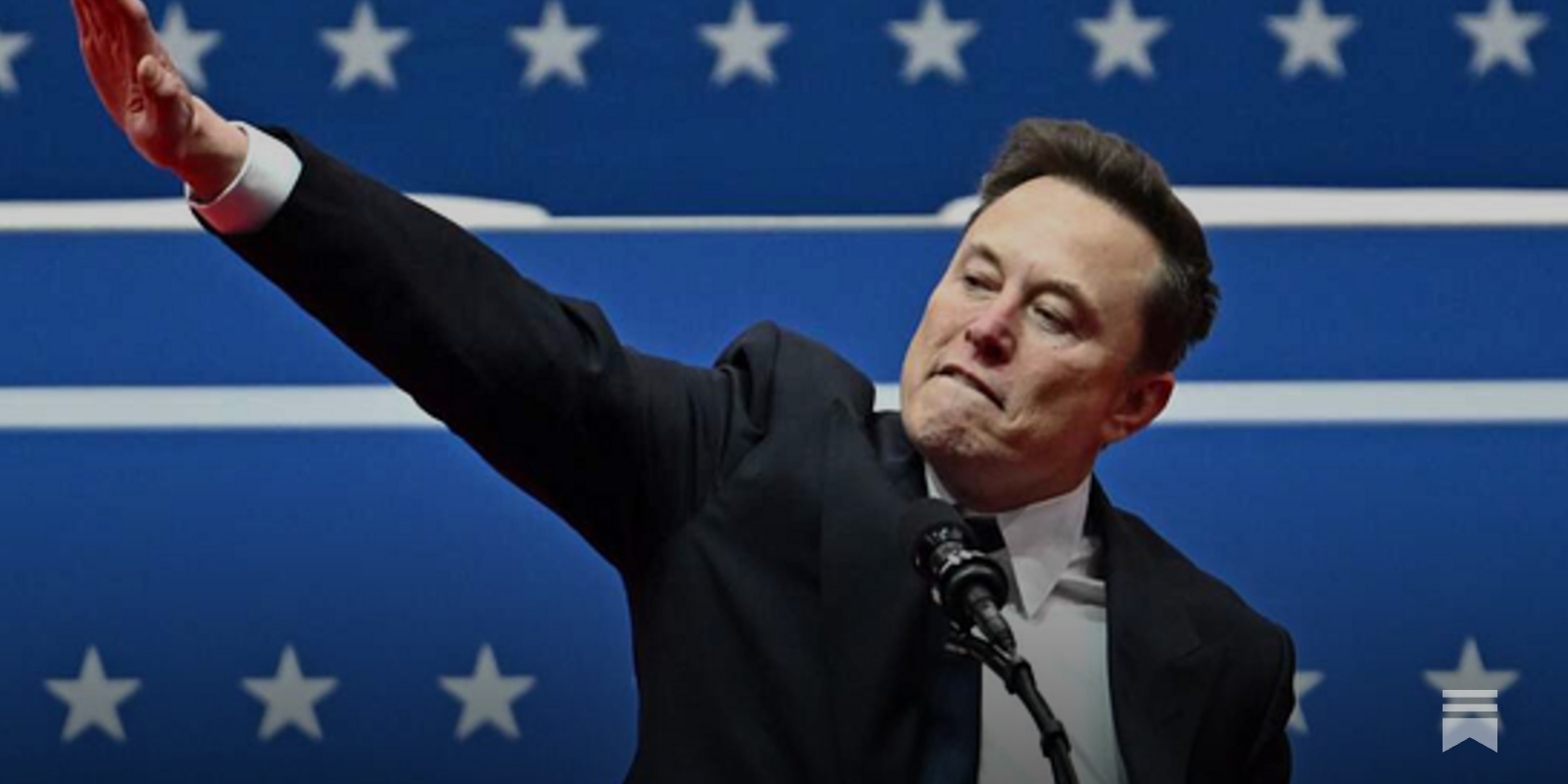
America’s new oligarchy
Under Trump an ultra-wealthy clique has infiltrated government, raising concerns about democratic integrity

Jeff Bezos Is Afraid Of What Comes Next
What comes after authoritarianism and the golden age of corruption? Billionaires are desperate to abuse their control of mass media to convince you it's anything other than good faith, popular, progressive reform.
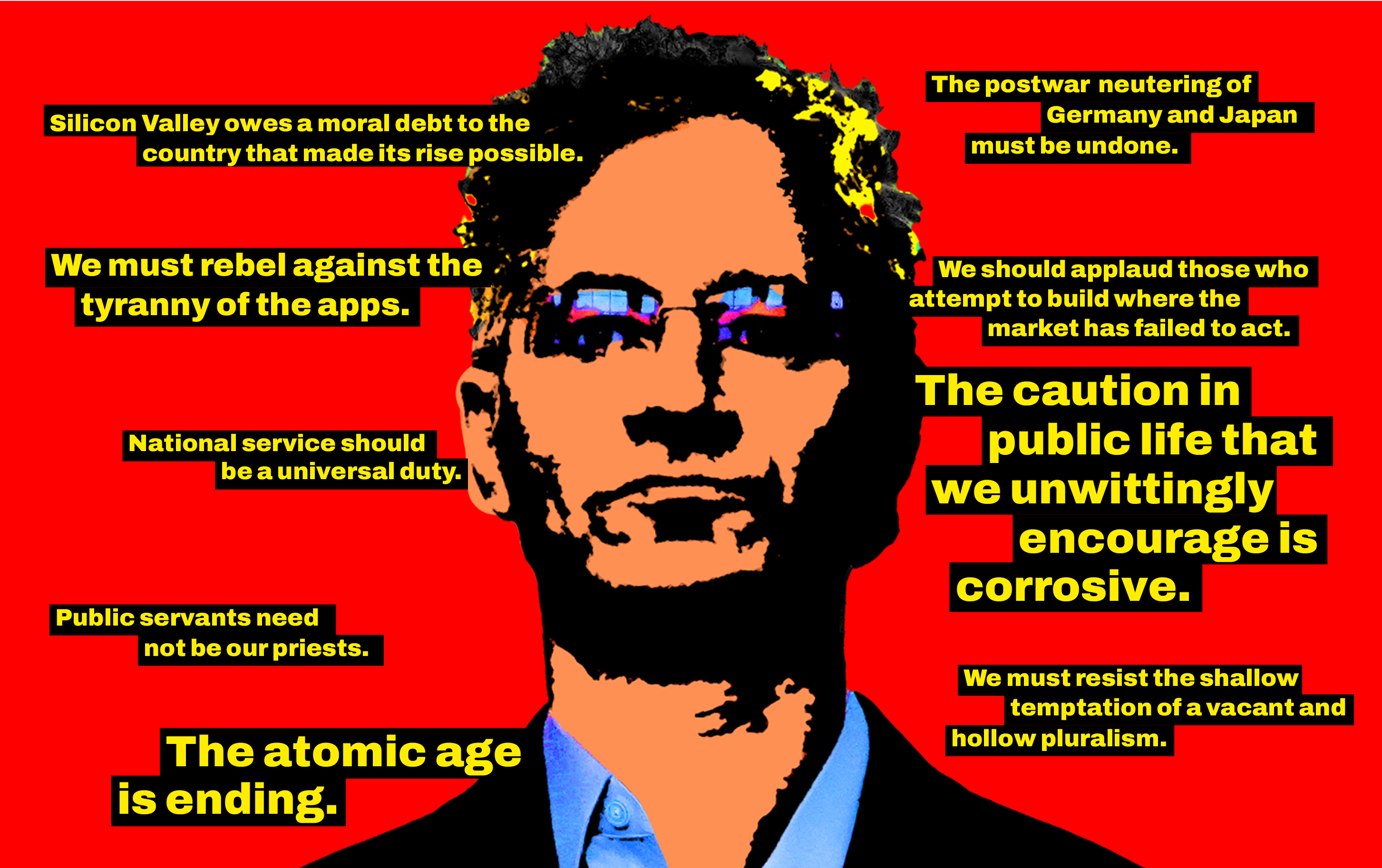
Palantir's social media manifesto is a blueprint for technofascism
The surveillance firm’s viral X post calls for hard power, conscription and the end of pluralism. AI expert and academic Mark Coeckelbergh on what happens when technology becomes the gateway to authoritarianism

All the Ways Europe Is Ditching American Technology
A WIRED timeline shows how dozens of governments, companies, and other organizations across Europe are moving, or planning to shift, away from US Big Tech.

the viability of many right-wing intellectuals and intellectual spaces is enormously dependent on the largesse of reactionary billionaires and foreign governments, who help them circumvent a marketplace of ideas where they would otherwise post extraordinarily poor sales

Don Moynihan
Its fair to ask if Orban's successful cultivation of the Western right wing intellectuals reflected that their networks were already dependent on patronage. Rod Dreher was funded by a weird billionaire, and when he stopped paying his salary, Orban did. Dreher already looking for a new gig.
