The Autistic Signal Conversion Protocol
Alexithymia Reframed:
Understanding Autistic Emotional Architecture as Overlay, Not Fusion

The Signal Conversion Protocol and the Photon Model:
Understanding Emotional Processing Across Cognitive Architectures
Stimming as High-Precision System:
The Phenomenology of Autistic Self-Regulation and Its Value to Humanity


Stimming as Temporal Awareness
Why Autistics Aren't Odd, Just More Attuned to the Human System Clock

What Is Autistic Burnout? A Thematic Analysis of Posts on Two Online Platforms
Background: Compared with adults in the general population, autistic adults are more likely to experience poor mental health, which can contribute to increased suicidality. While the autistic community has long identified autistic burnout as a significant mental health risk, to date, only one study has been published. Early research has highlighted the harmful impact of autistic burnout among autistic adults and the urgent need to better understand this phenomenon. Methods: To understand the lived experiences of autistic adults, we used data scraping to extract public posts about autistic burnout from 2 online platforms shared between 2005 and 2019, which yielded 1127 posts. Using reflexive thematic analysis and an inductive “bottom-up” approach, we sought to understand the etiology, symptoms, and impact of autistic burnout, as well as prevention and recovery strategies. Two autistic researchers with self-reported experience of autistic burnout reviewed the themes and provided insight and feedback. Results: We identified eight primary themes and three subthemes across the data. (1) Systemic, pervasive lack of autism awareness. (1.1) Discrimination and stigma. (2) A chronic or recurrent condition. (3) Direct impact on health and well-being. (4) A life unlived. (5) A blessing in disguise? (6) Self-awareness and personal control influence risk. (6.1) “You need enough balloons to manage the weight of the rocks.” (7) Masking: Damned if you do, damned if you don't. (8) Ask the experts. (8.1) Stronger together. The overarching theme was that a pervasive lack of awareness and stigma about autism underlie autistic burnout. Conclusions: We identified a set of distinct yet interrelated factors that characterize autistic burnout as a recurring condition that can, directly and indirectly, impact autistic people's functioning, mental health, quality of life, and well-being. The findings suggest that increased awareness and acceptance of autism could be key to burnout prevention and recovery. , Community brief What was the purpose of this study? Although the autistic community has talked about autistic burnout for a long time, there has not been much research about the topic. This study aimed to investigate autistic burnout from the perspective of autistic adults to understand what they think causes it, the symptoms and impact on their lives, and what can be done to assist prevention and recovery. Why is this an important issue? This issue is important because autistic people have said that autistic burnout can severely affect their quality of life and well-being and contribute to poor mental health, including the risk of suicide. What did the researchers do? We used a computer program to collect public posts from two online platforms to look at how autistic adults described autistic burnout. We collected 1127 posts shared over a 12-year period by 683 users. To understand the adults' lived experiences, we analyzed their language at the surface level and looked for common themes across the data. What were the results of the study? The adults in this study said that autistic burnout was often first experienced during adolescence, lasted months or years, and was hard to recover from. They described severe direct and indirect consequences for their physical and mental health, capacity to function, and ability to achieve personal goals. They described a general lack of knowledge about autism, especially among health care professionals, which led to misdiagnosis and inadequate or inappropriate treatment. Masking or “camouflaging” to pass as nonautistic was the most common reason participants gave for autistic burnout. Many used strategies to manage energy levels to avoid burnout. The autistic community was an essential source of information and support for participants. Overall, stigma, discrimination, and low awareness and acceptance of autism were responsible for the cycle of autistic burnout. How do these findings add to what was already known? As one of the first studies about autistic burnout, we learned that it happens because of factors associated with being autistic and poor autism awareness and acceptance within society. We now know that autistic people often first experience autistic burnout when they are young, but it usually recurs, which can stop autistic people leading fulfilling lives. We learned that difficulty identifying emotions may be a risk factor and that online communication may help autistic people during recovery. We found that some positive consequences of autistic burnout include autism diagnosis in adulthood, finding the autistic community, and making empowering lifestyle changes. What are the potential weaknesses in the study? We had limited demographic information, so we do not know how diverse the sample was or how factors such as gender, age, race, or identifying as LGBTQI may have influenced some people's experience of autistic burnout. The adults in this study had access to online platforms and could communicate in writing, and so, people with higher communication support needs may not have been included. How will these recommendations help autistic adults now or in the future? The findings reinforce the personal stories of autistic people and show that autistic burnout is a common, consistent, and harmful experience. The findings show it is vital for health professionals to recognize autistic burnout to provide appropriate care and support because prevention and early detection could help stop the harmful cycle of autistic burnout. The findings underscore the importance of reducing discrimination and stigma against autistic people and increased acceptance.

What Is Autistic Burnout? A Thematic Analysis of Posts on Two Online Platforms
Background: Compared with adults in the general population, autistic adults are more likely to experience poor mental health, which can contribute to increased suicidality. While the autistic community has long identified autistic burnout as a significant mental health risk, to date, only one study has been published. Early research has highlighted the harmful impact of autistic burnout among autistic adults and the urgent need to better understand this phenomenon. Methods: To understand the lived experiences of autistic adults, we used data scraping to extract public posts about autistic burnout from 2 online platforms shared between 2005 and 2019, which yielded 1127 posts. Using reflexive thematic analysis and an inductive “bottom-up” approach, we sought to understand the etiology, symptoms, and impact of autistic burnout, as well as prevention and recovery strategies. Two autistic researchers with self-reported experience of autistic burnout reviewed the themes and provided insight and feedback. Results: We identified eight primary themes and three subthemes across the data. (1) Systemic, pervasive lack of autism awareness. (1.1) Discrimination and stigma. (2) A chronic or recurrent condition. (3) Direct impact on health and well-being. (4) A life unlived. (5) A blessing in disguise? (6) Self-awareness and personal control influence risk. (6.1) “You need enough balloons to manage the weight of the rocks.” (7) Masking: Damned if you do, damned if you don't. (8) Ask the experts. (8.1) Stronger together. The overarching theme was that a pervasive lack of awareness and stigma about autism underlie autistic burnout. Conclusions: We identified a set of distinct yet interrelated factors that characterize autistic burnout as a recurring condition that can, directly and indirectly, impact autistic people's functioning, mental health, quality of life, and well-being. The findings suggest that increased awareness and acceptance of autism could be key to burnout prevention and recovery. , Community brief What was the purpose of this study? Although the autistic community has talked about autistic burnout for a long time, there has not been much research about the topic. This study aimed to investigate autistic burnout from the perspective of autistic adults to understand what they think causes it, the symptoms and impact on their lives, and what can be done to assist prevention and recovery. Why is this an important issue? This issue is important because autistic people have said that autistic burnout can severely affect their quality of life and well-being and contribute to poor mental health, including the risk of suicide. What did the researchers do? We used a computer program to collect public posts from two online platforms to look at how autistic adults described autistic burnout. We collected 1127 posts shared over a 12-year period by 683 users. To understand the adults' lived experiences, we analyzed their language at the surface level and looked for common themes across the data. What were the results of the study? The adults in this study said that autistic burnout was often first experienced during adolescence, lasted months or years, and was hard to recover from. They described severe direct and indirect consequences for their physical and mental health, capacity to function, and ability to achieve personal goals. They described a general lack of knowledge about autism, especially among health care professionals, which led to misdiagnosis and inadequate or inappropriate treatment. Masking or “camouflaging” to pass as nonautistic was the most common reason participants gave for autistic burnout. Many used strategies to manage energy levels to avoid burnout. The autistic community was an essential source of information and support for participants. Overall, stigma, discrimination, and low awareness and acceptance of autism were responsible for the cycle of autistic burnout. How do these findings add to what was already known? As one of the first studies about autistic burnout, we learned that it happens because of factors associated with being autistic and poor autism awareness and acceptance within society. We now know that autistic people often first experience autistic burnout when they are young, but it usually recurs, which can stop autistic people leading fulfilling lives. We learned that difficulty identifying emotions may be a risk factor and that online communication may help autistic people during recovery. We found that some positive consequences of autistic burnout include autism diagnosis in adulthood, finding the autistic community, and making empowering lifestyle changes. What are the potential weaknesses in the study? We had limited demographic information, so we do not know how diverse the sample was or how factors such as gender, age, race, or identifying as LGBTQI may have influenced some people's experience of autistic burnout. The adults in this study had access to online platforms and could communicate in writing, and so, people with higher communication support needs may not have been included. How will these recommendations help autistic adults now or in the future? The findings reinforce the personal stories of autistic people and show that autistic burnout is a common, consistent, and harmful experience. The findings show it is vital for health professionals to recognize autistic burnout to provide appropriate care and support because prevention and early detection could help stop the harmful cycle of autistic burnout. The findings underscore the importance of reducing discrimination and stigma against autistic people and increased acceptance.
“Having All of Your Internal Resources Exhausted Beyond Measure and Being Left with No Clean-Up Crew”: Defining Autistic Burnout
Background: Although autistic adults often discuss experiencing “autistic burnout” and attribute serious negative outcomes to it, the concept is almost completely absent from the academic and clinical literature. Methods: We used a community-based participatory research approach to conduct a thematic analysis of 19 interviews and 19 public Internet sources to understand and characterize autistic burnout. Interview participants were autistic adults who identified as having been professionally diagnosed with an autism spectrum condition. We conducted a thematic analysis, using a hybrid inductive–deductive approach, at semantic and latent levels, through a critical paradigm. We addressed trustworthiness through multiple coders, peer debriefing, and examination of contradictions. Results: Autistic adults described the primary characteristics of autistic burnout as chronic exhaustion, loss of skills, and reduced tolerance to stimulus. They described burnout as happening because of life stressors that added to the cumulative load they experienced, and barriers to support that created an inability to obtain relief from the load. These pressures caused expectations to outweigh abilities resulting in autistic burnout. Autistic adults described negative impacts on their health, capacity for independent living, and quality of life, including suicidal behavior. They also discussed a lack of empathy from neurotypical people and described acceptance and social support, time off/reduced expectations, and doing things in an autistic way/unmasking as associated in their experiences with recovery from autistic burnout. Conclusions: Autistic burnout appears to be a phenomenon distinct from occupational burnout or clinical depression. Better understanding autistic burnout could lead to ways to recognize, relieve, or prevent it, including highlighting the potential dangers of teaching autistic people to mask or camouflage their autistic traits, and including burnout education in suicide prevention programs. These findings highlight the need to reduce discrimination and stigma related to autism and disability. Lay summary Why was this study done? Autistic burnout is talked about a lot by autistic people but has not been formally addressed by researchers. It is an important issue for the autistic community because it is described as leading to distress; loss of work, school, health, and quality of life; and even suicidal behavior. What was the purpose of this study? This study aimed to characterize autistic burnout, understand what it is like, what people think causes it, and what helps people recover from or prevent it. It is a first step in starting to understand autistic burnout well enough to address it. What did the researchers do? Our research group—the Academic Autism Spectrum Partnership in Research and Education—used a community-based participatory research approach with the autistic community in all stages of the study. We analyzed 9 interviews from our study on employment, 10 interviews about autistic burnout, and 19 public Internet sources (five in-depth). We recruited in the United States by publicizing on social media, by word of mouth, and through community connections. When analyzing interviews, we took what people said at face value and in deeper social context, and looked for strong themes across data. What were the results of the study? The primary characteristics of autistic burnout were chronic exhaustion , loss of skills , and reduced tolerance to stimulus . Participants described burnout as happening because of life stressors that added to the cumulative load they experienced, and barriers to support that created an inability to obtain relief from the load. These pressures caused expectations to outweigh abilities resulting in autistic burnout . From this we created a definition: Autistic burnout is a syndrome conceptualized as resulting from chronic life stress and a mismatch of expectations and abilities without adequate supports. It is characterized by pervasive, long-term (typically 3+ months) exhaustion, loss of function, and reduced tolerance to stimulus. Participants described negative impacts on their lives, including health , capacity for independent living , and quality of life , including suicidal behavior. They also discussed a lack of empathy from neurotypical people. People had ideas for recovering from autistic burnout including acceptance and social support , time off/reduced expectations , and doing things in an autistic way/unmasking . How do these findings add to what was already known? We now have data that autistic burnout refers to a clear set of characteristics, and is different from workplace burnout and clinical depression. We have the start of a model for why autistic burnout might happen. We know that people have been able to recover from autistic burnout and have some insights into how. What are the potential weaknesses in the study? This was a small exploratory study with a convenience sample. Although we were able to bring in some diversity by using three data sources, future work would benefit from interviewing a wider range of participants, especially those who are not white, have higher support needs, and have either very high or very low educational attainment. More research is needed to understand how to measure, prevent, and treat autistic burnout. How will these findings help autistic adults now or in the future? These findings validate the experience of autistic adults. Understanding autistic burnout could lead to ways to help relieve it or prevent it. The findings may help therapists and other practitioners recognize autistic burnout, and the potential dangers of teaching autistic people to mask autistic traits. Suicide prevention programs should consider the potential role of burnout. These findings highlight the need to reduce discrimination and stigma around autism and disability.
“Having All of Your Internal Resources Exhausted Beyond Measure and Being Left with No Clean-Up Crew”: Defining Autistic Burnout
Background: Although autistic adults often discuss experiencing “autistic burnout” and attribute serious negative outcomes to it, the concept is almost completely absent from the academic and clinical literature. Methods: We used a community-based participatory research approach to conduct a thematic analysis of 19 interviews and 19 public Internet sources to understand and characterize autistic burnout. Interview participants were autistic adults who identified as having been professionally diagnosed with an autism spectrum condition. We conducted a thematic analysis, using a hybrid inductive–deductive approach, at semantic and latent levels, through a critical paradigm. We addressed trustworthiness through multiple coders, peer debriefing, and examination of contradictions. Results: Autistic adults described the primary characteristics of autistic burnout as chronic exhaustion, loss of skills, and reduced tolerance to stimulus. They described burnout as happening because of life stressors that added to the cumulative load they experienced, and barriers to support that created an inability to obtain relief from the load. These pressures caused expectations to outweigh abilities resulting in autistic burnout. Autistic adults described negative impacts on their health, capacity for independent living, and quality of life, including suicidal behavior. They also discussed a lack of empathy from neurotypical people and described acceptance and social support, time off/reduced expectations, and doing things in an autistic way/unmasking as associated in their experiences with recovery from autistic burnout. Conclusions: Autistic burnout appears to be a phenomenon distinct from occupational burnout or clinical depression. Better understanding autistic burnout could lead to ways to recognize, relieve, or prevent it, including highlighting the potential dangers of teaching autistic people to mask or camouflage their autistic traits, and including burnout education in suicide prevention programs. These findings highlight the need to reduce discrimination and stigma related to autism and disability. Lay summary Why was this study done? Autistic burnout is talked about a lot by autistic people but has not been formally addressed by researchers. It is an important issue for the autistic community because it is described as leading to distress; loss of work, school, health, and quality of life; and even suicidal behavior. What was the purpose of this study? This study aimed to characterize autistic burnout, understand what it is like, what people think causes it, and what helps people recover from or prevent it. It is a first step in starting to understand autistic burnout well enough to address it. What did the researchers do? Our research group—the Academic Autism Spectrum Partnership in Research and Education—used a community-based participatory research approach with the autistic community in all stages of the study. We analyzed 9 interviews from our study on employment, 10 interviews about autistic burnout, and 19 public Internet sources (five in-depth). We recruited in the United States by publicizing on social media, by word of mouth, and through community connections. When analyzing interviews, we took what people said at face value and in deeper social context, and looked for strong themes across data. What were the results of the study? The primary characteristics of autistic burnout were chronic exhaustion , loss of skills , and reduced tolerance to stimulus . Participants described burnout as happening because of life stressors that added to the cumulative load they experienced, and barriers to support that created an inability to obtain relief from the load. These pressures caused expectations to outweigh abilities resulting in autistic burnout . From this we created a definition: Autistic burnout is a syndrome conceptualized as resulting from chronic life stress and a mismatch of expectations and abilities without adequate supports. It is characterized by pervasive, long-term (typically 3+ months) exhaustion, loss of function, and reduced tolerance to stimulus. Participants described negative impacts on their lives, including health , capacity for independent living , and quality of life , including suicidal behavior. They also discussed a lack of empathy from neurotypical people. People had ideas for recovering from autistic burnout including acceptance and social support , time off/reduced expectations , and doing things in an autistic way/unmasking . How do these findings add to what was already known? We now have data that autistic burnout refers to a clear set of characteristics, and is different from workplace burnout and clinical depression. We have the start of a model for why autistic burnout might happen. We know that people have been able to recover from autistic burnout and have some insights into how. What are the potential weaknesses in the study? This was a small exploratory study with a convenience sample. Although we were able to bring in some diversity by using three data sources, future work would benefit from interviewing a wider range of participants, especially those who are not white, have higher support needs, and have either very high or very low educational attainment. More research is needed to understand how to measure, prevent, and treat autistic burnout. How will these findings help autistic adults now or in the future? These findings validate the experience of autistic adults. Understanding autistic burnout could lead to ways to help relieve it or prevent it. The findings may help therapists and other practitioners recognize autistic burnout, and the potential dangers of teaching autistic people to mask autistic traits. Suicide prevention programs should consider the potential role of burnout. These findings highlight the need to reduce discrimination and stigma around autism and disability.
The Fixed-Coordinate Self-Anchor:
Understanding Autistic Identity as Immovable Observer

Defining autistic burnout through experts by lived experience: Grounded Delphi method investigating #AutisticBurnout
Although commonly described on social media by autistic people, there is little recognition of autistic burnout in the academic literature. Anecdotally, autistic burnout is described as a debilitating condition that severely impacts functioning, is linked to suicidal ideation and is driven by the stress of masking and living in an unaccommodating neurotypical world. We sought to define autistic burnout using the Grounded Delphi method. Autistic adults, experts by the lived experience of autistic burnout (n = 23), co-produced and agreed to a definition intended for clinicians and the autistic and autism communities. A thick description and conceptual framework were developed from the open-ended round 1 survey, with a high majority of agreement reached in the round 3 survey. Autistic burnout was defined as a highly debilitating condition characterised by exhaustion, withdrawal, executive function problems and generally reduced functioning, with increased manifestation of autistic traits – and distinct from depression and non-autistic burnout. Further work is needed to differentiate autistic burnout from other conditions and to build clinician understanding of the accompanying complexity to be considered in treatment planning. Lay abstract Autistic burnout has been commonly described in social media by autistic people. There is little mention of autistic burnout in the academic literature. Only one recent study has used interviews and reviews of social media descriptions to try to understand autistic burnout. Anecdotally, autistic burnout is a very debilitating condition that reduced people’s daily living skills and can lead to suicide attempts. It is suggested that autistic burnout is caused by the stress of masking and living in an unaccommodating neurotypical world. We wanted to create a definition of autistic burnout that could be used by clinicians and the autism community. We used the Grounded Delphi method, which allowed autistic voice to lead the study. Autistic adults who had experienced autistic burnout were considered as experts on the topic, in the co-production of this definition. The definition describes autistic burnout as a condition involving exhaustion, withdrawal, problems with thinking, reduced daily living skills and increases in the manifestation of autistic traits. It is important for future research that there is a specific description of the condition. In practice, it is important for clinicians to be aware that autistic burnout is different from depression. Psychological treatments for depression potentially could make autistic burnout worse. Further awareness of autistic burnout is needed, as well as further research to prove this condition is separate from depression, chronic fatigue and non-autistic burnout.
Defining autistic burnout through experts by lived experience: Grounded Delphi method investigating #AutisticBurnout
Although commonly described on social media by autistic people, there is little recognition of autistic burnout in the academic literature. Anecdotally, autistic burnout is described as a debilitating condition that severely impacts functioning, is linked to suicidal ideation and is driven by the stress of masking and living in an unaccommodating neurotypical world. We sought to define autistic burnout using the Grounded Delphi method. Autistic adults, experts by the lived experience of autistic burnout (n = 23), co-produced and agreed to a definition intended for clinicians and the autistic and autism communities. A thick description and conceptual framework were developed from the open-ended round 1 survey, with a high majority of agreement reached in the round 3 survey. Autistic burnout was defined as a highly debilitating condition characterised by exhaustion, withdrawal, executive function problems and generally reduced functioning, with increased manifestation of autistic traits – and distinct from depression and non-autistic burnout. Further work is needed to differentiate autistic burnout from other conditions and to build clinician understanding of the accompanying complexity to be considered in treatment planning. Lay abstract Autistic burnout has been commonly described in social media by autistic people. There is little mention of autistic burnout in the academic literature. Only one recent study has used interviews and reviews of social media descriptions to try to understand autistic burnout. Anecdotally, autistic burnout is a very debilitating condition that reduced people’s daily living skills and can lead to suicide attempts. It is suggested that autistic burnout is caused by the stress of masking and living in an unaccommodating neurotypical world. We wanted to create a definition of autistic burnout that could be used by clinicians and the autism community. We used the Grounded Delphi method, which allowed autistic voice to lead the study. Autistic adults who had experienced autistic burnout were considered as experts on the topic, in the co-production of this definition. The definition describes autistic burnout as a condition involving exhaustion, withdrawal, problems with thinking, reduced daily living skills and increases in the manifestation of autistic traits. It is important for future research that there is a specific description of the condition. In practice, it is important for clinicians to be aware that autistic burnout is different from depression. Psychological treatments for depression potentially could make autistic burnout worse. Further awareness of autistic burnout is needed, as well as further research to prove this condition is separate from depression, chronic fatigue and non-autistic burnout.
Welcome: Mapping the Architecture of Autistic Cognition
Most people experience their minds as opaque.

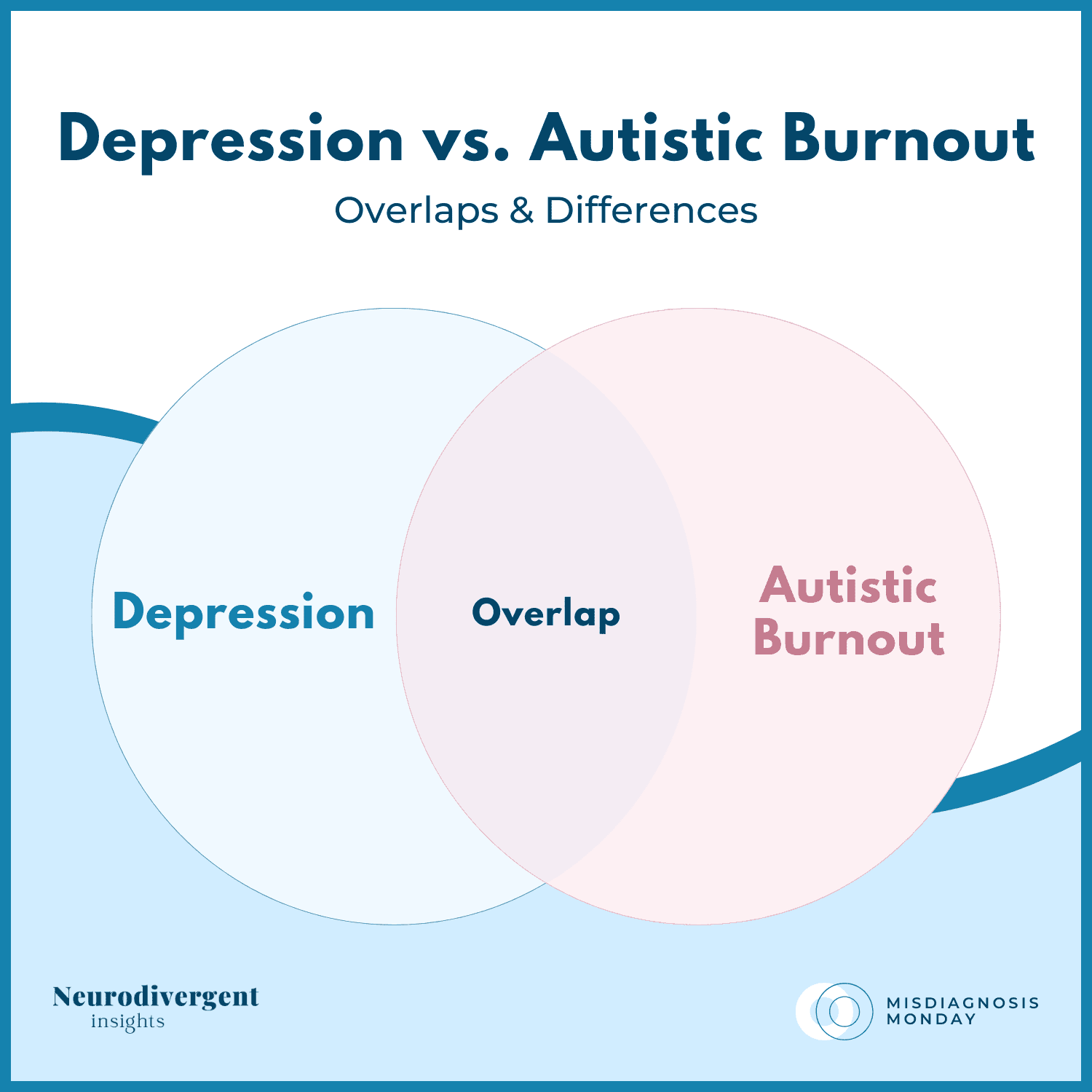
Autistic Burnout vs. Depression | Neurodivergent Insights
Dr Megan Anna Neff explains the difference between autistic burnout and depression. Overlapping signs, root causes, and why withdrawal can be a valid response.
Two Realities: Native Modes, Learned Social Systems, and the Foundations of Autistic Cognition
Part 1: The Architecture Overview