

Why I'm Always Late
There's not really any other explanation—chronically late people are actually insane.

Social media and youth mental health: Simple narratives produce biased interpretations.
Individual Experience vs. The Cochrane Review
On my decade-long exploration seeking a scientific language for singular evidence.
Use it or lose it: How cognitive skills change with age
Cognitive skills are commonly assumed to begin deteriorating from the age of 30, which could pose a significant challenge for rapidly ageing populations. But this assumption relies largely on cross-sectional data that cannot distinguish between ageing patterns and cohort differences. Using German longitudinal data, this column finds that skills, on average, increase markedly into one’s 40s before decreasing slightly in literacy and more severely in numeracy. In addition, skills decline at older ages only for those with below-average skill usage, outlining a clear policy pathway for avoiding skill declines.

NYT Less Interested Than Ever in Trans Perspectives on Trans Issues
Even while feigning concern, the paper of record remains largely uninterested in centering trans people and perspectives in coverage of trans issues.
Degeneracy is a Symptom
On Conspicuous Despair, the Ponzi stage of being alive, and why your grandparents are wrong about you.

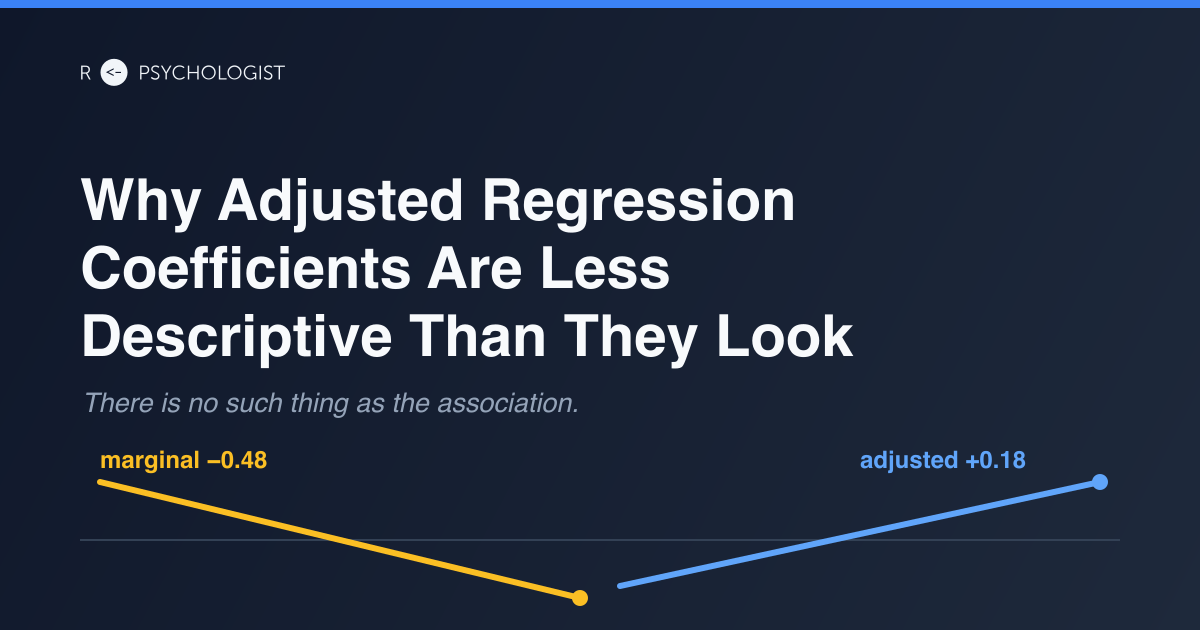
Why Adjusted Regression Coefficients Are Less Descriptive Than They Look | R Psychologist
An interactive article about how regression adjustment works and the pitfalls of conditional associations in descriptive studies.
Debunking “When Prophecy Fails”
ABSTRACT In 1954, Dorothy Martin predicted an apocalyptic flood and promised her followers rescue by flying saucers. When neither arrived, she recanted, her group dissolved, and efforts to proselytize ceased. But When Prophecy Fails (1956), the now‐canonical account of the event, claimed the opposite: that the group doubled down on its beliefs and began recruiting—evidence, the authors argued, of a new psychological mechanism, cognitive dissonance. Drawing on newly unsealed archival material, this article demonstrates that the book's central claims are false, and that the authors knew they were false. The documents reveal that the group actively proselytized well before the prophecy failed and quickly abandoned their beliefs afterward. They also expose serious ethical violations by the researchers, including fabricated psychic messages, covert manipulation, and interference in a child welfare investigation. One coauthor, Henry Riecken, posed as a spiritual authority and later admitted he had “precipitated” the climactic events of the study.

New paradigm for psychology just dropped
OR: the ideas your mother warned you about

Blog | Online Therapy NYC | New York City 11096 | The Keely Group
Struggling with self-doubt at work? Click here to explore therapy for imposter syndrome in Manhattan, NY, tailored for twice-exceptional professionals.

Doctors’ AI scribes get names of drugs and diagnoses wrong, NHS watchdog warns
Exclusive: Patients identify errors in consultation transcripts that are missed by GPs, Healthwatch England finds
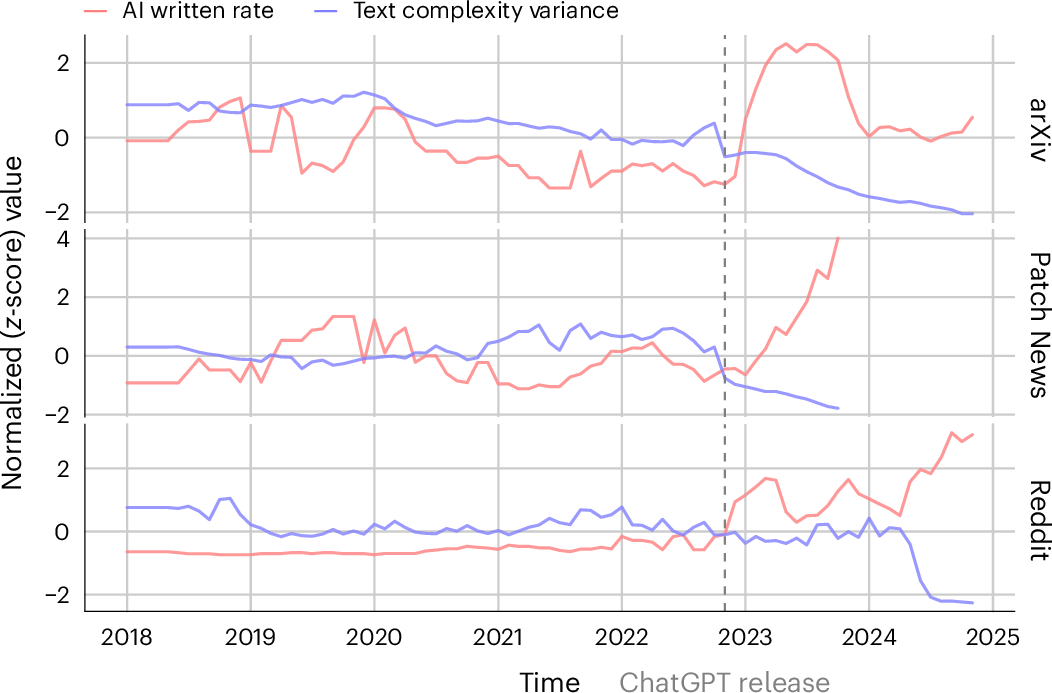
The shrinking landscape of linguistic diversity in the age of large language models
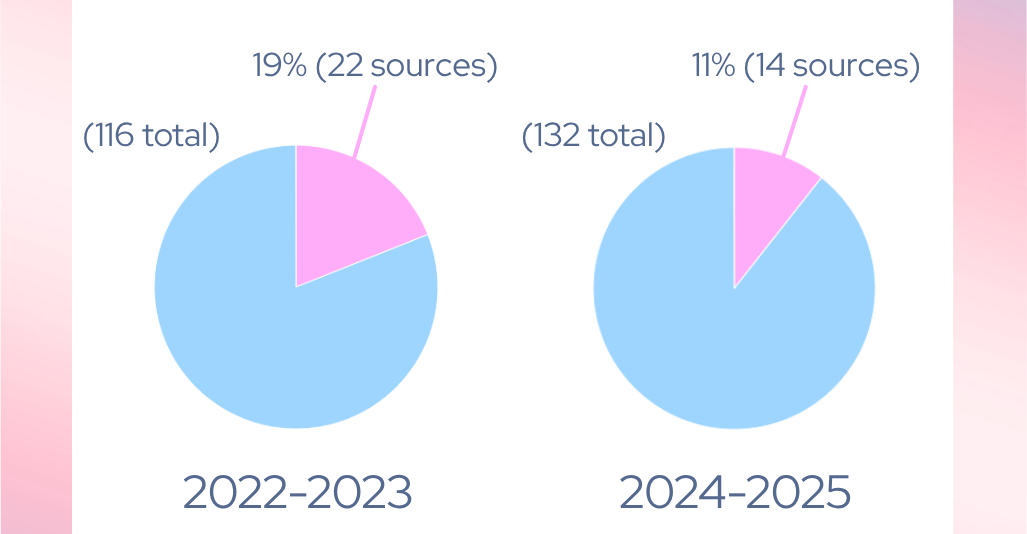
Language is far more than a communication tool; it encodes a wealth of information about a person’s identity, psychological state and social context, providing valuable insights for diverse fields including psychology, marketing and healthcare. Across three studies spanning seven datasets in different domains and over 880,000 texts, we show that the widespread adoption of large language models (LLMs) as writing assistants is linked to declines in linguistic diversity, interfering with the societal and psychological insights language provides. While core content is retained when LLMs polish and rewrite texts, LLMs also homogenize writing styles, reducing writing-complexity variance by a statistically significant 21–50% across datasets and models (P ≤ 0.05), and amplify patterns associated with dominant characteristics while suppressing others, emphasizing conformity over individuality. These trends hold across different LLMs, prompts and contexts, with potential implications for diagnostic processes, personalization efforts, hiring assessments and cultural preservation.
LF11 - Cohort Futures
On belonging, becoming, and communities with a clock.

How AI For Women’s Health Is Being Built Differently
Healthcare AI mirrors decades of gender bias. Women-led startups are rebuilding it to reduce misdiagnosis, dismissal, and fragmented care.

These parents didn’t know why their daughter was sick. They turned to AI to help solve the mystery. - The Boston Globe
First they sequenced the entire genomes of all four members of their family. Then they got down to work.

So this is a fascinating article about how a family used ChatGPT to help (emphasis on *help*, not on doing everything) diagnose the rare genetic disorder their kid had. While I know it will make some people angry, I think there are a few good lessons in here: bostonglobe.com/2026/09/12/metro/ai-chatgpt-h…

These parents didn’t know why their daughter was sick. They turned to AI to help solve the mystery. - The Boston Globe
www.bostonglobe.com