

A Guardrail Feature of Hyperfocus-Capable Systems
APRIL Laboratory APRIL Papers : Autonomy * Perception * Robotics * Interfaces * Learning
Focus-plus-context screen
Extending Our Perception
The world is rich with information hidden from human senses and not captured by our algorithms. The next era of AI will require Hypersensory Intelligence — AI and novel sensors engineered together to perceive reality in fundamentally new ways, catalysing breakthroughs across disciplines.
I love AI, but it still can't design for shit
Without a critical human eye, AI produces slop. The quality bar is yours to maintain.
Ubiquitous Accessibility for People with Visual Impairments: Are We There Yet?
Ubiquitous access is an increasingly common vision of computing, wherein users can interact with any computing device or service from anywhere, at any time. In the era of personal computing, users with visual impairments required special-purpose, assistive technologies, such as screen readers, to interact with computers. This paper investigates whether technologies like screen readers have kept pace with, or have created a barrier to, the trend toward ubiquitous access, with a specific focus on desktop computing as this is still the primary way computers are used in education and employment. Towards that, the paper presents a user study with 21 visually-impaired participants, specifically involving the switching of screen readers within and across different computing platforms, and the use of screen readers in remote access scenarios. Among the findings, the study shows that, even for remote desktop access—an early forerunner of true ubiquitous access—screen readers are too limited, if not unusable. The study also identifies several accessibility needs, such as uniformity of navigational experience across devices, and recommends potential solutions. In summary, assistive technologies have not made the jump into the era of ubiquitous access, and multiple, inconsistent screen readers create new practical problems for users with visual impairments.

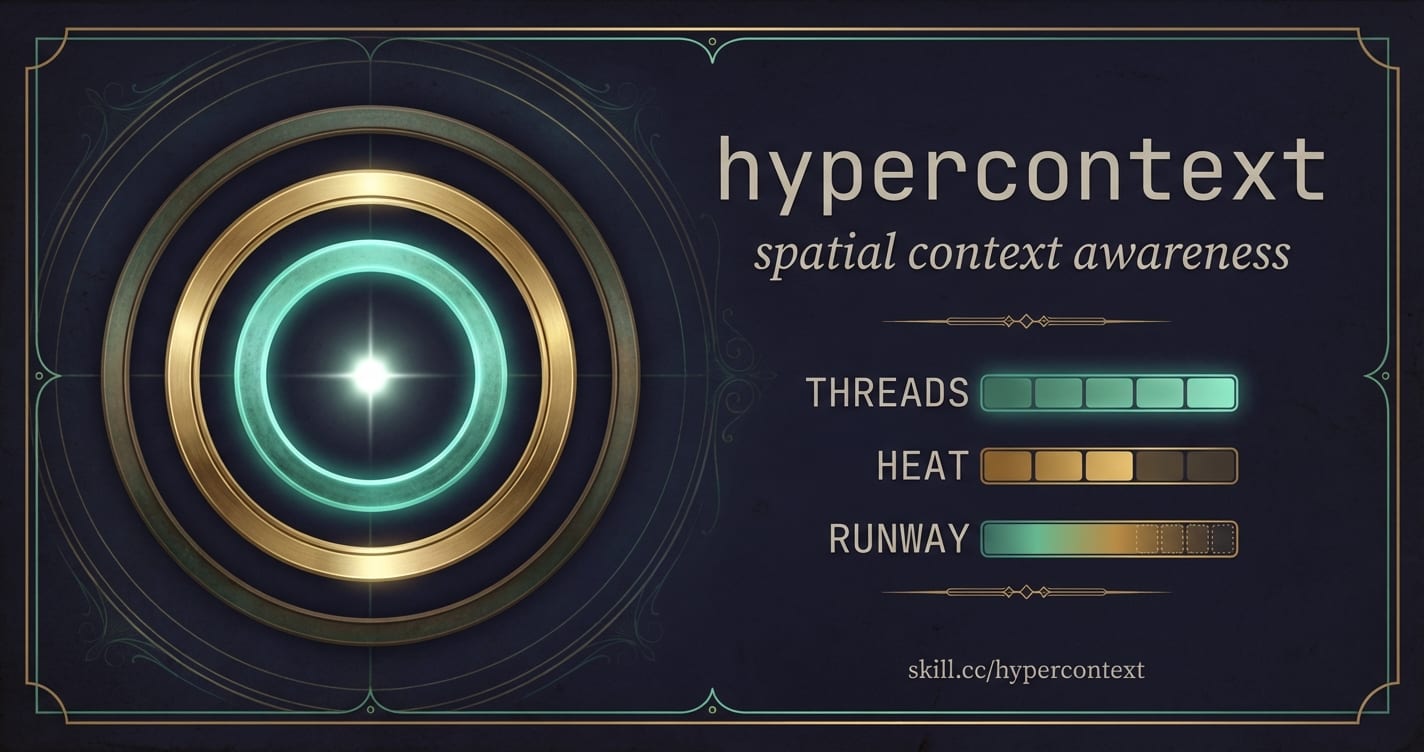
hypercontext — spatial context awareness
See what your AI knows. Session state as a spatial map.
Artificial intelligence-powered smart vision glasses for the visually impaired
Purpose: In India, 4.80 million people are blind, and 4.69 million have severe visual impairment. Globally, the digital era and the advent of artificial intelligence devices offer solutions for daily challenges faced by the visually impaired, but they are often expensive. This study evaluates the acceptance and usability of a cost-effective AI-powered spectacle-mounted assistive device in a multicentric Indian cohort. Methods: Smart vision glass (SVG) is a lightweight tool, mounted on a spectacle frame with braille-coded keys and a real-time voice interface for guiding the visually impaired, and is connected to a smartphone Android App. The four major functions of the device are as follows: “Things Around You,” “Reading,” “Walking Assistance,” and “Face Recognition.” Ninety participants were recruited from five vision rehabilitation centers across India, and feedback was collected after a month’s usage. Results: The mean age of the participants was 23.5 years (range: 6 to 56 years) with 58.9% male; 51% from rural areas; and 64.4% students. As per the World Health Organization (WHO) classification, 90% of the participants were blind (best corrected visual acuity in better eye less than 3/60). A total of 100% of the participants were able to access all the functions of the SVG. Participants reported a positive experience with “Reading” (72.9%), “Things Around You” (44.7%), “Face Recognition” (36.5%), and “Walking Assistance” (22.4%). About 2/3rd of the participants utilized the device for an hour or more per day. Conclusion: SVG is a promising cost-effective device for the blind and severe visually impaired in aiding their day-to-day challenges and becoming self-reliant.
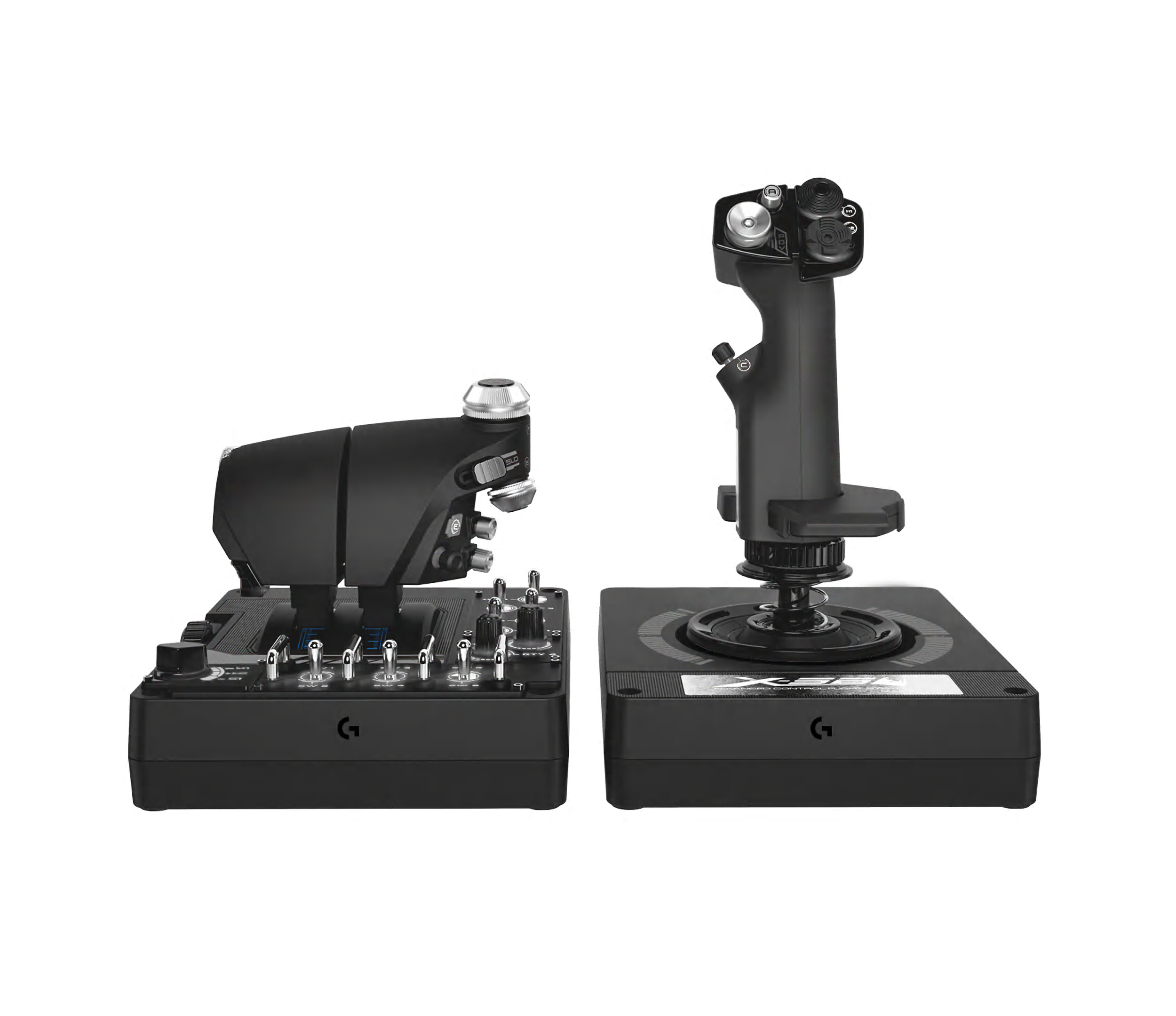
X56 H.O.T.A.S.
Logitech G X56 H.O.T.A.S. flight and space simulator stick & throttle put realistic, customizable cockpit controls at your fingertips. Perfect for VR games.
Cognitive Load | Laws of UX
The amount of mental resources needed to understand and interact with an interface.

Focusmate - Virtual coworking for getting anything done
Stop procrastination forever with virtual body doubling. Join for free and tackle any task, from studying and coding to meal prep and everything in between. As featured in BBC, NPR, The New York Times, and HBR.

Be My Eyes Smartglasses
Learn how Be My Eyes smartglasses enhance accessibility through Meta AI Glasses in numerous countries and how to get yours.

Smart glasses for remote assistance: analysing usability and optimal user characteristics among young adults with and without autism
Young adults with autism spectrum disorder (ASD) often face challenges achieving independence and require ongoing support from caregivers. Smart glasses can develop skills and provide remote suppor...

Envision Glasses
AI-powered smartglasses that articulate everyday visual information into speech, providing independence and possibilities for people who are blind or have low vision.

Is Meta Using Disabled People to Promote Its Glasses?
AI glasses are a double-edged sword for disabled people, who face unique risks from surveillance.

inFORM: dynamic physical affordances and constraints through shape and object actuation
We propose a new approach to Physical Telepresence, based on shared workspaces with the ability to capture and remotely render the shapes of people and objects. In this paper, we describe the concept of shape transmission, and propose interaction ...

How AI Glasses Are Empowering People With Disabilities
Our AI glasses are empowering people with disabilities to perform daily tasks with greater independence.
