

A new major version of Automerge, which cuts down memory usage by more than 10x while preserving backwards compatability.
Welcome to Automerge
Automerge is a library for building collaborative, local-first applications.
Eric on Twitter / X
Qwen3.5 27B is awesome (the entire family above 9B is impressive). You can now try it directly in your browser at SOTA speeds with whatever GPU you have: https://t.co/avWxUd8vNLMy previous research in practice - The `Intel/Qwen3.5-27B-int4-AutoRound` is particularly good. https://t.co/QVSVNKM0Nk— Eric (@Ex0byt) March 21, 2026
Automerge 3.0 Beta, Sketchy Calendar, and a lab website refresh
Some major updates to our open-source Automerge library, an introduction to Sketchy Calendars, and a peek at our work on collaborative game development. Also some meta content—a refreshed website, and a talk about how we work.

0xSero on Twitter / X
I told y’all this is the move. Heterogenous hardware is the way forward. Large cheap pools of mixed memory + specialized accelerators (Nvidia GPUs, DGX Spark, Cerebras wafers) The next year will be dominated by solutions that split the stack. - 3000$ for a used Mac Studio… https://t.co/zMlScSnJ0X— 0xSero (@0xSero) April 1, 2026
Inference Time Memory Module | Research | Tiles
Simple inference-time memory module that treats memory management as a series of LLM calls and agent loops over a markdown-based file tree.
Structured merge with auto-tuning: balancing precision and performance
Software-merging techniques face the challenge of finding a balance between precision and performance. In practice, developers use unstructured-merge (i.e., line-based) tools, which are fast but imprecise. In academia, many approaches incorporate information on the structure of the artifacts being merged. While this increases precision in conflict detection and resolution, it can induce severe performance penalties. Striving for a proper balance between precision and performance, we propose a structured-merge approach with auto-tuning. In a nutshell, we tune the merge process on-line by switching between unstructured and structured merge, depending on the presence of conflicts. We implemented a corresponding merge tool for Java, called JDime. Our experiments with 8 real-world Java projects, involving 72 merge scenarios with over 17 million lines of code, demonstrate that our approach indeed hits a sweet spot: While largely maintaining a precision that is superior to the one of unstructured merge, structured merge with auto-tuning is up to 12 times faster than purely structured merge, 5 times on average.

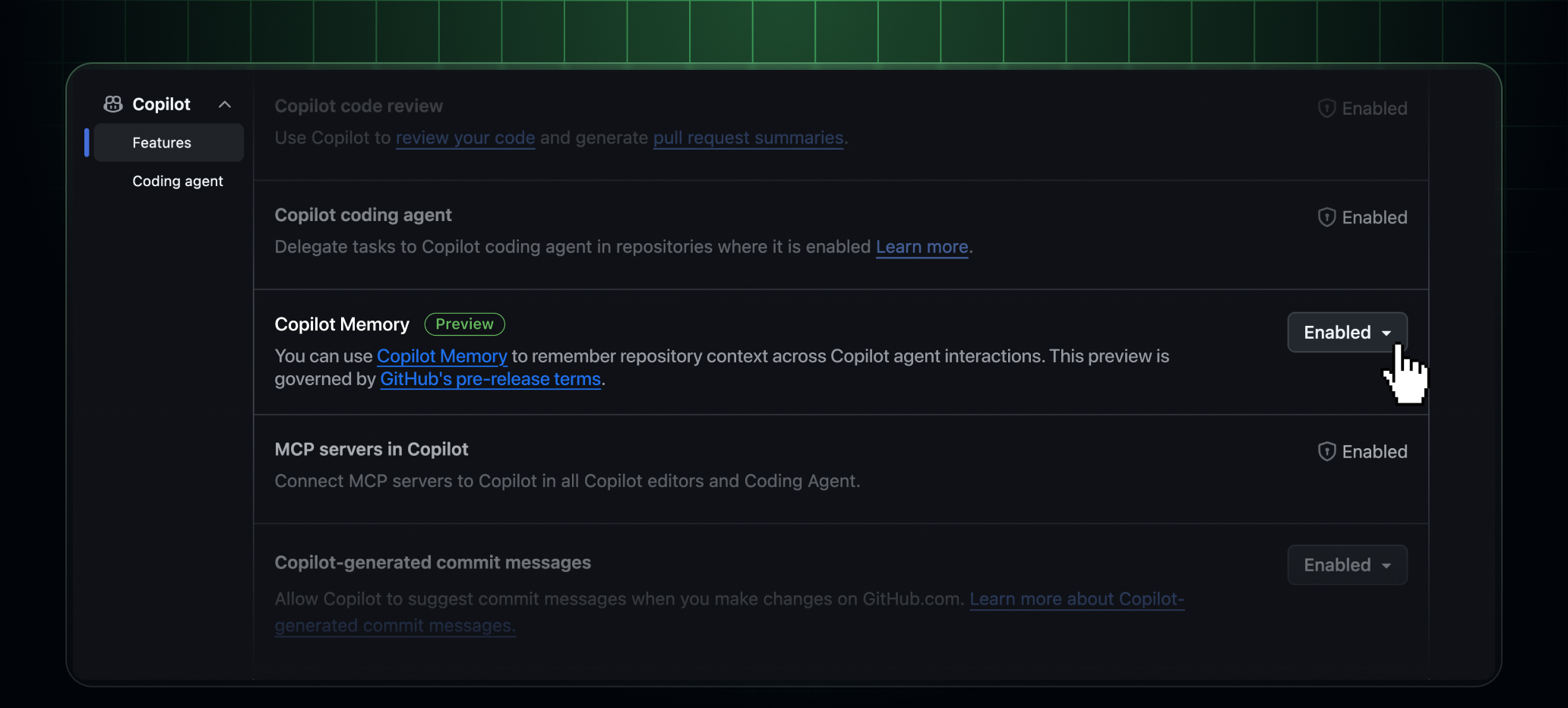
Copilot memory early access for Pro and Pro+ - GitHub Changelog
Copilot memory is now available in public preview for GitHub Copilot Pro and Pro+ users, with support in Copilot coding agent and Copilot code review. Copilot memory Copilot memory enables…
0xSero on Twitter / X
Are you compute poor? Do you want to run Qwen3.8-27B? Dude, if you have 8-16gb of vram or 16-24gb of MacOS memory this is by far the smartest model you can runPrimML is doing something phenomenal, they've created a ternary version of Qwen3.8-27B9x smaller 98.2% as smart! https://t.co/rtmNCsIQbA— 0xSero (@0xSero) September 17, 2026
MemGPT
Memory-GPT (MemGPT) - Towards LLMs as Operating Systems - Teach LLMs to manage their own memory for unbounded context!
Saving another 100TB of RAM with math (and Rust)
Cloudflare's global network is immense but not limitless. As we look for small ways to trim our resource usage, we sometimes get lucky and we can cut significantly more. Here’s how we reduced one of our Pingora-based service's RAM usage with statistics.

How do I use Leo customization and memory features?
Leo's customization and memory features allow you to create a more personalized AI experience by setting your preferences and storing...

LLM in a flash: Efficient Large Language Model Inference with Limited Memory
Large language models (LLMs) are central to modern natural language processing, delivering exceptional performance in various tasks. However, their substantial computational and memory requirements present challenges, especially for devices with limited DRAM capacity. This paper tackles the challenge of efficiently running LLMs that exceed the available DRAM capacity by storing the model parameters in flash memory, but bringing them on demand to DRAM. Our method involves constructing an inference cost model that takes into account the characteristics of flash memory, guiding us to optimize in two critical areas: reducing the volume of data transferred from flash and reading data in larger, more contiguous chunks. Within this hardware-informed framework, we introduce two principal techniques. First, "windowing" strategically reduces data transfer by reusing previously activated neurons, and second, "row-column bundling", tailored to the sequential data access strengths of flash memory, increases the size of data chunks read from flash memory. These methods collectively enable running models up to twice the size of the available DRAM, with a 4-5x and 20-25x increase in inference speed compared to naive loading approaches in CPU and GPU, respectively. Our integration of sparsity awareness, context-adaptive loading, and a hardware-oriented design paves the way for effective inference of LLMs on devices with limited memory.

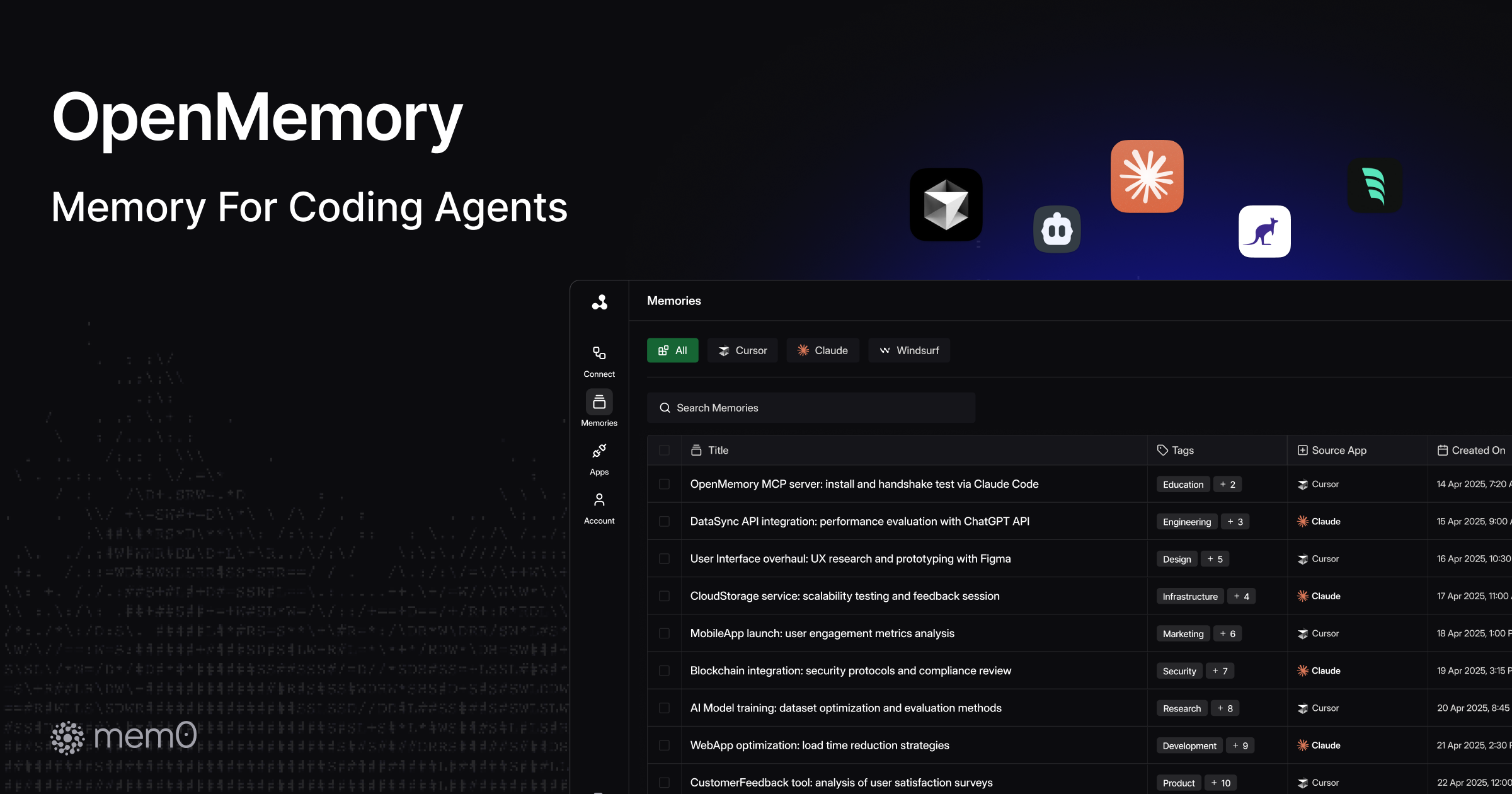
OpenMemory - AI Memory MCP Server for Coding Agents | Mem0
With OpenMemory, add persistent, project-aware memory to Cursor, Windsurf, and VS Code agents. Store preferences, patterns, and context that get retrieved automatically.
Saturation: How Your Software Will Fail at Scale - Lorin Hochstein | SSW 2026