

I read a blog post this morning by the creator of bearblog.dev (which I am a huge fan of!), which posits a vision of an ideal slow social network. We're all…
RIP social media. What comes next is messy.
As social media splinters, how can we keep the new online spaces from devolving into toxic pits of despair?

Social media algorithms can be redesigned to bridge divides — here’s how
"It falls to both the tech companies that built these systems and an engaged public to create technologies designed for social cohesion."
Our Social Media is Broken. Is Decentralization the Fix? | Internet Archive Blogs
When Jack Dorsey, founder of the very centralized social media platform, Twitter, posted this message about decentralized social media, our DWeb community took note:
Introducing Slow Social
I’d like to introduce you to Slow Social. Slow Social is my idea of what I wish social networks...
Shifts in U.S. Social Media Use, 2020–2024: Decline, Fragmentation, and Enduring Polarization
The social media ecosystem appears to be in flux. Twitter’s rebranding to X has come to symbolize a broader reorganization of online publics – political reshuffling, user attrition, and uncertainty over the role of legacy platforms. Simultaneously, the shift from text-based, networked feeds toward algorithmically curated, short-form video has accelerated, with TikTok setting the pace for the wider ecosystem [18, 14, 16]. At the same time, everyday communication increasingly migrates from large, open networks to semi-private spaces such as group chats and messaging apps. Commentators describe a digital public sphere in transition: smaller, more fragmented, less dominated by traditional social networking sites, and rise of more broadcast-oriented forms of media – with some even suggesting that we are seeing the beginning of the end of the social media era.
My 2024 thoughts on the state of social media
I see a continued fragmentation of social media as people leave X(Twitter).

From Feeds to Trails
To design the future of social media, rethink the interface before the algorithm.
Bloom
A calmer social network with no ads, no tracking, and a chronological feed.

Leaflet, Blogging, and How to Fix Social Media - Aaron Ross Powell
Decentralization, network overlap, and why we should all blog, too.
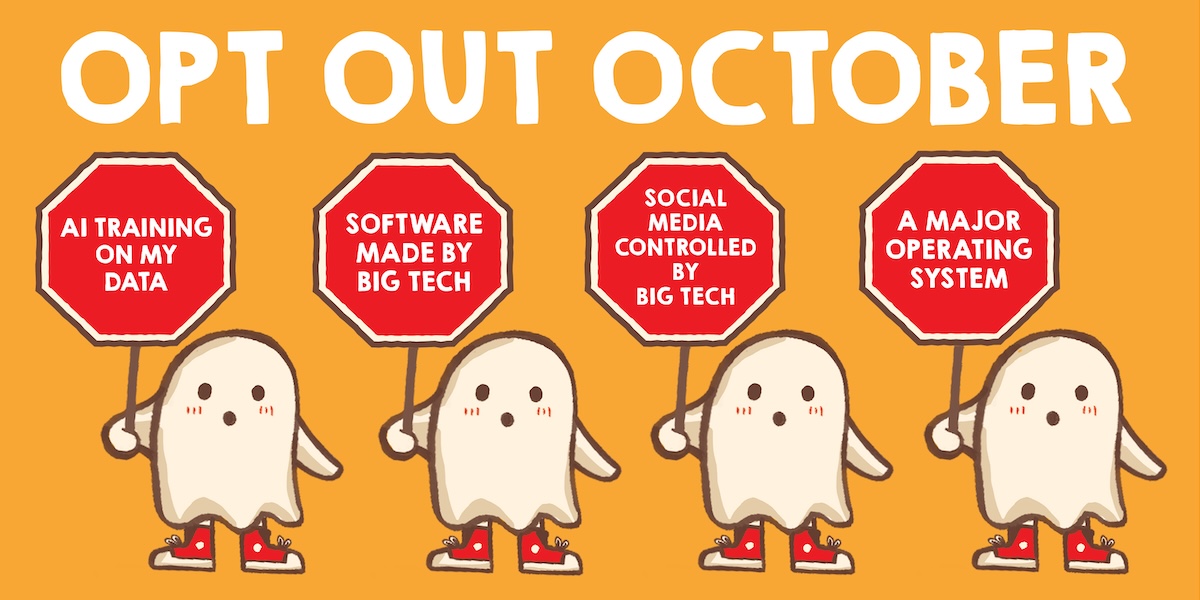
How to Opt Out of Social Media Controlled by Big Tech
It might seem like there are simply no other choices for social media beyond those controlled by big tech companies, but that’s not true at all. In fact, we’re in a golden era of options being built
The year social networks were no longer social | TechCrunch
The term “social network” has become a meaningless association of words. Pair those two words and it becomes a tech category, the equivalent of a single

Blog | Babesky
How to Take Back Control of Social Media This blog post has been a long time coming, so hydrate and…
🧵 On social media, we feel trapped in “filter bubbles” and “echo chambers.” Often, we see this as a problem with the algorithm. Our new essay argues the problem is the feed interface itself: it constrains our movement—all we can do is scroll. We lay out an alternative vision:

From Feeds to Trails
leaflet.pubSocial media algorithms don't allow us to understand or control what we see online and why... until now! Top scholars @jonathanstray.com and @noupside.bsky.social are sharing @mysky.social, a tool that allows users to adjust their feed’s priorities and explains why certain posts appear over others.

🎛️📲 Meet the algorithm you can actually control and understand
newpublic.substack.comSocial media is no longer social. Most of it is passive viewing of videos and pictures from people we've never met. But we're still studying social media like it's 2010. We've entered the post-social media era — and research needs to catch up. osf.io/preprints/socarxiv/6nue7_v1 preprint w/ Richard Rogers


