


worrying away at an old subject
The problem of knowledge in the Anthropocene
In the twentieth century, debates about economic planning were largely shaped by arguments concerning knowledge and the acquisition of information. As the century drew to a close, the dispute was a...

Opinion | Be Afraid of Economic ‘Bigness.’ Be Very Afraid. (Published 2018)
In the 1930s it contributed to the rise of fascism. Alarmingly, we are experimenting again with a monopolized economy.

Chesterton’s Fence: A Lesson in Thinking
A core component of making great decisions is understanding previous decisions. If we don’t understand how we got “here,” we run the risk of making things much worse.

Why I'm Worried About Job Loss + Thoughts on Comparative Advantage — LessWrong
David Oks published a well-written essay yesterday arguing that the current panic about AI job displacement is overblown. I agree with a few of his p…
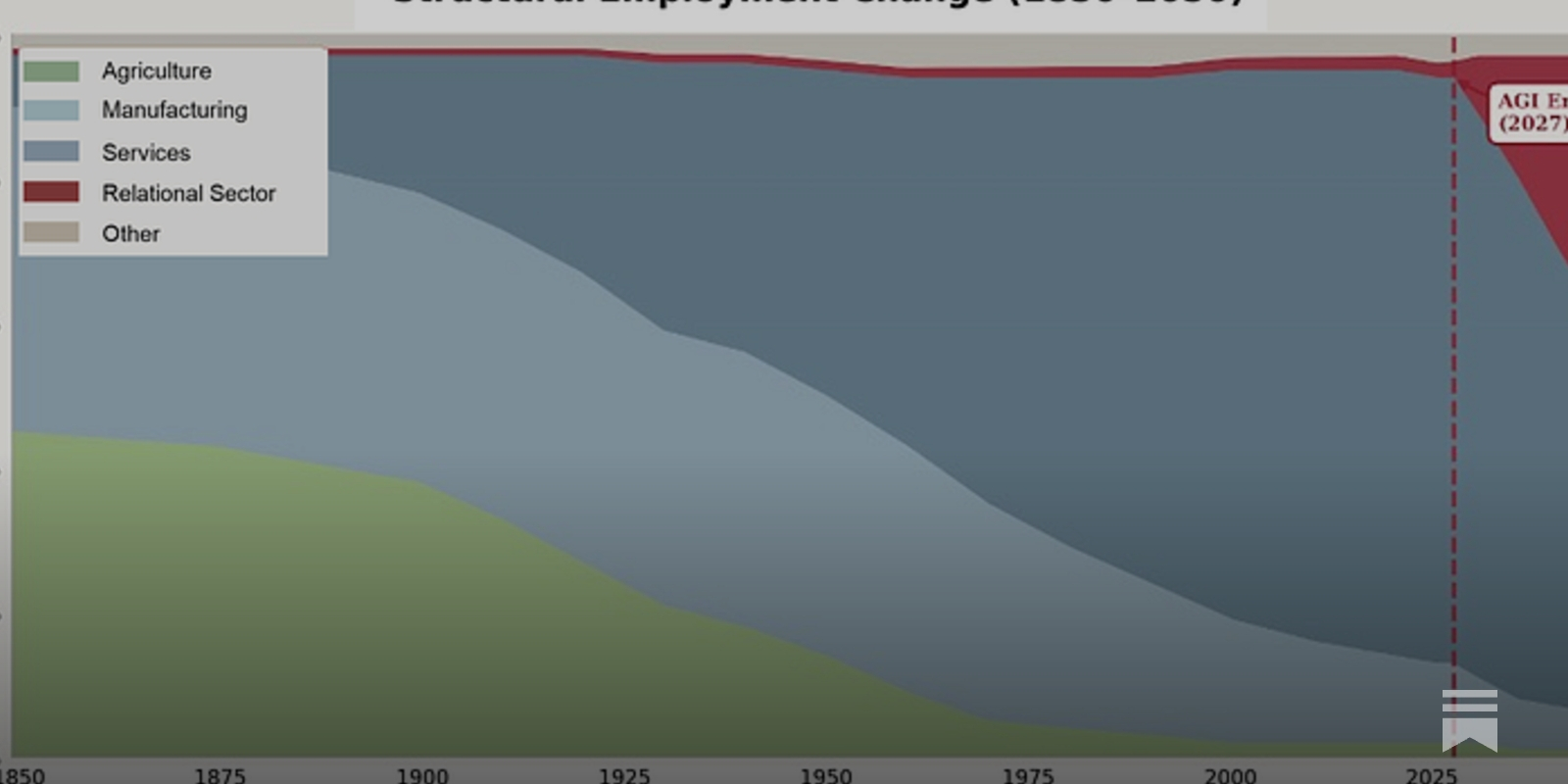
What will be scarce?
The economics of structural change and the post-commodity future of work
Does modernisation erase cultural difference – or amplify it? | Psyche Ideas
We understandably fear the flattening effect of modernity. But global data from China to Peru tells a hopeful story

People Spend Too Much Time On Decisions with Equally Satisfying Outcomes
The pitfalls of analysis paralysis

Silence is a Commons by Ivan Illich
Ivan Illich is doing to computers what he did to education (De-Schooling Society, 1971), to energy (Energy and Equity, 1974), to medicine (Medical Nemesis, 1975), and to sex roles (Vernacular Gender, 1983). Each time it has been radical analysis that changes our perception of what is really going on. Each time, and with growing clarity, it is an economic/historical analysis having to do with the idea of scarcity as a means of exploitation. This article is from Illich's remarks at the "Asahi Symposium Science and Man - The computer-managed Society," Tokyo, Japan, March 21, 1982. The ideas here are part of a book Illich is working on, The History of Scarcity. - Stewart Brand The CoEvolution Quarterly, Winter 1983
On technological optimism and technological pragmatism
"There are no guarantees that things are going to turn out very well for anyone.”

A Thesis on the History of the 21st Century: Technocracy, AI, and the End of the World
Reviewing a trio of books by a sextet of ruling-class ideologues, Mathias Fuelling finds an ambient anxiety hanging over a perceived crisis in American capitalism, with visions of bolstering a Silicon Valley-led technocracy fueled by AI investment reflecting American fears over the dawn of a "Chinese Century."
The Great Reckoning - The Ideas Letter
The world feels unsettled, as if history itself were changing tempo. The familiar landmarks of the modern age are blurring, slipping away, and the stories we once told ourselves about…

The Great Reckoning - The Ideas Letter
The world feels unsettled, as if history itself were changing tempo. The familiar landmarks of the modern age are blurring, slipping away, and the stories we once told ourselves about…
Ideology and Ideological State Apparatuses by Louis Althusser 1969-70
I must now expose more fully something which was briefly glimpsed in my analysis when I spoke of the necessity to renew the means of production if production is to be possible. That was a passing hint. Now I shall consider it for itself.
On Taste, Effort & Curiosity - again
When AI collapses how long it takes to ship, what’s left is judgment, experimentation, and knowing what not to build.
The Golden Age Is Behind Us: How the Status Quo Impacts the Evaluation of Technology
New technology invariably provokes concerns over potential societal impacts. Even as risks often fail to materialize, the fear continues. The current research explored the psychological underpinnings of this pattern. Across four studies ( N = 2,454 adults recruited via Amazon Mechanical Turk), we found evidence for the role of status quo thinking in evaluating technology. In Study 1, we experimentally manipulated the reported age of unfamiliar technology and found that people evaluate it more favorably when it is described as originating before (vs. after) their birth. In Studies 2 through 4, participants’ age at the time of invention strongly predicts attitudes toward a wide range of real-world technologies. Finally, we found that individual differences in status-quo-based decision-making moderated evaluations of technology. These studies provide insight into how people respond to the rapidly changing technological landscape.

Permissionless innovation: The fuzzy idea that rules our lives
People sometimes ask me, “What is the most important concept in political economy?” The answer is easy, but subtle …
