

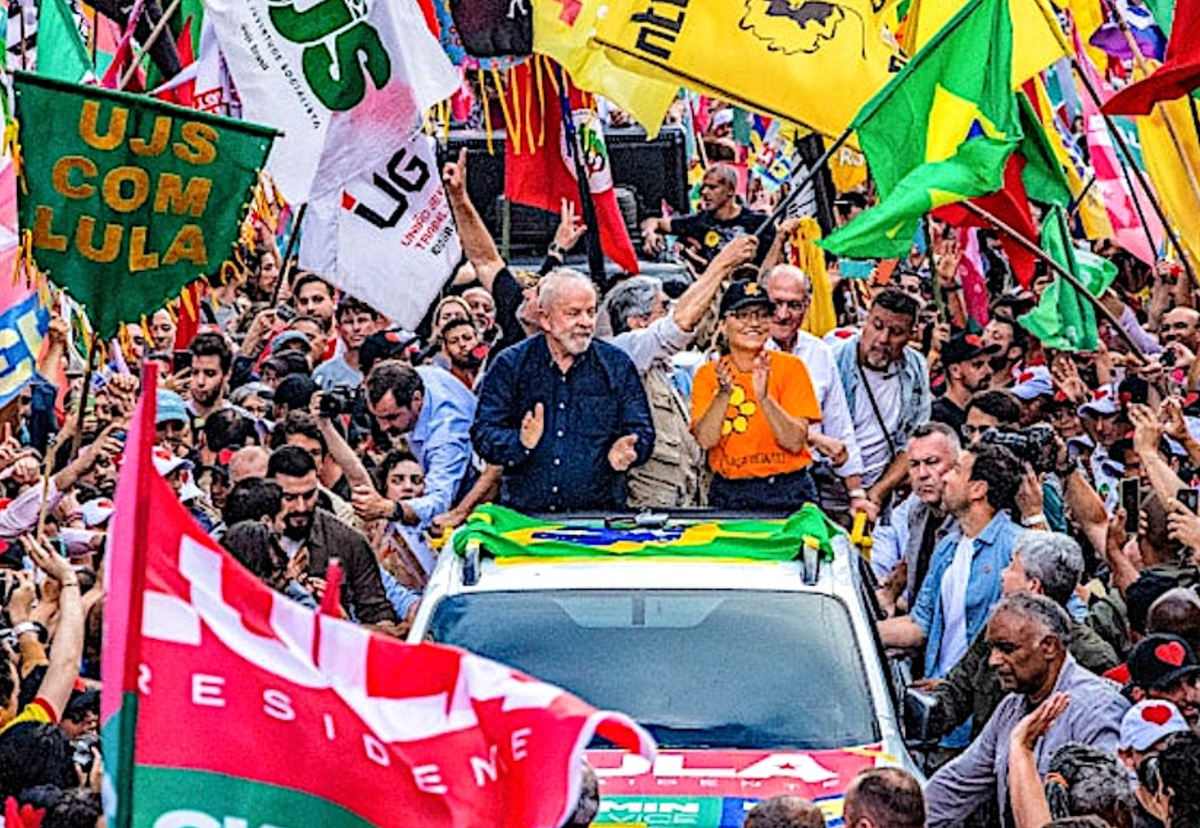
Brazil's government is trying something weird: Being proactive about election misinformation.
The Brazilianization of the World - American Affairs Journal
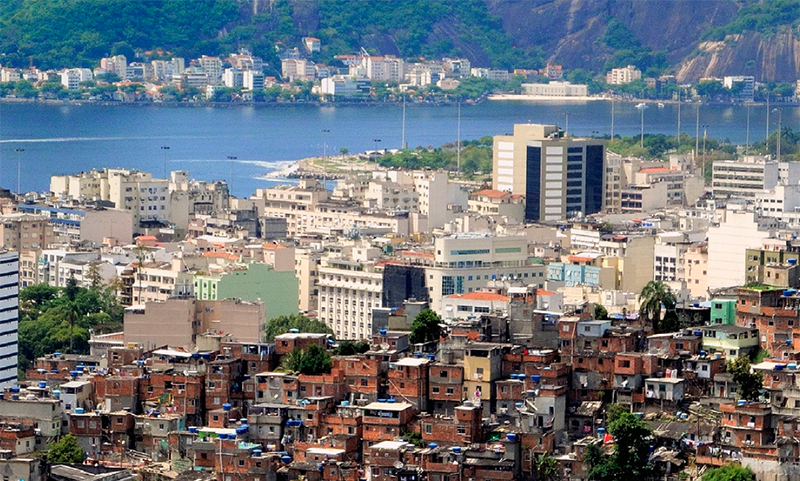
The West’s involution finds its mirror image in the original country of the future, the nation doomed forever to remain the country of the future, the one that never reaches its destination: Brazil. The Brazilianization of the world is our encounter with a future denied, and in which this frustration has become constitutive of our social reality. While the closing of historical horizons has often been a leftist, indeed Marxist, concern, the sense that things don’t work as they should is now widely shared across the political spectrum. Welcome to Brazil. Here the only people satisfied with their situation are financial elites and venal politicians. Everyone complains, but everyone shrugs their shoulders. This slow degradation of society is not so much a runaway train, but more of a jittery rollercoaster, occasionally holding out promise of ascent, yet never breaking free from the tracks. We always come back to where we started, shaken and disoriented, haunted by what might have been...
Venezuela misinformation spreads like wildfire online
The right clearly get that people aren't happy about what Trump did in Venezuela. So, they're pumping out misinformation and AI slop

Here’s what happened when Brazil banned corporate donations in elections
In the wake of corruption scandals, Brazil banned corporate donations to electoral campaigns. This is what happened.

When Do Parties Lie? Misinformation and Radical-Right Populism Across 26 Countries - Petter Törnberg, Juliana Chueri, 2026
The spread of misinformation has emerged as a global concern. Academic attention has recently shifted to emphasize the role of political elites as drivers of mi...

Brazil's Lula accuses social media giant Meta of election interference amid tight run-off campaign
Social media platform Meta has 48 hours to respond to claims by Brazil's leftwing candidate and incumbent President Luiz Inacio Lula da Silva's campaign accusing the tech platform of blocking content…

Anticipating Election Misinformation in the 2026 Midterms
Election misinformation often follows the same pattern every cycle. Here are some of the false and misleading claims that voters are likely to see.

What is electoral misinformation?
Advice on engaging with campaign material, and guidance on who to contact if you're unsure.

When Do Parties Lie? Misinformation and Radical-Right Populism Across 26 Countries
The spread of misinformation has emerged as a global concern. Academic attention has recently shifted to emphasize the role of political elites as drivers of misinformation. Yet, little is known of the relationship between party politics and the spread of misinformation—in part due to a dearth of cross-national empirical data needed for comparative study. This article examines which parties are more likely to spread misinformation, by drawing on a comprehensive database of 32M tweets from parliamentarians in 26 countries, spanning 6 years and several election periods. The dataset is combined with external databases such as Parlgov and V-Dem, linking the spread of misinformation to detailed information about political parties and cabinets, thus enabling a comparative politics approach to misinformation. Using multilevel analysis with random country intercepts, we find that radical-right populism is the strongest determinant for the propensity to spread misinformation. Populism, left-wing populism, and right-wing politics are not linked to the spread of misinformation. These results suggest that political misinformation should be understood as part and parcel of the current wave of radical right populism, and its opposition to liberal democratic institution.
Meta lucra com anúncios irregulares promovidos por redes coordenadas para influenciar as eleições no Brasil
Neste relatório, desenvolvido no âmbito do Observatório das Big Tech, que se propõe a verificar se as grandes plataformas digitais estão cumprindo seus deveres e obrigações durante as eleições gerais de 2026, o NetLab UFRJ identificou 1.613 anúncios político-eleitorais impulsionados nas plataformas da Meta a partir do exterior e por atores sem autorização para realizar propaganda eleitoral no Brasil.As páginas responsáveis por esses anúncios estavam localizadas predominantemente nos Estados Unid

Colombia's Petro accuses Israeli cyberfirm BlackCore of election interference
Outgoing president rejects election results, claiming half a million automated bots were deployed to manipulate voters ahead of Abelardo de la Espriella’s razor-thin victory | Anadolu

Meta Denies Accusation of Anti-Lula Political Bias in Brazil After Electoral Court Ruling
Tech giant Meta has denied accusations it has acted with political bias during Brazil’s presidential campaign

Os influencers no Brasil que atacam o voto das mulheres - BBC News Brasil
Reportagem mapeou questionamento ao direito das mulheres ao voto e seus ecos no mundo político. À BBC News Brasil, ministra Cármen Lúcia, do STF, criticou declarações e disse que propor qualquer mudança neste direito é inconstitucional.

(PDF) Authoritarian Neoliberalism from Below: Subjectivity and Platform Capitalism in Argentina and Brazil
PDF | We are witnessing a worldwide resurgence of reactionary ideologies and movements, combined with an escalating assault on democratic institutions... | Find, read and cite all the research you need on ResearchGate

The Pain Is the Plan
MAGA is actively seeking to immiserate the country in order to cement their power over the rest of us.

How Technology Is Shaping Modern Politics
Discover how technology is reshaping politics, from digital campaigns to AI, and the challenges of misinformation and election security.

Public support for the <i>cordon sanitaire</i> : Descriptive evidence from Spain
Reactions to the rise of far-right parties that advocate democratic backsliding, and the dilution of socially liberal democratic norms present a dilemma for existing political parties. How should existing political parties respond to this challenge? A commonly adopted strategy is to apply a cordon sanitaire which excludes radical right-wing challengers from the government-forming process. Do voters support this policy? Leveraging data from Spain – where the mainstream right has accommodated the radical right-wing party, VOX, via numerous governing coalitions – I rely on individual citizens’ views on how parties should respond to rise of the far-right party, to answer this question. Empirically, the results show very low-level support for the cordon sanitaire in Spain. Indeed, the modal position of the electorate, regardless of their ideological position, is to treat the party just like any other. These results are not conditioned by the propensity of individuals to identify VOX as indeed being a “radical right” party. These descriptive findings suggest that whilst radical right-wing parties may present an inimical threat to democratic norms, citizens do not necessarily view the means of squashing this threat to be one of strategic exclusion. This likely explains why the mainstream right has been able to institutionalise VOX as a political ally: where strategic exclusion is not expected, the mainstream right need not fear violating an expectation that does not exist.