


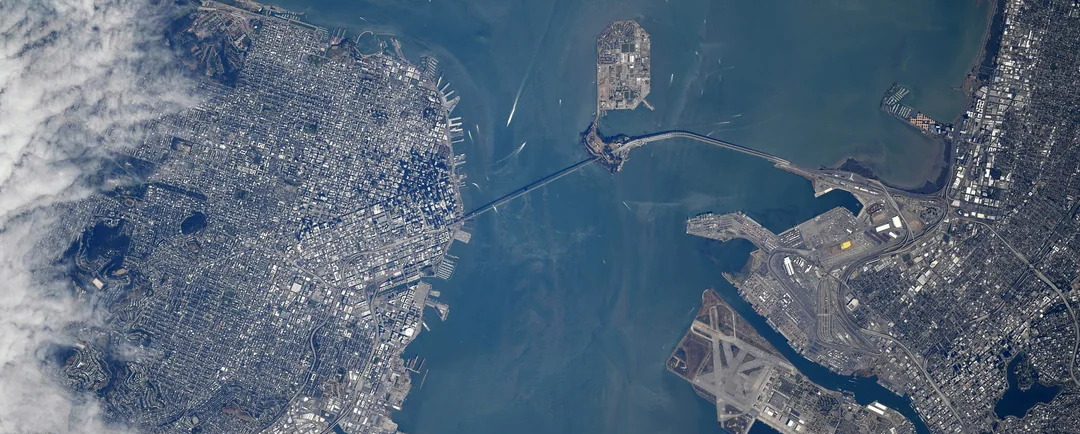
I have close friends who live in Oakland which is across the Bay from me. We generally meet in the city to hang out...
The great vibes divergence
Why does San Francisco feel so weird during this tech boom while Oakland is more or less still Oakland?
Out of Oakland by Sean L Malloy | East Bay Booksellers
Out of Oakland offers a wonderful case study in the possibilities and limitations of transnational organizing. â? Diplomatic HistoryIn Out of Oakland, Sean L.
Tower Of Power - Back To Oakland
Who Rules Oakland? : Indybay
The Oakland Chamber of Commerce and other business lobbies in the East Bay have recently pressured government officials to crack down on Occupy Oakland. Furthermore, they have popularized a narrative portraying Occupy as "harmful to local business." We critically examine ruling class networks of shared ownership, governance, and political advocacy impacting communities in Oakland by revealing links between the directors and executives of major corporations that are members in the Oakland Chamber of Commerce. In subsequent parts to this series we will provide more detailed information about the directors and executives of these companies, and provide an analysis of their social cohesion, profit-driven collusion, and political influence. More broadly, we will explore networks and institutions of economic and political power in the Bay Area.

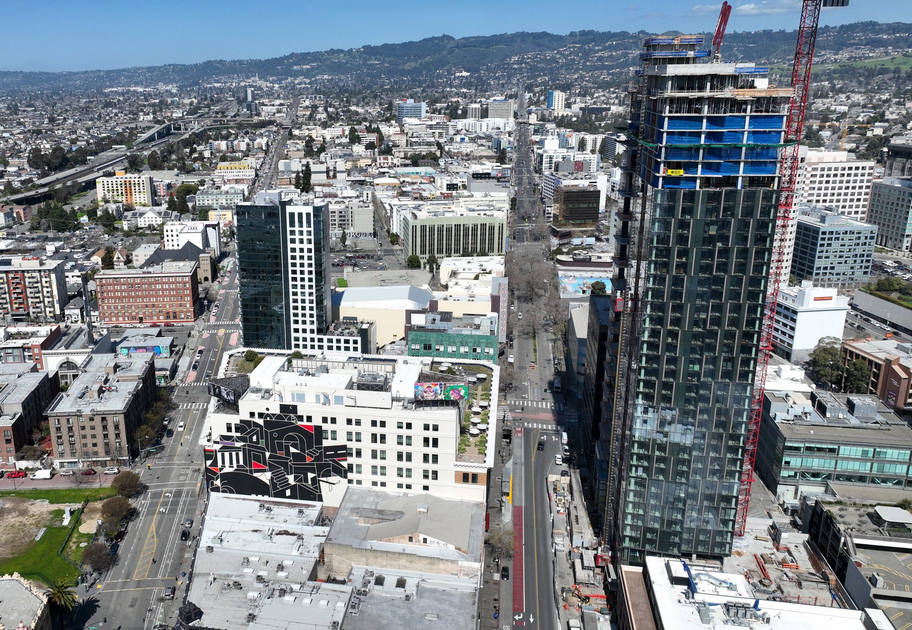
Two-bedroom apartments hit $6K for the first time in SF. The same apartment in Oakland is less than half that, but the clock is ticking.
While Oakland has long been a more affordable alternative, the rental gap between SF and Oakland is now at a staggering 128%. We break down why the East Bay deal might be changing as vacancy rates tighten.
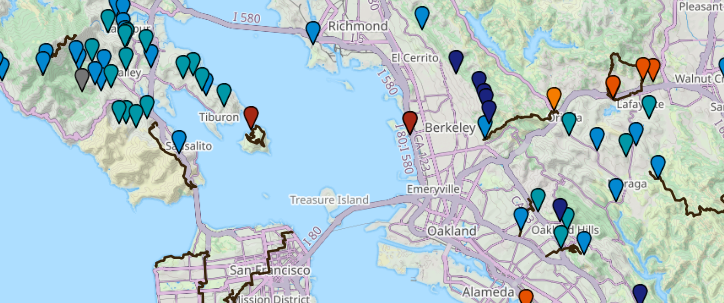
Hiking by Transit
Transit-accessible hikes, parks, and trailheads across California.
South Bay Map Night (OpenStreetMap), Tue, Jul 9, 2024, 7:00 PM | Meetup
Every other week, [OpenStreetMap](https://www.openstreetmap.org/) enthusiasts from across San José and the South Bay meet to share tagging advice, hatch mapping plans, and


Hometown Chinatown: A History of Oakland's Chinese Community, 1852-1995
Focusing on the local history of the Chinese in Oakland, California, this study examines common stereotypes in the early Chinese community and Chinatown organizations.

The First Map of Oakland, California: An Historical Speculation as Solution to an Enigma on JSTOR
Jack J. Studer, The First Map of Oakland, California: An Historical Speculation as Solution to an Enigma, California Historical Society Quarterly, Vol. 48, No. 1 (Mar., 1969), pp. 59-71

BART: The Dramatic History of the Bay Area Rapid Transit System by John King, Michael C. Healy
When BART opened in the San Francisco Bay Area in 1972, it became a catalyst for a renaissance in modern rail transit, both nationally and
The Water’s Edge: Empire, Race, and the Global History of Oakland, California, 1848-1980
Author(s): Klein, Andrew Nelson Carver | Advisor(s): Kelley, Robin D.G. | Abstract: This dissertation explores historical intersections between capitalism, race-making, environmental change, and U.S. foreign relations from the vantage of Oakland’s waterfront. It tracks the evolution of this geostrategic coastline since it emerged as a coal-powered nexus of railroads, steamships, and military installations during American colonization. Revising the story of Oakland’s development from a global perspective, my project documents how local boosters, businessmen, and bureaucrats forged intimate ties with far-flung territories administered by U.S. troops and landowners. Combining social and environmental history with methods from Black studies, I map the transformation of Oakland’s fertile estuary into an infilled hub of postindustrial commerce, a vital node of military logistics, and a focal point for racialized labor migration. Simultaneously, this dissertation reveals how, over the long twentieth century, Black, Indigenous, Chinese, and other working-class Oaklanders found footholds on the harbor, often repurposing its imperial routes for dramatically different ends. Drawing on archives and oral histories in Cuba, Hawai‘i, and across the continental United States, I trace Oakland’s tradition of radical internationalism, most visible in the antiwar and Black Power movements of the sixties, to multi-generational struggles over the governance of coastal land. I argue that Oakland’s waterfront both bridged the continental and overseas expansion of an ascendant world power and came to serve as a proving ground for alternative forms of globalization. “The Water’s Edge” therefore offers a critical reappraisal of the generally place-bound history of North American urbanism and far-reaching lessons for building just cities in a present defined by global environmental crises.

Deploy San Francisco | DigitalOcean
Deploy San Francisco is an in-person conference where you'll learn to navigate what's next in AI with infrastructure insights and strategies. Register for free.

Oakland, the Last Refuge of Radical America (Published 2012)
The Occupy movement is still wreaking havoc in Oakland, the world capital of anticapitalism.
