

Note: This was originally published as a LinkedIn post on November 11, 2025. I need to make a painful confession: somehow, LinkedIn has become an important social network to me. This isn’t necessarily due to LinkedIn’s sparkling competence, of course. To the contrary, LinkedIn is the Gerald Ford of social networks: the normal one that was left standing as the Richard Nixons and the Spiro Agnews of social media imploded around them. As with Gerald Ford, with LinkedIn we know that we’re getting something a bit clumsy and boring, but (as with post-Watergate America!), we’re also getting something that isn’t totally crooked — and that’s actually a bit of a relief.
Nobody knows how the whole system works
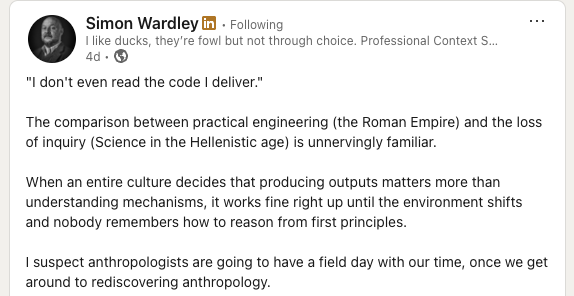
One of the surprising (at least to me) consequences of the fall of Twitter is the rise of LinkedIn as a social media site. I saw some interesting posts I wanted to call attention to: First, Simon W…
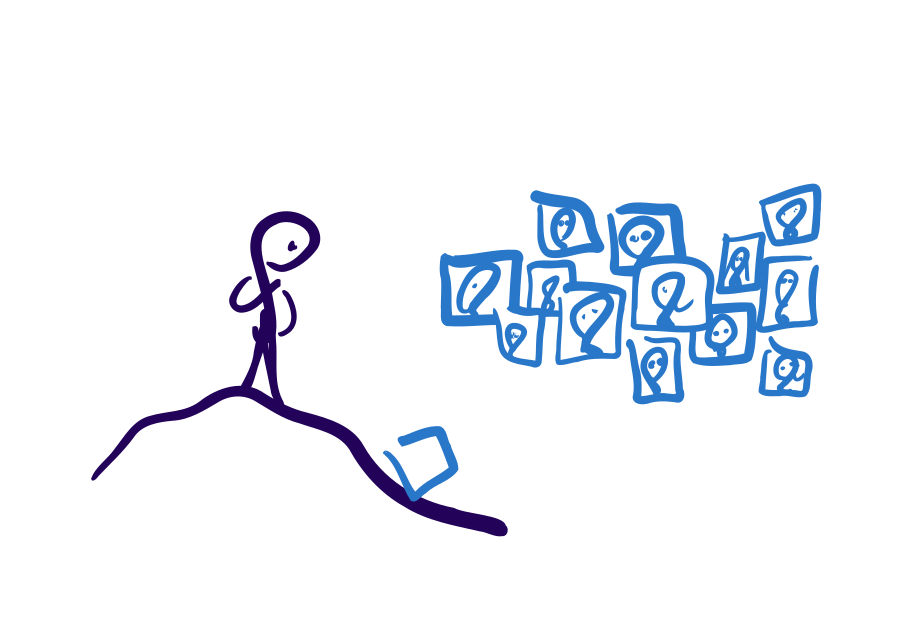
How to beat LinkedIn: The Game
A strategy guide for using a semi-pointless social network in all the wrong ways.

How Social Media Tricks our Brains — and Destroys our Politics - Aaron Ross Powell's Blog
Cohort — A New Professional Social Graph
“Professional? Social? Isn’t that what LinkedIn is for!” Nope.

That smiling LinkedIn profile face might be a computer-generated fake
Stanford researchers uncovered more than 1,000 of these LinkedIn profiles. A technology that has been used to promote misinformation online has now entered the corporate world.

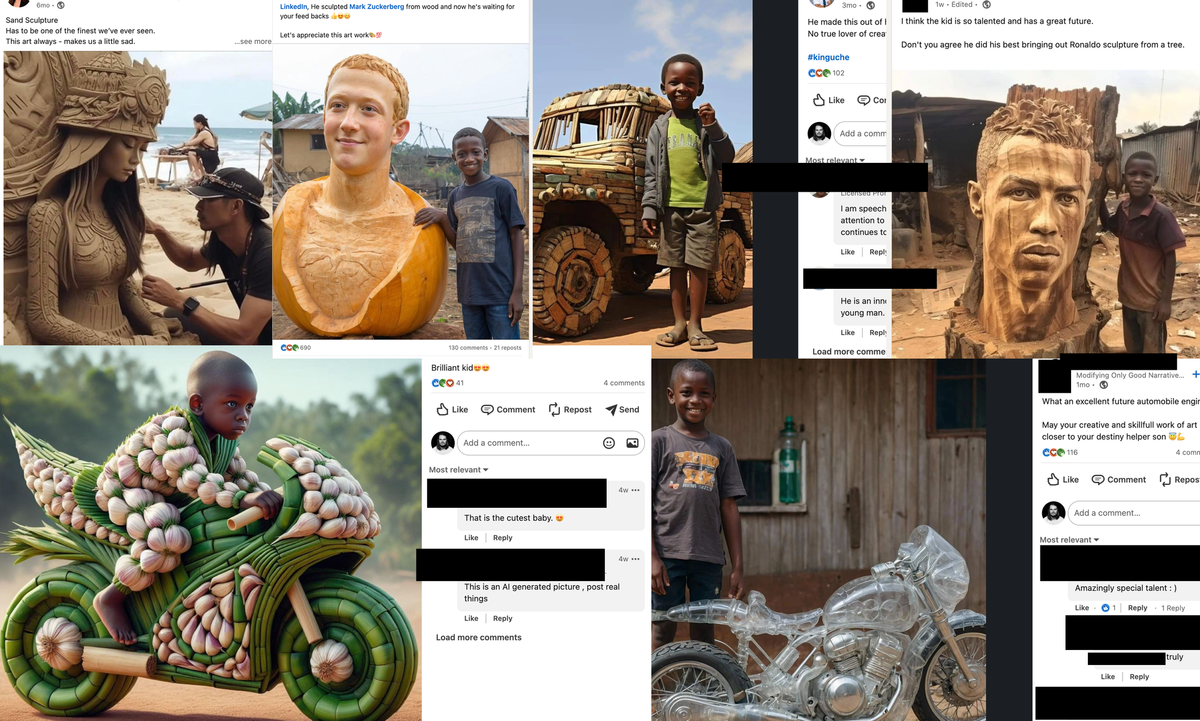
Facebook’s Bizarre AI Images Now on LinkedIn, Too
Linkedin lunatics discover AI image engagement hacking.
Why the next professional network will look nothing like LinkedIn
As LinkedIn unbundles, SaaS companies emerge as leaders of the new professional networks
Sign Up | LinkedIn
500 million+ members | Manage your professional identity. Build and engage with your professional network. Access knowledge, insights and opportunities.
Sign Up | LinkedIn
500 million+ members | Manage your professional identity. Build and engage with your professional network. Access knowledge, insights and opportunities.
Scientists no Longer Find Twitter Professionally Useful, and have Switched to Bluesky
Synopsis Social media has become widely used by the scientific community for a variety of professional uses, including networking and public outreach. For the past decade, Twitter has been a primary home of scientists on social media. In recent years, new leadership at Twitter has made substantive changes that have resulted in increases in the prevalence of pseudoscience, conspiracy theory, and harassment on the platform, causing many scientists to seek alternatives. Bluesky has been suggested as a good alternative to Twitter, but the phenomenon of academics switching social media platforms has not previously been studied. Here we report on the results of a survey distributed to scientists on Twitter and Bluesky (n = 813). Results overwhelmingly confirm that changes to Twitter have made the social media platform no longer professionally useful or pleasant, and that many scientists have abandoned it in favor of Bluesky. Results show that for every reported professional benefit that scientists once gained from Twitter, scientists can now gain that benefit more effectively on Bluesky than on Twitter.
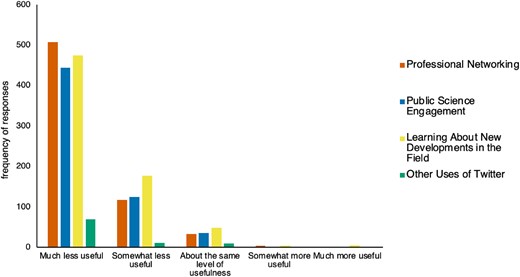
Leaflet, Blogging, and How to Fix Social Media - Aaron Ross Powell
Decentralization, network overlap, and why we should all blog, too.
The year social networks were no longer social | TechCrunch
The term “social network” has become a meaningless association of words. Pair those two words and it becomes a tech category, the equivalent of a single

"This is what a truly networked movement does. It's more than interoperability between platforms, it's infrastructure for trust, visibility and connection" By a @gainforest.earth user discovering @atproto.com's magic for the first time! 🦋🌱 Their full post: linkedin.com/feed/update/urn:li:activity:7…

Sometimes the most exciting discoveries happen by accident. While reading this thoughtful field report from GainForest https://lnkd.in/eihbfggg, I was reminded why I've been so impressed by the wa...
www.linkedin.com
