


Cognitive labor is unevenly distributed between men and women in households. New research shows there’s nuance to this breakdown, with implications for how we address gender equality across society.
Neuroscience research finds brain structure differences in men and women are not strongly linked to behavioral differences
Brain structure differences in men and women are only weakly linked to behavioral differences, according to new research that analyzed two large

Sex Hormones as Cognitive Enhancers?
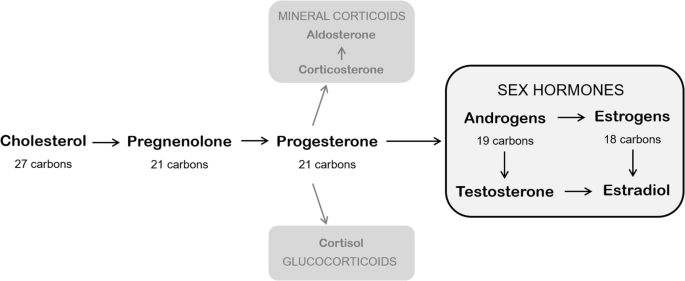
Understanding the differences in the way women and men think has made headway thanks to experiments showing how sex hormones influence cognitive capacities. Masculine and feminine sex hormones (androgens and estrogens, respectively) affect cognition in different ways and may account for some of the gender differences in cognitive abilities, allowing men and women to perform better in certain cognitive tests. In this opinion article, we discuss studies addressing differences in cognitive functions between males and females and the underlying neural substrates, as well as the effects of sex hormone supplementation. Even though some studies on patients receiving exogenous sex hormones showed gender differences that emerge at group levels on a few cognitive tasks, it is not yet clear whether these differences can be partially attributed to hormonal causes. Supplementation of female estrogen can enhance verbal skills, whereas masculine androgen can increase performance in mathematical and visuospatial tasks. Studies of the administration of exogenous sex hormones have allowed further insight into the use of sex hormones as possible cognitive enhancers.
Gender Performativity | The Paper Pilot
The Paper Pilot's digital garden of thoughts on philosophy, politics, and sociology
Nurturing Our Humanity: How Domination and Partnership Shape Our Brains, Lives, and Future - The Center for Partnership Systems
By Riane Eisler and Douglas P. Fry Nurturing Our Humanity: How Domination and Partnership Shape Our Brains, Lives, and Future, by Riane Eisler and Douglas P. Fry, holds the key to a clear perspective on our personal and social options in today’s world, showing how to structure our environments – from family and gender relations […]

Gender Productivity Paradox: Artificial Intelligence Is Failing Women - ICTworks
We're seeing decreasing distributive returns at higher AI exposure levels. Precisely when we should expect technology to be most equalizing.

What’s the Matter with Men?
They’re floundering at school and in the workplace. Some conservatives blame a crisis of masculinity, but the problems—and their solutions—are far more complex.


Specialization and the Flowering of Personality, and Choice - Marginal REVOLUTION
A new paper in Science adds support to the so-called gender-equality paradox. Using a survey of some 80,000 people across 76 countries Falk and Hermle find that for a variety of preferences the differences between the genders gets larger the greater is economic development and gender equality. The basic story is here: As the authors […]
Neuroscientist Larry Cahill on the ‘neurosexism’ debate | Hacker News
Her exact words were “men and women are equal but different, in many ways they’re complimentary” she then explained that some men look down on women because they didn’t value how women think about things. She also said the same is true of some women viewing men.
Gender Pay Gap — Information is Beautiful
A visual breakdown of the UK and US gender pay gap by industry and by job type.

A Growing Gender Divide in the AI Economy — The Honest Economist
The article argues that AI is reshaping gender inequality even before the pay gap visibly widens. Women are more concentrated in clerical and administrative roles where AI can restructure work, while men are more concentrated in technical, AI-complementary roles. Among college graduates, the exposur

AI’s Gender Gap - Haas News | UC Berkeley Haas
Generative AI could boost productivity and reduce inequality, but women across the world are at risk of missing out. A sweeping analysis by Nick Otis, PhD 25, Assistant Professor Solène Delecourt, and colleagues from Stanford and Harvard found that women were about 20% less likely than men to use tools such as ChatGPT, Claude, and […]

New research reveals "staggering" gender gap in ChatGPT adoption
A study reveals that ChatGPT adoption reflects existing workplace inequalities, with younger, higher-paid men using AI more than women and lower-income employees.

The Large Gender Gap in Who Uses AI
A recent study finds that AI usage tilts heavily toward men. Part of the reason: Women worried they might be penalized for using AI.

Women Who Use AI At Work Face A Predictable ‘Competence Penalty’
Women who use AI are seen as less competent than men who use AI, even when producing identical work. This reflects a common gender bias known as the "competence penalty."
