


Ideas for a Changing World.
How to choose a governance system for your organization
Is your nonprofit, small business, or volunteer group looking for a new way to make decisions? Many groups are questioning our mainstream systems — and that includes the systems by which we make decisions. Governance used to be one of the things we’d all take for granted, and now it’s one of the cho

The Future of Governance is not Governments
Living systems on every scale have governance — methods of self-regulation to manage the coherence and continuity of the system. Also, for…


Broken Assumptions of Governance
Before we can really tackle building next generation governance, we may have to shake up some of the assumptions holding us back. After…

Binding Chaos: Mass Collaboration on a Global Scale
The world is long overdue for a completely new system of governance. If there was ever a need for political representation or a paternalistic and opaque authority, it has been removed by technology. Every political system we have tried has proven incapable of protecting human rights and dignity. Every political system we have tried has devolved into oligarchy. To effect the change we require immediately, to give individuals control and responsibility, to bring regional systems under regional governance, allow global collaboration and protect the heritage of future generations, we need a new political model.
The Yak Online Governance Primer :: The Yak Collective
How do you do online governance? This primer is intended as a guided tour through a curated set of readings — based on a year of study by the Yak Collective1 — that can help groups and organizations navigate this question.
Humanitarian Governance
This review examines humanitarian governance, defined as the increasingly organized and internationalized attempt to save the lives, enhance the welfare, and reduce the suffering of the world's most vulnerable populations. Political scientists and international relations scholars are only now beginning to explain this rapidly growing global governance of humanity, which is particularly evident in the developing literatures on humanitarian intervention, emergency relief, peacebuilding, and refugee protection. As they increasingly engage this relatively unexplored area of global life, political scientists are using the familiar analytics of the global governance literature to explain the origins, design, and effectiveness of this collective activity. This essay, though, interjects an alternative perspective, one that draws from critical theory, to widen the research agenda of the study of humanitarian governance. Specifically, the essay raises six central questions: What kind of world is being imagined and produced? What accounts for the tremendous growth of humanitarian governance over the last century? Who governs? How is humanitarian governance organized and accomplished? What are the principal techniques of control? By what authority do humanitarians govern and what do they do with that authority?

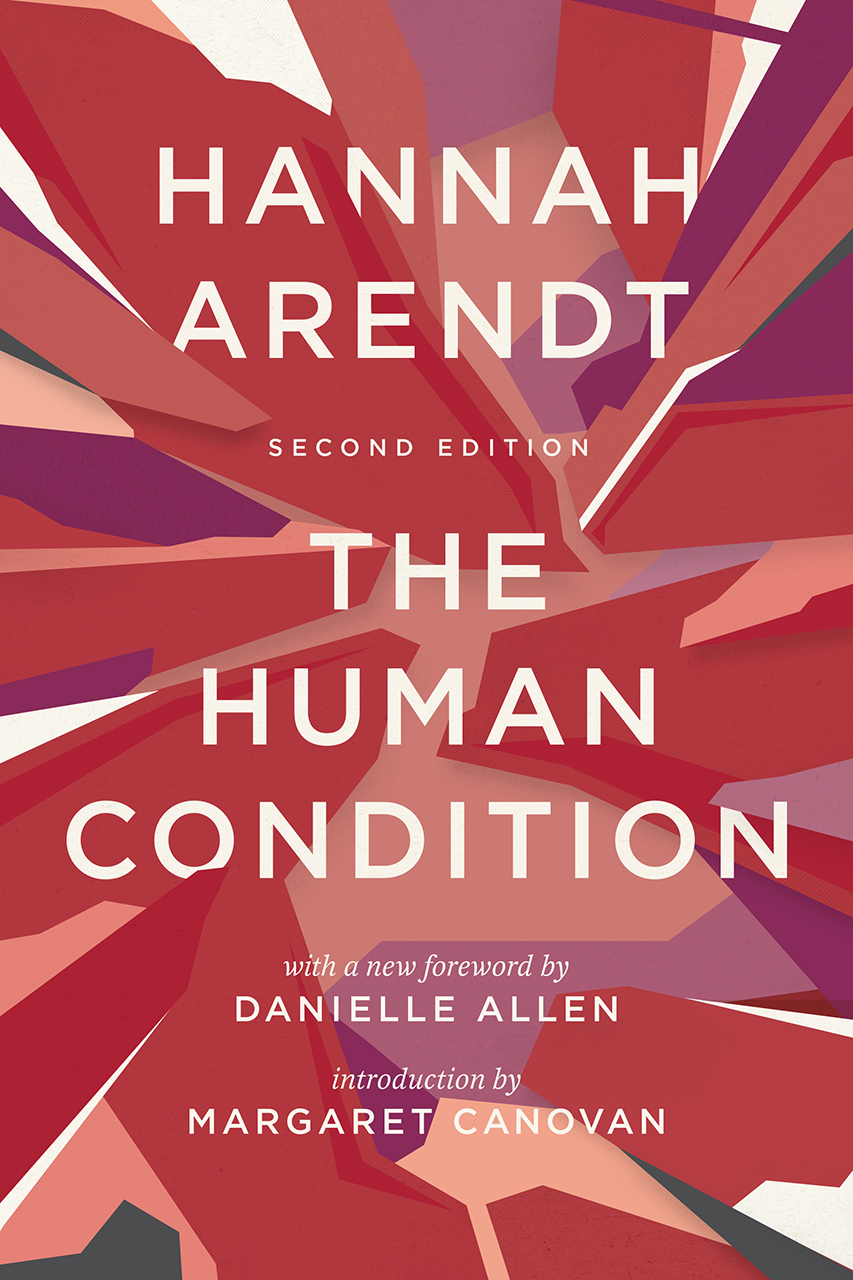
The Human Condition: Second Edition
A classic work of political thought, more relevant today than ever The twenty-first century has seen a resurgence of interest in the political thinker Hannah Arendt, “the theorist of beginnings,” whose work probes the logics underlying unexpected transformations—from totalitarianism to revolution. A work of striking originality, The Human Condition is in many respects more relevant now than when it first appeared in 1958. In her study of the state of modern humanity, Hannah Arendt considers humankind from the perspective of the actions of which it is capable. The problems Arendt identified then—diminishing human agency and political freedom, the paradox that as human powers increase through technological and humanistic inquiry, we are less equipped to control the consequences of our actions—continue to confront us today. This new edition, published to coincide with the sixtieth anniversary of its original publication, contains Margaret Canovan’s 1998 introduction and a new foreword by Danielle Allen. A classic in political and social theory, The Human Condition is a work that has proved both timeless and perpetually timely.
Making Community Governance Legible: A Semester with Bonfire
A collaboration with Princeton explores how Governance Cards can help communities explain how they organise, make decisions, and care for their shared spaces.

The Ecosystem
Create collective knowledge by crowdsourcing and adapting governance innovations.
Preface | The World After Capital
Since publishing the previous version of The World After Capital, I have met with people across the political spectrum to discuss the ideas from the book. When I present these in person, I emphasize that the ideas are neither left nor right but forward (credit to Scott Santens who first used this phrase about Universal Basic Income). My writing, however, at times has alienated readers who identify as being more on the right. In this new edition, I am therefore making an extra effort to emphasize how both my diagnosis of where we are at and my suggestions for how to move forward do not map onto the existing political divides. Instead this is a new way of understanding our challenges and opportunities that can be the basis for movements and parties that are not trapped in Industrial Age ideology.
Citizen Participation (@oliverescobar.bsky.social)
Professor of Public Policy and Democratic Innovation | University of Edinburgh | Working on #democracy #participation #deliberation #commons #governance #power #research | RT≠ endorse | Own views | Profile: https://www.sps.ed.ac.uk/staff/oliver-escobar

Citizen Participation (@oliverescobar.bsky.social)
Professor of Public Policy and Democratic Innovation | University of Edinburgh | Working on #democracy #participation #deliberation #commons #governance #power #research | RT≠ endorse | Own views | Profile: https://www.sps.ed.ac.uk/staff/oliver-escobar