


The four keys, the required-reason codes, the checks that catch half-finished privacy manifests, and why round-tripping an existing xcprivacy file matters.
Home | Laws of UX
Laws of UX is a collection of best practices that designers can consider when building user interfaces.
Security research on Private Cloud Compute - Apple Security Research
Private Cloud Compute (PCC) fulfills computationally intensive requests for Apple Intelligence while providing groundbreaking privacy and security protections — by bringing our industry-leading device security model into the cloud. To build public trust in our system, we’re making it possible for researchers to inspect and verify PCC’s security and privacy guarantees by releasing tools and resources including a comprehensive PCC Security Guide, the software binaries and source code of key PCC components, and — in a first for any Apple platform — a Virtual Research Environment, which allows anyone to install and test the PCC software on a Mac with Apple silicon.
Customer Commons
We are planning to release more agreements as we approach the finalization of the IEEE P7012 Standard for Machine Readable Personal Privacy Terms . This initiative is currently has a demo #NoStalking, and we encourage your participation and feedback to help shape its development.

Privacy Architectures: Reasoning About Data Minimisation and Integrity
Privacy by design will become a legal obligation in the European Community if the Data Protection Regulation eventually gets adopted. However, taking into account privacy requirements in the design of a system is a challenging task. We propose an approach based on the specification of privacy architectures and focus on a key aspect of privacy, data minimisation, and its tension with integrity requirements. We illustrate our formal framework through a smart metering case study.

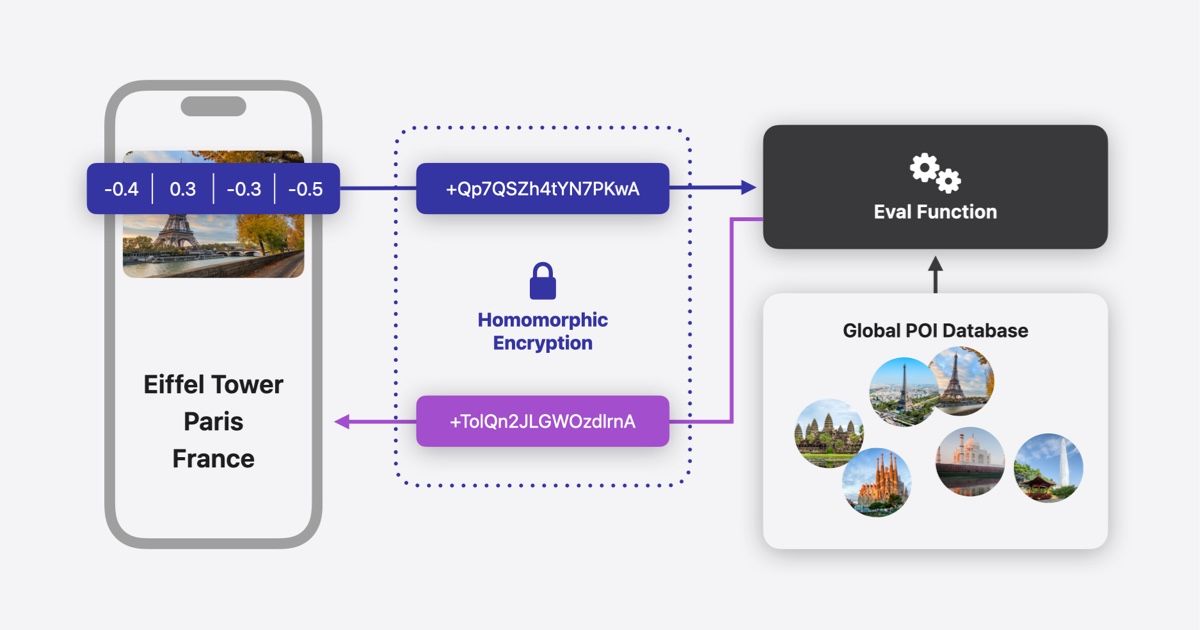
Combining Machine Learning and Homomorphic Encryption in the Apple Ecosystem
At Apple, we believe privacy is a fundamental human right. Our work to protect user privacy is informed by a set of privacy principles, and…
Understanding the Cryptographic Autonomy License
Why crypto software licenses need to protect user’s control of their keys.

CIDs: What You Need to Know and Why, Part 1 - Nick's Blog
A deep dive into Content Identifiers, the self-describing cryptographic fingerprints that form the foundation of ATProtocol’s data model.
Introductions and kick off
Hello, I’m Simon Horrobin. I’m working on a couple of projects which are ATproto relevant… one to handle sport and health data, the other for managing publishing workflow. Both of these need privacy to varying degrees. I think about this in a few axes… who can create, view, edit, delete, grant, revoke, all over time and state.
Cryptographic Autonomy License
1. Purpose This License gives You unlimited permission to use and modify the software to which it applies (the “Work”), either as-is or in modified form, for Your private purposes, while protecting…

Permissioned Data Shapes: Notifications - Nick's Blog
A self-keyed space gives notifications a home you control: every app gets an append-only sink to write into, you pick the reader that turns them into pushes and emails, and allowing or revoking an app is an access control you already have.
Private Cloud Compute: A new frontier for AI privacy in the cloud - Apple Security Research
Secure and private AI processing in the cloud poses a formidable new challenge. To support advanced features of Apple Intelligence with larger foundation models, we created Private Cloud Compute (PCC), a groundbreaking cloud intelligence system designed specifically for private AI processing. Built with custom Apple silicon and a hardened operating system, Private Cloud Compute extends the industry-leading security and privacy of Apple devices into the cloud, making sure that personal user data sent to PCC isn’t accessible to anyone other than the user — not even to Apple. We believe Private Cloud Compute is the most advanced security architecture ever deployed for cloud AI compute at scale.
Permissioned Data Diary 1: To Encrypt or Not to Encrypt - Daniel's Leaflets
The first in a series of posts about major design decisions along the way to a permissioned data protocol for atproto.
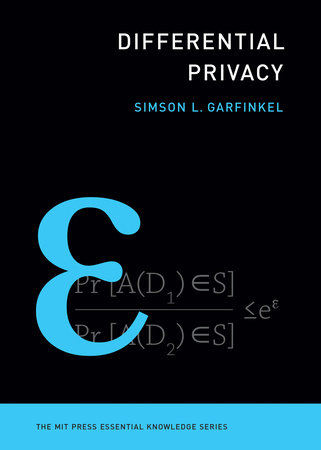
Differential Privacy
A robust yet accessible introduction to the idea, history, and key applications of differential privacy—the gold standard of algorithmic privacy protection
Seventh in the atproto permissioned-data series: notifications. One self-keyed space per identity, every app writing through a create-only grant, and a reader you choose doing the triage. The self shape returns, direction flipped.

Permissioned Data Shapes: Notifications
ngerakines.leaflet.pubBlink: Intent to Experiment: Signature-based Integrity
Blink: Intent to Experiment: Signature-based Integrity
groups.google.comA deep dive on permissioned-data space access. The dials, policies, and the difference between handing out keys and revoking them.

Permissioned Data: Space Access
ngerakines.leaflet.pub
