


A new study shows that naming conventions will change how infants represent objects in their memories.
“Infantile amnesia” occurs despite babies showing memory activity
It looks like humans actively suppress our earliest memories.

Infantilizing babies helps them learn language
Pretend conversations early on lead to better vocabularies later.

I Am Begging AI Companies to Stop Naming Features After Human Processes
Anthropic announced “dreaming” for AI agents to sort through “memories” at its developer conference. Can we not?

Can names shape facial appearance?
Our given name is a social tag associated with us early in life. This study investigates the possibility of a self-fulfilling prophecy effect wherein individuals’ facial appearance develops over time to resemble the social stereotypes associated with given names. Leveraging the face–name matching effect, which demonstrates an ability to match adults’ names to their faces, we hypothesized that individuals would resemble their social stereotype (name) in adulthood but not in childhood. To test this hypothesis, children and adults were asked to match faces and names of children and adults. Results revealed that both adults and children correctly matched adult faces to their corresponding names, significantly above the chance level. However, when it came to children’s faces and names, participants were unable to make accurate associations. Complementing our lab studies, we employed a machine-learning framework to process facial image data and found that facial representations of adults with the same name were more similar to each other than to those of adults with different names. This pattern of similarity was absent among the facial representations of children, thereby strengthening the case for the self-fulfilling prophecy hypothesis. Furthermore, the face–name matching effect was evident for adults but not for children’s faces that were artificially aged to resemble adults, supporting the conjectured role of social development in this effect. Together, these findings suggest that even our facial appearance can be influenced by a social factor such as our name, confirming the potent impact of social expectations.

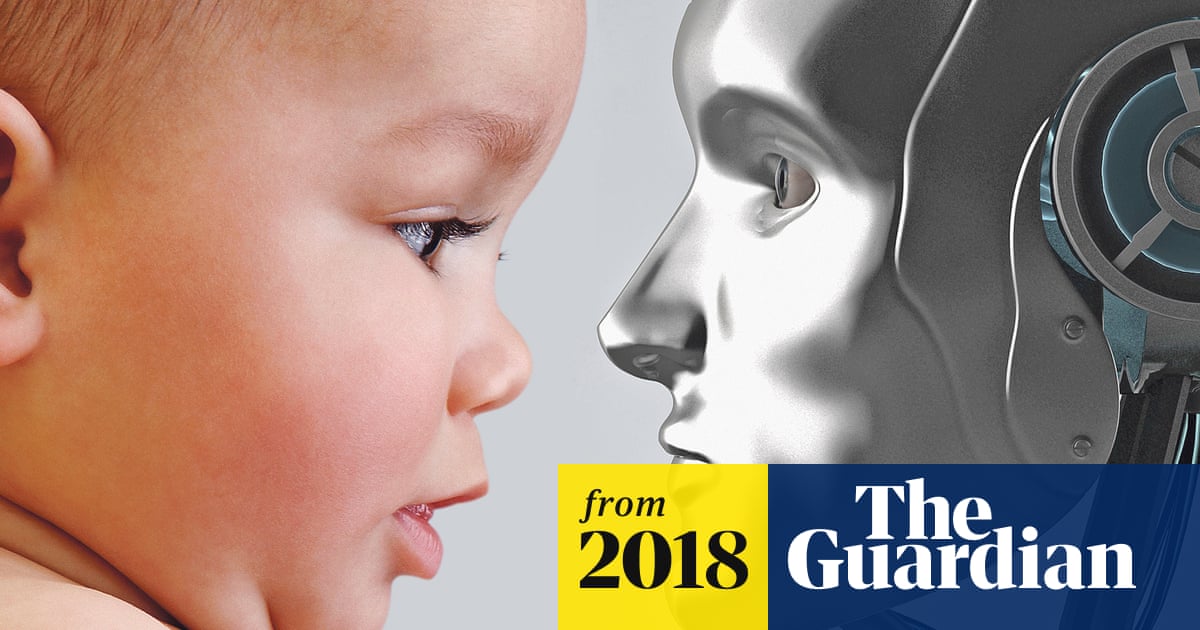
How babies learn – and why robots can’t compete
The long read: If we could understand how the infant mind develops, it might help every child reach their full potential. But seeing them as learning machines is not the answer
A Successful Artificial Memory Has Been Created
The growing science of memory manipulation raises social and ethical questions

Inside Design Tokens: Naming
Naming design tokens can sometimes be considered its own discipline. Naming is surprisingly straight forward, and if it isn't then it solves the wrong problem.
Do newborn boys really tend to prefer a ‘mechanical object’ to a human face? Failure to assess the confounding effect of an exceptionally high caesarean section rate
We review a twenty year old paper on sex differences in human neonatal social perception, and identify a serious issue: a failure to assess whether the results were distorted by an exceptionally high Caesarean Section rate. This is in addition to a number of other methodological weaknesses, which together mean that there is too much ‘noise’ in the data to draw clear conclusions from the results. The paper’s stark conclusion to have ‘demonstrated’ biological sex differences is unsubstantiated and misleading, and it should no longer be considered a reliable reference point.
How Childhood Trauma Can Impact the Brain
New research has illuminated how traumatic experiences during childhood can literally alter the structure and chemistry of the brain, leading to long-lasting consequences.

Babies Are Prewired To Perceive the World - Slashdot
In an investigation of neural connectivity in 30 infants ranging from six to 57 days old (with an average age of 27 days), neuroscientists found that circuit wiring precedes, and thus may guide, regional specialization, shedding light on how knowledge systems emerge in the brain. An anonymous reader...

The Triadic Mind: How Language Reveals the Limits of Human Cognition
Languages are the most complex symbolic systems humans have ever created. Yet children acquire them effortlessly, without formal…

Pluralistic: There’s no such thing as “age verification” (19 May 2026) – Pluralistic: Daily links from Cory Doctorow
"Object permanence" is the ability to understand that even if you can't see something, it still exists. Most toddlers acquire a thorough sense of object permanence by the age of two. But when it comes to technopolitics, object permanence eludes even full-grown lawmakers. These motherfuckers would lose a game of peek-a-boo.
Names should be cute, not descriptive | nicole@web
A long-standing debate between me and a peer at work has been how we should name services. His position was always that services should be named something descriptive, so that you can infer from the name what it does. My position is that the name should definitely not be descriptive, but should be something cute and wholly disconnected from the purpose. And I think this applies more broadly to projects and companies, too.
Forget coding, we need to teach our kids how to dream
Tom Goodwin on the five key attributes we should help kids develop instead of focusing on knowledge.

Children use algorithm induction to discover patterns in data
Humans are unique in our ability to acquire diverse skills and inhabit myriad environments, but the cognitive mechanisms underlying such fast, flexible learning remain unresolved. Inspired by theories of artificial intelligence, here we show evidence for one such learning mechanism - program induction - in US American and indigenous Tsimane’ children in the Bolivian Amazon. Participants viewed novel patterns and were asked to generalize them to new stimuli, alphabets, and lengths, without feedback. Given very limited data, participants across ages, cultures, and conditions constructed response patterns that shared abstract structure with the sample patterns. Computational modeling shows that responses likely reflect discovery of latent rules, rather than simple heuristics or associations, even among children without formal schooling. The results suggest program induction serves as a domain-general learning mechanism from early in life, allowing children across cultures to rapidly infer the algorithmic structure of their natural and cultural environment, whatever it might be.

Better to Be Alone than in Bad Company: Cognate Synonyms Impair Word Learning
The effects of cognate synonymy in L2 word learning are explored. Participants learned the names of well-known concrete concepts in a new fictional language following a picture-word association paradigm. Half of the concepts (set A) had two possible translations in the new language (i.e., both words were synonyms): one was a cognate in participants’ L1 and the other one was not. The other half of the concepts (set B) had only one possible translation in the new language, a non-cognate word. After learning the new words, participants’ memory was tested in a picture-word matching task and a translation recognition task. In line with previous findings, our results clearly indicate that cognates are much easier to learn, as we found that the cognate translation was remembered much better than both its non-cognate synonym and the non-cognate from set B. Our results also seem to suggest that non-cognates without cognate synonyms (set B) are better learned than non-cognates with cognate synonyms (set A). This suggests that, at early stages of L2 acquisition, learning a cognate would produce a poorer acquisition of its non-cognate synonym, as compared to a solely learned non-cognate. These results are discussed in the light of different theories and models of bilingual mental lexicon.
