


You have probably been asked about your hobbies at some point. I never had a good answer to that question. Tbh, I still don't. A few years ago, while reading Designing Your Life, I realised something slightly uncomfortable. I did very little just for joy. Most things I spent
Build the thing you wish to see in the world
For most of my career, I've been confusing building products with building businesses—and that confusion kept me from pursuing a lot of ideas. Two weeks off helped me realize that not everything needs to be a startup, and some of the best things we build are the ones we build just because we want them to exist.

On Making
TLDR: I gain a lot of fulfillment by making things. I don't consider things built by others at my request to be made by me, and are therefore much less fulfilling. And then I feel sad. This article starts strong and then heads off into the weeds.
Built by Designers: No Explanation Needed
Designers now turn ideas into working products. Explore a curated collection of apps, tools, websites, and experiments designed, built, and shipped by designers.

Finding joy in the little things really can benefit your wellbeing – a scientist explains
Enjoying a cup of coffee or performing an act of kindness are some examples of the everyday ‘micro-joys’ that can boost your wellbeing.

Unintuitive Things I’ve Learned about Management (Part 1)
I first started managing people seven years ago, three years after I graduated and got my first design job. At the time, I was woefully…

Static! Designing for energy Awareness
From the boost of the first cup of coffee in the morning to the glow of a nightlight that keeps a child company after dark, much of our contemporary lifestyles is powered by electricity. Today, however, the economic and environmental costs of energy require us to think again. While recognizing the complex social functions and cultural forms of electricity in everyday life, the current challenge for design is to change practices and patterns of (over)consumption. Static! explores design as a basis for increasing awareness of energy. Familiar furnishings and products have been reinterpreted to materialize electricity, to make it more visible and tangible for people. The resulting series of conceptual design examples express the poetics – and politics – of everyday electricity consumption. A design research project at the Interactive Institute funded by the Swedish Energy Agency, Static! has proved to be a pioneer in opening a current and critical research area at the intersection of design, energy and information technology. This book presents the Static! design examples and perspectives on issues in (sustainable) design today. Grounded in passion and humor, as well as rigor and research, the book asks designers and consumers – that is, all of us – to rethink the form, and future, of electricity in the world around us. Editor: Ramia Mazé. Authors: Christina Öhman, Sara Backlund, Johan Redström, Ramia Mazé, Sara Ilstedt Hjelm, Sara Routarinne.
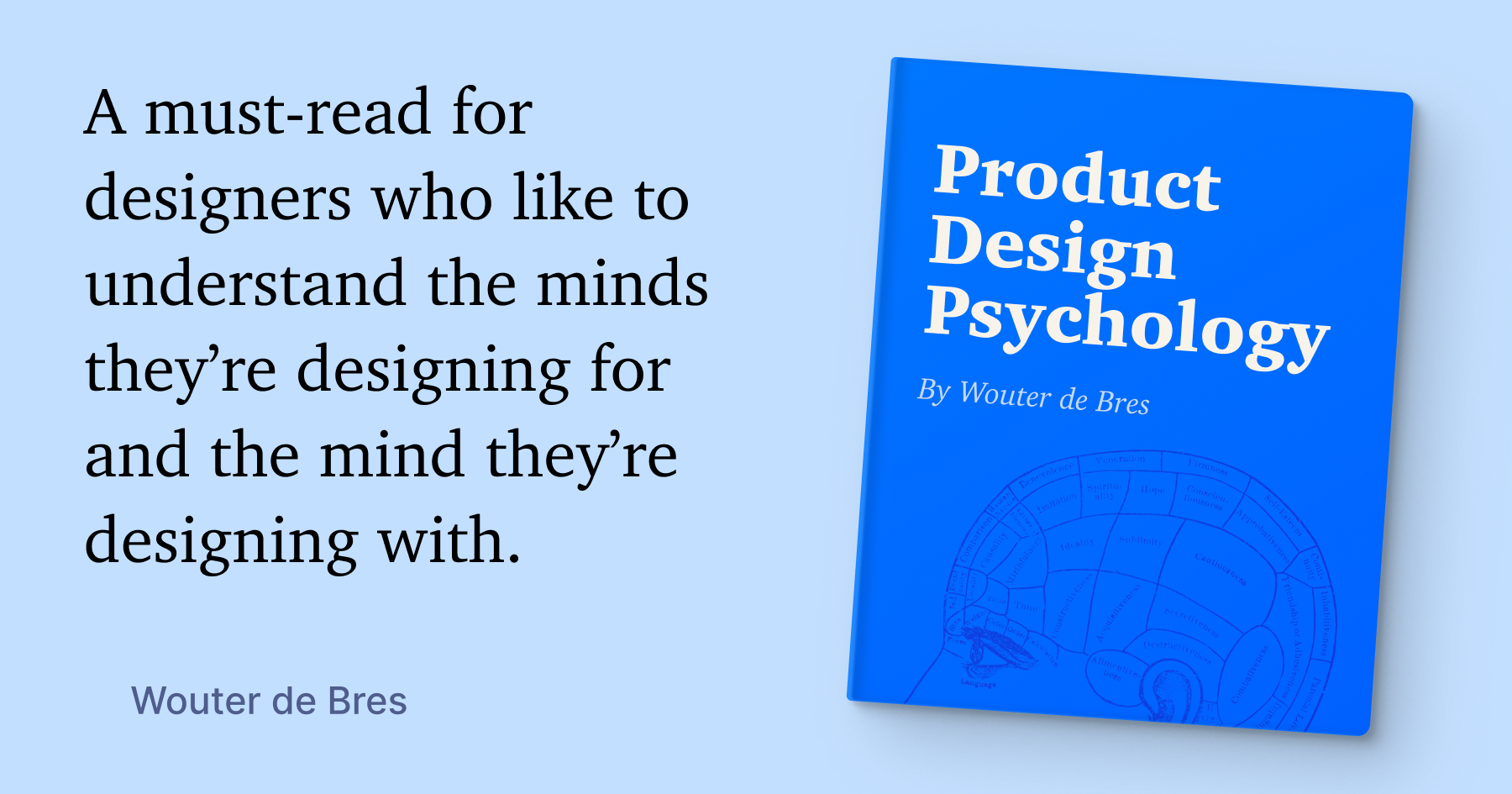
Product Design Psychology by Wouter de Bres
Understand the minds you design for and the mind you design with.
Natalia Emanuel on Twitter / X
Coffee shops boost innovation. 10% more Starbucks in an area --> 3-4% more inventions. People gather over a cuppa. They share ideas, discuss how to untangle a knotty problem, help see an issue from another perspective. These conversations lead to breakthroughs and inventions.… pic.twitter.com/3LwKtrgG5E— Natalia Emanuel (@NataliaHEmanuel) October 9, 2026

People, Not Feeds - transmissions from the atmosphere
How to move from addictive design to connective design
Design Life-Cycle
general life-cycle assessments of popular materials used by designers and products bought by consumers. where and how was it made?
Developing creative identity
I was a theoretical physicist from 1992 to 2007. It was a romantic activity, exploring the fundamental nature of the cosmos! I became a university professor, wrote papers and books, and got to explore some of the most beautiful ideas ever discovered. In parallel, I also developed a fascination with the social systems humanity uses to make knowledge. Systems like the university or peer review are immensely deep inventions: our discovery system is itself one of the great inventions of humanity! But I believed a radically better discovery system must be possible. I became obsessed with this idea, eventually giving up tenure to work on it1. My first big project was to write a book helping develop and spread the fundamental ideas underlying the modern open science movement.
Mindful Design Products – Mindful Design
Mindful Design products are forever–free products designed from the ground up to be calm, opinionated, and lovely to use.

Design Thinking
In the past, design has most often occurred fairly far downstream in the development process and has focused on making new products aesthetically attractive or enhancing brand perception through smart, evocative advertising. Today, as innovation’s terrain expands to encompass human-centered processes and services as well as products, companies are asking designers to create ideas rather than to simply dress them up. Brown, the CEO and president of the innovation and design firm IDEO, is a leading proponent of design thinking—a method of meeting people’s needs and desires in a technologically feasible and strategically viable way. In this article he offers several intriguing examples of the discipline at work. One involves a collaboration between frontline employees from health care provider Kaiser Permanente and Brown’s firm to reengineer nursing-staff shift changes at four Kaiser hospitals. Close observation of actual shift changes, combined with brainstorming and rapid prototyping, produced new procedures and software that radically streamlined information exchange between shifts. The result was more time for nursing, better-informed patient care, and a happier nursing staff. Another involves the Japanese bicycle components manufacturer Shimano, which worked with IDEO to learn why 90% of American adults don’t ride bikes. The interdisciplinary project team discovered that intimidating retail experiences, the complexity and cost of sophisticated bikes, and the danger of cycling on heavily trafficked roads had overshadowed people’s happy memories of childhood biking. So the team created a brand concept—“Coasting”—to describe a whole new category of biking and developed new in-store retailing strategies, a public relations campaign to identify safe places to cycle, and a reference design to inspire designers at the companies that went on to manufacture Coasting bikes. [hbr_brightcove id=”4443548301001″]

The Product Picnic
Writing on UX and product management to connect today's discourse with classic insights that the industry forgot.

Semble Product Inspiration

Products we take design, functionality or organizational inspiration from for semble

Elicit: AI for scientific research

Alerts | Elicit: Al for scientific research

Embed Bsky
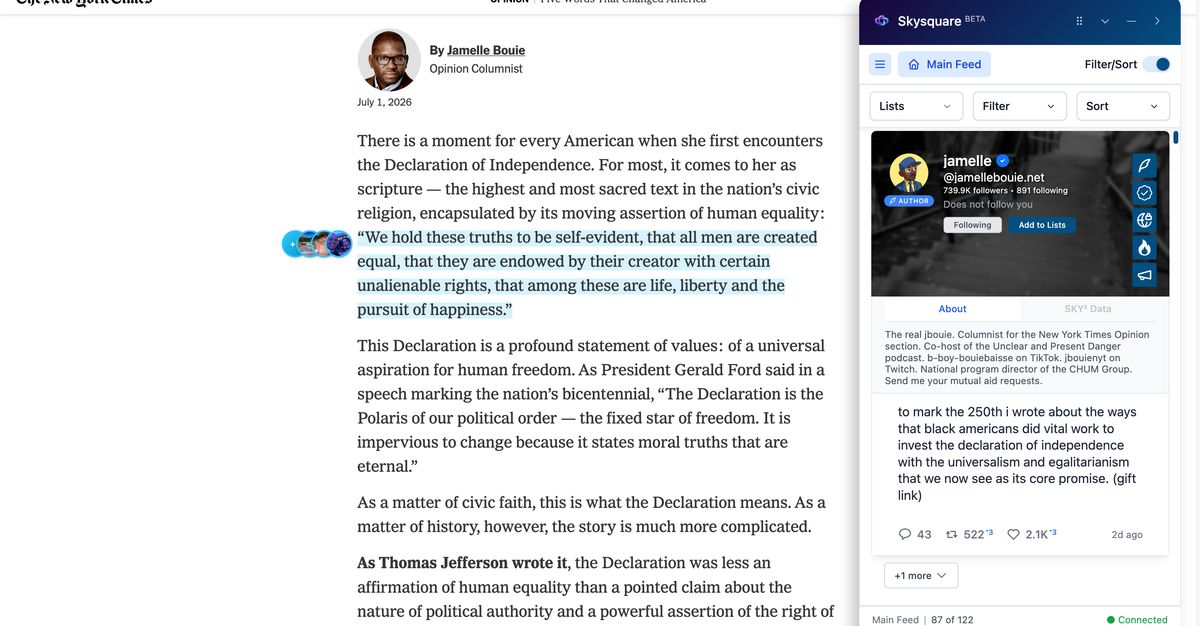
Skysquare — Public conversation, anchored to the web

alphaXiv
Hark, a link blog! - Boris Mann Tech Blog