


What is intersectionality? Most references in intersectional scholarship point to Kimberlé Crenshaw’s 1991 Stanford Law Review article “Mapping The Margins: Intersectionality, Identity Politics, and Violence against Women of Color” as the initiation of of the concept into academia. Crenshaw combines literature on critical race theory to examine antiracist and feminist discourse on women of color as victims sexual...
Intersectional Antifeminism, or: What is a White Feminist, Anyway?
Regarding the most famous social theory no one has actually read.

Intersectionality | The Paper Pilot
The Paper Pilot's digital garden of thoughts on philosophy, politics, and sociology
Social Reproduction Theory: Remapping Class, Recentering Oppression
This groundbreaking collection explores the profound power of Social Reproduction Theory to deepen our understanding of everyday life under capitalism. While many Marxists tend to focus on the productive economy, this book focuses on issues such as child care, health care, education, family life and the roles of gender, race and sexuality, all of which are central to understanding the relationship between economic exploitation and social oppression. In this book, leading writers such as Lise Vogel, Nancy Fraser, David McNally and Susan Ferguson reveal the ways in which daily and generational reproductive labour, found in households, schools, hospitals and prisons, also sustains the drive for accumulation. Presenting a more sophisticated alternative to intersectionality, these essays provide ideas which have important strategic implications for anti-capitalists, anti-racists and feminists attempting to find a path through the seemingly ever more complex world we live in.
The intersectionality wars
When Kimberlé Crenshaw coined the term 30 years ago, it was a relatively obscure legal concept. Then it went viral.

An intersectional take on technology, rights and justice | Beatrice Martini – blog
There’s a word – which is an entire multi-faceted concept in itself – which comes to my mind very often, whether I’m reading the news, working, talking with loved ones or following someone’s train of thoughts online. Intersectionality. The concept it expresses has always been at the core of my perspective of the world and … Continue reading An intersectional take on technology, rights and justice

Political Science and Transphobia
RI DaSēr K (@so_treu@scholar.social)
"We are living in a moment in which it is common practice among trans activists and sympathetic media to outline trans vulnerability in the following way: “We need to care about trans lives, especially trans women’s lives, especially trans women of color’s lives.” This essay questions the straightforwardness of a trajectory of vulnerability from the categories “trans people” to “trans women” to “trans women of color,” suggesting that key aspects of race & class supremacy are elided within it. +
A Future for Intersectional Black Feminist Technology Studies
Neoliberal narratives of digital technologies and the internet have flourished in information and internet studies and suggest that the web is a panacea of social liberation and empowerment.

Intersectionality as a Technology
The recent tragedy in Orlando should remind us, among many other things, that building solidarity and compassion across multiple identities is both difficult and necessary. It is difficult because …
Towards Intersectional Feminist and Participatory ML: A Case Study in Supporting Feminicide Counterdata Collection
As part of the Digital Library's transition to Open Access, new features for researchers are available in the Premium Edition. Click here to learn more.

Black Schoolgirls at the Intersection of Consent and Property: Mapping a Socio-Historical Analysis for Anti-Rape Education Futures in Schooling
This article examines how the concept of consent, persons as property, with its links to the convergence of law, imperial governance and schooling reveal the fragility and possibilities of consent ...

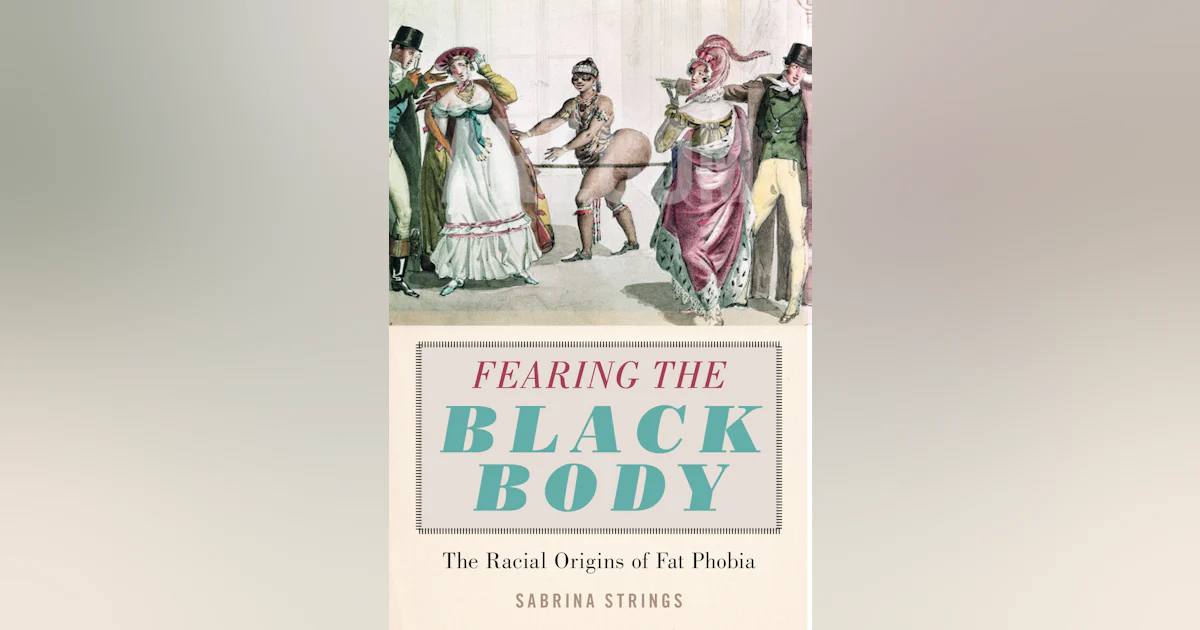
Fearing the Black Body
Winner, 2020 Body and Embodiment Best Publication Award, given by the American Sociological AssociationHonorable Mention, 2020 Sociology of Sex and Gender Di...
Meet The Dominatrix Who Requires The Men Who Hire Her To Read Black Feminist Theory
"On an individual level, it provides me with an emotional sense of reparations."

Gender Trouble: Feminism and the Subversion of Identity
One of the most talked-about scholarly works of the past fifty years, Judith Butler’s Gender Trouble is as celebrated as it is controversial.Arguing that traditional feminism is wrong to look to a natural, 'essential' notion of the female, or indeed of sex or gender, Butler starts by questioning the category 'woman' and continues in this vein with examinations of 'the masculine' and 'the feminine'. Best known however, but also most often misinterpreted, is Butler's concept of gender as a reiterated social performance rather than the expression of a prior reality.Thrilling and provocative, few other academic works have roused passions to the same extent.

Toward an Anti-Racist Music Education: A Critical Pedagogy of Popular Music Teacher Education
In this article, we propose a framework for a critical pedagogy of popular music for teacher education to better prepare music teachers to enact anti-racist praxis within their classrooms. Although a growing body of literature in music education addresses issues of racism within the field, fewer scholars have studied this within teacher education. Drawing from critical pedagogy, our framework centers popular music as a means for music teacher educators to interrogate issues of identity and power and (re)contextualize pedagogy, considering the socio-political contexts and communities from which music practices originate. These processes facilitate reflection on how racisms shape taken-for-granted practices within music education by centering the socio-political contexts of popular music. Through our framework, music teacher educators could prompt pre-service music educators to consider the multiple racialized epistemologies of musical value students and teachers bring to the classroom, working toward the possibility of enacting a multicentric approach to music education.

Green Screen: The Lack of Female Road Narratives and Why it Matters
This essay has been drawn from Vol. 1 No. 4 of the American Reader, available here. Our October 2012 interview with Veselka can be found here.