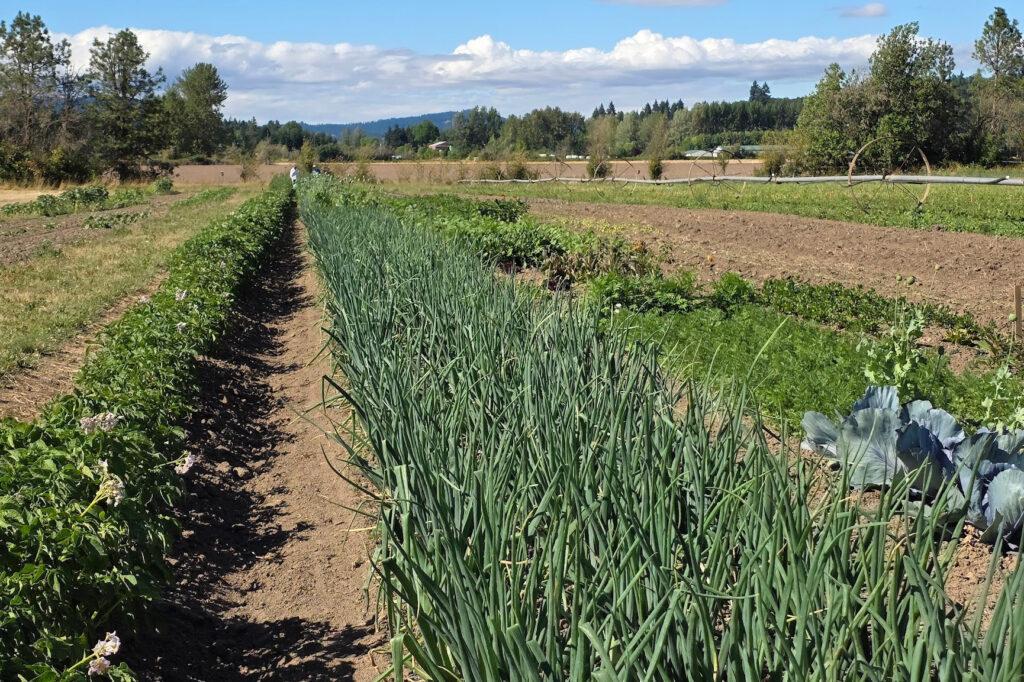
The National Black Food and Justice Alliance represents hundreds of Black urban and rural farmers, organizers, and land stewards based nationwide working together towards an intergenerational, urban/rural movement to map, assess, train and deepen the organizing, institution building and advocacy work protecting Black land and work towards food sovereignty.
National Young Farmers Coalition
The National Young Farmers Coalition is a farmer-led, grassroots network shifting power and changing policy to equitably resource the new generation of working farmers. We are the largest unified voice calling for farm policy that will deliver a bright future for young farmers and ranchers in the U.S.
Sweat Equity — FARMore
The Sweat Equity Program is a volunteer-driven initiative providing hands-on assistance to farmers who need it most. More than just lending a hand, it shows how vital, soulful, and impactful farming is for all of us. This program bridges the gap between urban and rural communities through meaningful service and education. Together, we are building relationships based on reciprocity and inspiring:
Black Women and the Care Agenda | National Partnership for Women & Families
Black women are family caregivers – and they need flexibility and economic supports to make the best decisions for themselves and their families
Black Farmers Index
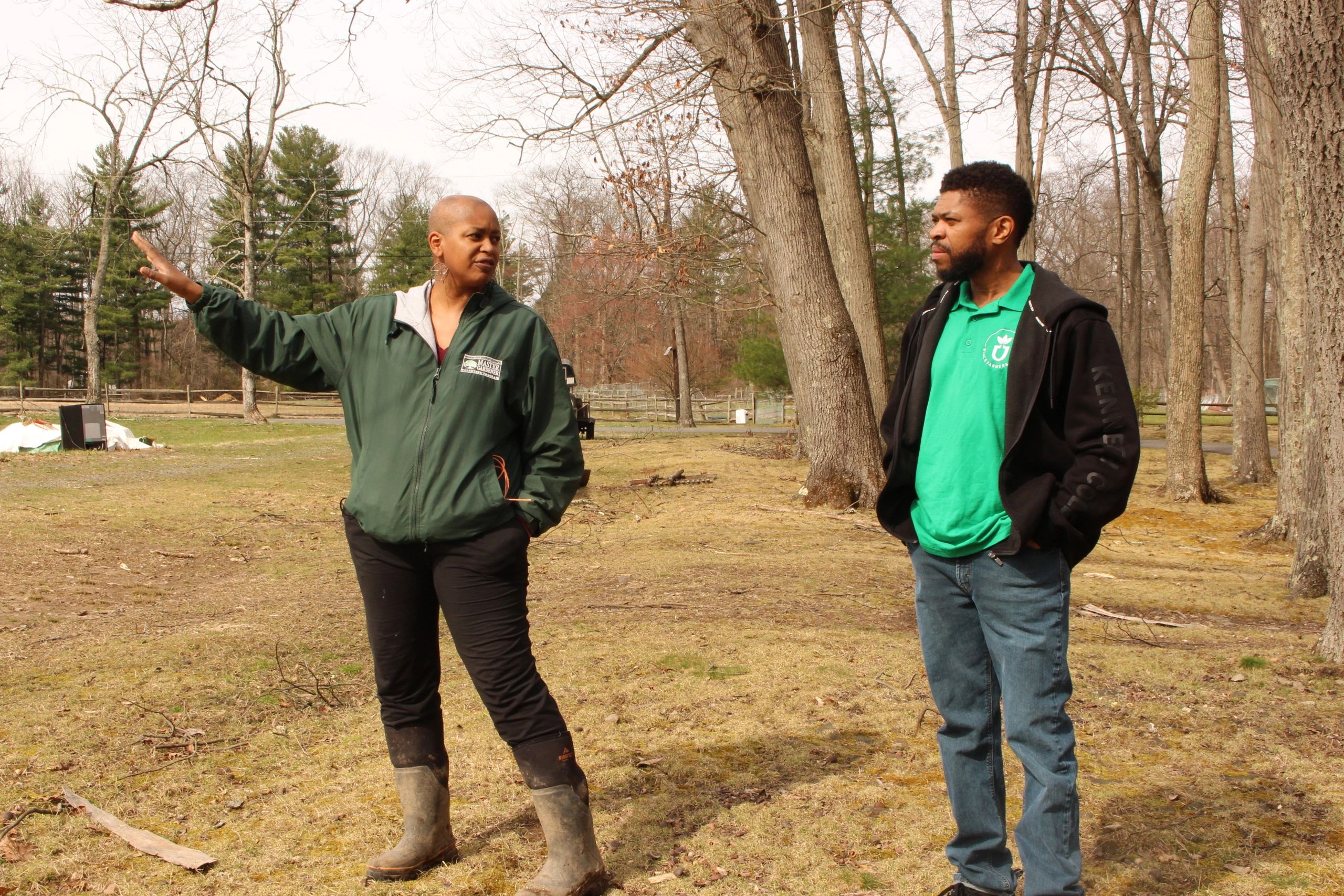
Black Farmers Index drives resources and exposure to agriculturalists with an online directory, workshops, events, data gathering/reporting and media features
American Indian Law Alliance
An NGO in consultative status with the United Nations Economic & Social Council (ECOSOC)
The Black Alliance for Peace
A people-centered human rights project against war, repression and imperialism. Get on our newsletter list to build the anti-war movement.

Alliance of Native Seedkeepers
Discover unique heirloom and non-GMO seeds at Alliance of Native Seedkeepers. As a Native American-led store, we specialize in over 1,500 varieties, preserving the rich heritage and biodiversity of indigenous agriculture. Shop now to contribute to sustainable, community-focused farming practices.
Expert: The NAACP is Fighting to Keep Black Communities From Becoming AI’s Collateral Damage – The Root
Houston Board of Food Security
Empowering Houstonians with knowledge, resources, and connections for food security in their own neighborhoods and backyards.

NAACP Unveils Blueprint for Building Black Wealth
The NAACP's new roadmap aims to help Black families build assets, close the racial wealth gap and create generational wealth.

NAACP Unveils Blueprint for Building Black Wealth
The NAACP's new roadmap aims to help Black families build assets, close the racial wealth gap and create generational wealth.
Growstuff - Growstuff
Growstuff is a community of food gardeners. Let's learn to grow food together.

McDonald's: you can sneer, but it's the glue that holds communities together
When many lower-income Americans feel isolated and empty, they yearn for physical social networks. All across US, this happens organically at McDonald’s

A social-ecological framework for analyzing and designing integrated crop–livestock systems from farm to territory levels
Integrated crop–livestock systems are often considered a promising way to address agricultural sustainability issues. Many authors claim that complementarities and synergies between crops and livestock can improve nutrient cycling and delivery of ecosystem services (ES) in agricultural systems. They have analyzed effects of interactions at the farm level and affirmed the potential advantage of developing crop–livestock interactions at the territory level. However, potential benefits of developing synergies beyond the farm level have not been clearly identified. Thus, we developed a conceptual framework that can be used to analyze, design and perform integrated assessment of crop–livestock systems at the territory level. To address crop–livestock interaction issues, we define it as a social-ecological system called the territorial crop–livestock system (TCLS). The ecological system is represented as three interacting components, crops, grasslands and animals, allowing description of various land uses and their potential effects on nutrient cycling and ES. The social system, represented as farmers interacting with natural-resource managers and agro-food chain actors, determines land use and the nature and intensity of ES delivered. We highlight the importance of coordination and learning among actors to support implementation of complex adaptive systems such as TCLSs. We illustrate the expressive power of our conceptual framework through development of a generic typology of crop–livestock systems. Then we show how our conceptual framework can be used as an intermediary object with stakeholders in participatory design approaches. We illustrate this process by representing four archetypal TCLSs. We provide an example of the design approach implemented in Southwestern France to address severe recurrent water shortages, which includes analysis of land use in the current crop–livestock system and the associated key metabolic and ES issues, identification of options for change and multi-criteria analysis of these options. We conclude that this framework shows great potential to support development of sustainable farming systems at the territory level.
About — NBUF Website
To struggle for self-determination, liberation and power for Black people in the United States.
We started a farming club. Why you should start one too
We are long overdue for a return to growing our own food, and the farming club offers a promising way to reconnect with that tradition.