Why computers can in principle produce thinking and understanding
Why I believe current AI models can really think and understand - Part 1 of 2
How the human mind is different from our conception of it

Are We Thinking Correctly About AI Intelligence? | Quanta Magazine
Computer scientist Melanie Mitchell discusses why artificial intelligence doesn’t “think” or “reason” like humans, and how we can create better methods for measuring machine cognition.
Machine god metaphors eat your brain
There are other ways of thinking about AI
How AI Is Learning to Think in Secret — LessWrong
On Thinkish, Neuralese, and the End of Readable Reasoning • ---------------------------------------- …

Reclaiming AI as a theoretical tool for cognitive science
The idea that human cognition is, or can be understood as, a form of computation is a useful conceptual tool for cognitive science. It was a foundational assumption during the birth of cognitive science as a multidisciplinary field, with Artificial Intelligence (AI) as one of its contributing fields. One conception of AI in this context is as a provider of computational tools (frameworks, concepts, formalisms, models, proofs, simulations, etc.) that support theory building in cognitive science. The contemporary field of AI, however, has taken the theoretical possibility of explaining human cognition as a form of computation to imply the practical feasibility of realising human(-like or -level) cognition in factual computational systems; and, the field frames this realisation as a short-term inevitability. Yet, as we formally prove herein, creating systems with human(-like or -level) cognition is intrinsically computationally intractable. This means that any factual AI systems created in the short-run are at best decoys. When we think these systems capture something deep about ourselves and our thinking, we induce distorted and impoverished images of ourselves and our cognition. In other words, AI in current practice is deteriorating our theoretical understanding of cognition rather than advancing and enhancing it. The situation could be remediated by releasing the grip of the currently dominant view on AI and by returning to the idea of AI as a theoretical tool for cognitive science. In reclaiming this older idea of AI, however, it is important not to repeat conceptual mistakes of the past (and present) that brought us to where we are today.
Unresolved debates about the future of AI
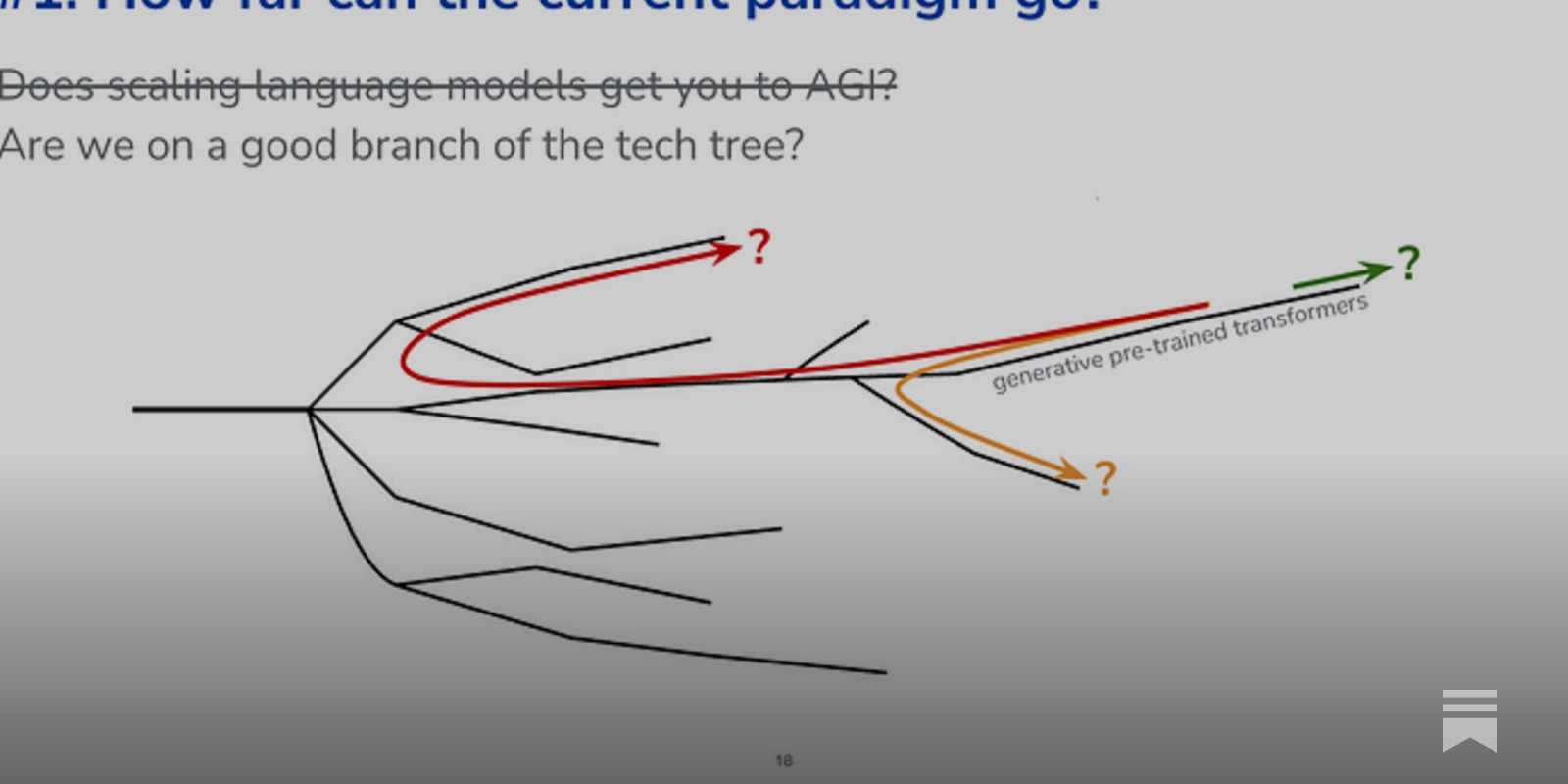
How far the current paradigm can go, AI improving AI, and whether thinking of AI as a tool will keep making sense
Field Guide to Thinking for Ourselves in the Age of AI
Underneath fears about rogue AI, labor market collapse and gradual disempowerment, there's a deeper worry: As machines become more capable, will humans be able to keep thinking for ourselves? It's a complicated question, but the Field Guide to Thinking for Ourselves has answers. 100% human-written, on topics from education to collective intelligence.

Machine understanding
What do artificial intelligence (AI) systems “understand”? This question arises not only in assessing a system’s intelligence but also in evaluation practices to ensure the safe and responsible deployment of AI. Drawing on scholarship from philosophy and cognitive science, and informed by current practices in AI, we develop a framework for asking more precise questions and making more precise claims about machine understanding. We conceptualize understanding as a relation between a system (S) and a target of understanding (T), and we discuss how to specify the relation, the system, and the target, offering a landscape of options in each case. Our goal is not to defend a particular account of understanding, but to provide conceptual tools for those working to assess or advance machine understanding.

My Thoughts on AI, Part 1: Fears, Opinions, and Mental Journey
My own personal thoughts and opinions on AI effects and usage, and how those have evolved over time

Until Yesterday I Didn't Understand What AI Is
Here is an insight which I haven’t seen expressed anywhere else.

Model Collapse Ends AI Hype
Introducing interaction models | Thinking Machines Lab

AI is Creating Peak Software, Media is the Best Analogy
Let's learn more about the world's most important manufactured product. Meaningful insight, timely analysis, and an occasional investment idea.