


Ok, so, suppose you’ve written a Kubernetes controller, you did it in Rust, and then you realized that “Hey, when this thing breaks it’s hard to understand what’s going on”. So, you decide to emit some Kubernetes events that give a little more context as to what your controller is doing and what steps it’s taken. You run all your tests
The Ultimate Guide to Rust Newtypes
Clean up your code, clarify business logic and improve test coverage with Rust's newtype wrappers.

A Kubernetes Operator in Rust
You can check the operator yourself here, or use it as boilerplate code to start your own rust operator. A little bit of background I’ve been writing Kubernetes operators for quite some time …

Pscheidl/rust-kubernetes-operator-example
An example of a Kubernetes operator implemented in Rust
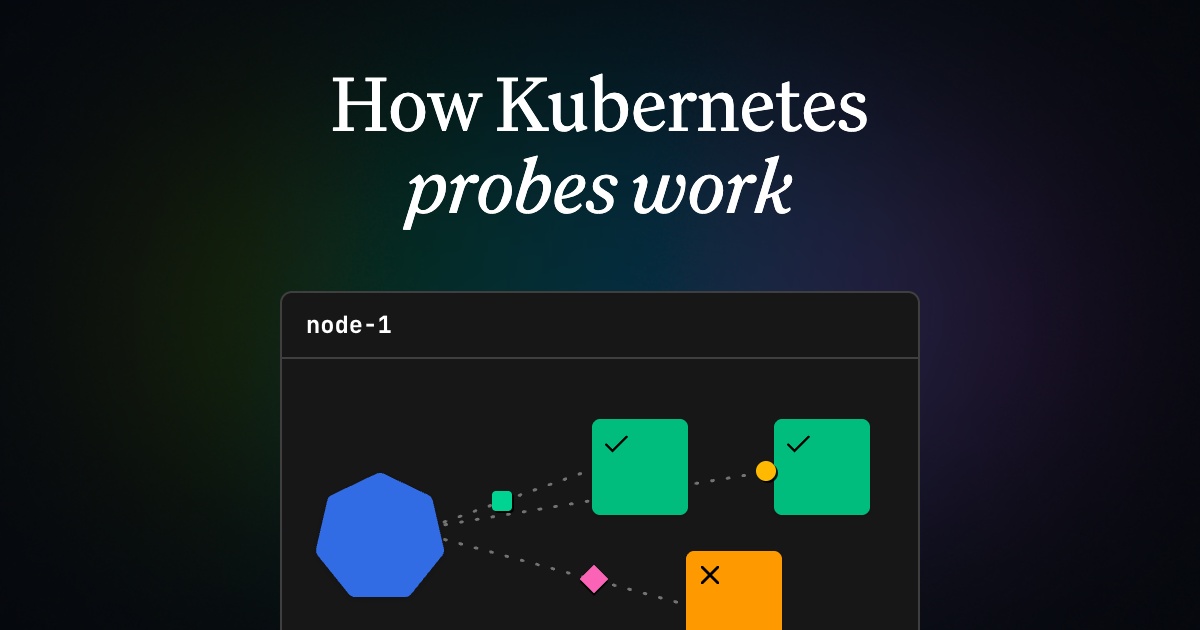
How Kubernetes probes work | ngrok blog
Learn how probes work interactively on simulated Kubernetes clusters running in your browser.
Rust traits and dependency injection - Julio Merino (jmmv.dev)
Dependency injection is one of my favorite design patterns to develop highly-testable and modular code. Unfortunately, applying this pattern by taking Rust traits as arguments to public functions has …

The Definitive Guide to Error Handling in Rust
Learn to model and handle any error using idomatic Rust.

An early look at tailscale-rs, a tsnet library in Rust
We've launched an experimental Rust library for Tailscale via tsnet. Help test tailscale-rs and shape it with your feedback.
Rust Error Handling: thiserror, anyhow, and When to Use Each
In this blog post, we’ll explore strategies for streamlining error handling in Rust using two popular libraries: thiserror and anyhow. We’ll discuss their features, use cases, and provide insights on when to choose each library. TL;DR thiserror simplifies the implementation of custom error type, removing boilerplates anyhow consolidates errors that implement std::error::Error While thiserror provides detailed error information for specific reactions, anyhow hides internal details Return Different Error Types from Function Let’s start by creating a function decode() for illustration. The function has 3 steps:
One year of Rust | Rust Blog
Empowering everyone to build reliable and efficient software.
Introduction - Rust By Example
Rust by Example (RBE) is a collection of runnable examples that illustrate various Rust concepts and standard libraries.
Learning Rust
Learning Rust - Rust Programming Language Tutorials for Everyone!

xymostech/XymosTeX
A re-implementation of TeX in Rust to help me understand how it works and to eventually provide a debugging interface
Why Use Structured Errors in Rust Applications?
Going against the common wisdom of “using anyhow for applications”.
RustFest Interviews Triple Feature: Rust for AAA Game Development; Async Foundations with `async-std`; and Powerful Concurrency Primitives with `crossbeam` :: Rustacean Station
Come journey with us into the weird, wonderful, and wily world of Rust.
Hello World - Rust By Example
Rust by Example (RBE) is a collection of runnable examples that illustrate various Rust concepts and standard libraries.