

There’s this thing that some organizational theory nerds (hi) talk about called the “rule of threes.” What it means, basically, is that every time your organization grows by x3, the way the organization operates has to change. While that blog post breaks down the numbers differently, I see one of the main inflection points as being between 50 and 150. One of my dear friends is on the board of a maker space, and they’ve recently started experiencing growing pains at the 120 mark where trust is breaking down and folks aren’t as aligned as they once were. This is a blog post about what I recommended to him based on the stage they’re at.
The Value of Getting Closer to the Work
Scaling The core problem of scaling a team is that not everyone can know everything. Scaling is the work of systematizing that – so that things are understandable, knowable. It’s turnin…

scaling · cory.news
Every few years there’s a startup that loudly proclaims it has “solved” management in some new way. Big-A agile, holocracy, etc etc etc.
Opinion | The New Power Structure (Published 2018)
New organizations are forming and succeeding in an age of distrust.

Holacracy and 3 of the Other Craziest Management Practices Around | Fortune
These companies pride themselves on managing a little differently that most.


Scaling Civic Tech
This report summarizes insights with the intention of advancing a more consistent, collaborative and rigorous fieldwide conversation about sustainability of the civic tech sector. We hope that the findings will be instructive for startups and funders, and that the report promotes a more sophisticated discussion about business models.


REINVENTING ORGANIZATIONS
Based on three years of research, the book Reinventing Organizations describes the emergence of a new management paradigm, a radically more soulful, purposeful and powerful ways to structure and run businesses and non-profits, schools and hospitals.

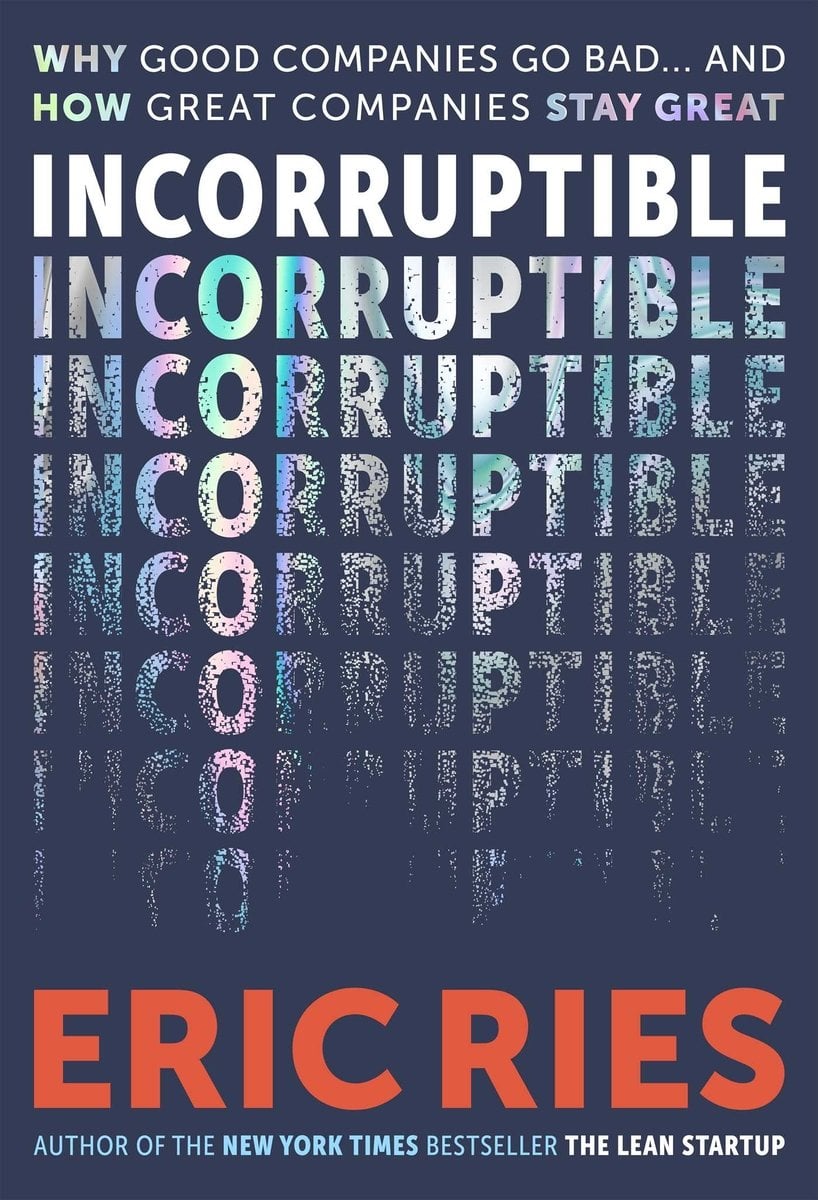
Incorruptible
Instant New York Times Bestseller "Incorruptible by Eric Ries is the best and most important business book of the year." —Dan Heath, NYT Bestselling Author & Podcast Host of "What It's Like To Be..." A Thinkers50 Best New Management Book | A Next Big Idea Club Must-Read From Eric Ries, creator of The Lean Startup, comes a bold and urgently needed rethink of how organizations are built—and why success itself so often turns companies against the people and principles that made them worth building in the first place. For decades, we've explained corporate corruption as a problem of bad actors, moral weakness, or isolated scandals. But that story doesn't match reality. Again and again, companies founded with strong ideals drift toward short-term thinking, extractive behavior, and mission abandonment—often despite the best intentions of the people inside them. Incorruptible argues that this failure is not primarily ethical. It is structural. As organizations grow, the systems that govern them—ownership, incentives, charters, accountability, and decision-making—quietly reshape behavior. When those systems are poorly designed, even principled leaders are pushed toward outcomes they never wanted. Success itself becomes a form of financial gravity, bending companies away from their original purpose. Drawing on two decades of work with founders, CEOs, investors, and institution builders, Ries shows how these failures arise predictably—and how they can be prevented. He reframes corporate governance not as bureaucracy or compliance, but as a creative and strategic act at the heart of building enduring, mission-controlled companies. At a moment when trust in business is eroding, Incorruptible offers a clear-eyed diagnosis and a practical blueprint for change. Success alone will not protect what matters most. Only incorruptible design can. Get more information and bonus materials at incorruptible.co.
How I Went from Burn-out Entrepreneur to Automating my $4M Company and 10x my Productivity.
Building a business is hard enough. On its official website, the U.S. Small Business Administration purports that “roughly 50 percent of…

Don’t Create Chaos
A guide to scaling product & engineering teams from $0 to past $100M ARR

Building and operating a pretty big storage system called S3
Three distinct perspectives on scale that come along with building and operating a storage system the size of S3.

Funded projects | Scaling Trust
Explore the projects we're funding in the Scaling Trust opportunity space.
Leading Change: Why Transformation Efforts Fail
Businesses hoping to survive over the long term will have to remake themselves into better competitors at least once along the way. These efforts have gone under many banners: total quality management, reengineering, rightsizing, restructuring, cultural change, and turnarounds, to name a few. In almost every case, the goal has been to cope with a new, more challenging market by changing the way business is conducted. A few of these endeavors have been very successful. A few have been utter failures. Most fall somewhere in between, with a distinct tilt toward the lower end of the scale. John P. Kotter is renowned for his work on leading organizational change. In 1995, when this article was first published, he had just completed a ten-year study of more than 100 companies that attempted such a transformation. Here he shares the results of his observations, outlining the eight largest errors that can doom these efforts and explaining the general lessons that encourage success. Unsuccessful transitions almost always founder during at least one of the following phases: generating a sense of urgency, establishing a powerful guiding coalition, developing a vision, communicating the vision clearly and often, removing obstacles, planning for and creating short-term wins, avoiding premature declarations of victory, and embedding changes in the corporate culture. Realizing that change usually takes a long time, says Kotter, can improve the chances of success.

And I did an episode where I explain what I'm interested in -- orgs that have some 1) form of sharing, 2) some transparency about their finances, 3) a non-growth goal in the form of knowing when they are sufficient, and 4) #multisolving. buzzsprout.com/2396702/episodes/16595444-the…

The Four Factors for Organizations - Future Mending Radio
www.buzzsprout.com
