

Dozens of languages today support gradual typing in some form or another. What lessons can the designer of a new language learn from their experiences?
Prism: An Impure Functional Language With Typed Effects - Stephen Diehl
Personal blog of Stephen Diehl - Software engineer writing about technology, programming, and the future
Typing without having to type
25+ years into my career as a programmer I think I may finally be coming around to preferring type hints or even strong typing. I resisted those in the past …
Strong arrows: a new approach to gradual typing
An introduction to strong arrows and how it leverages the Erlang VM to provide sound gradual typing.

Simply Typed Reverse-Mode Automatic Differentiation with Variants: Denotational Correctness via Idempotent Completion
Reverse-mode automatic differentiation can be derived denotationally as a structure-preserving interpretation of program syntax. In the usual simply typed model, each source type has one cotangent type. Variants break this representation because the valid cotangent space depends on the branch selected at run time; established correctness results therefore use primal-indexed families of cotangent spaces, whose direct internal language is dependent.
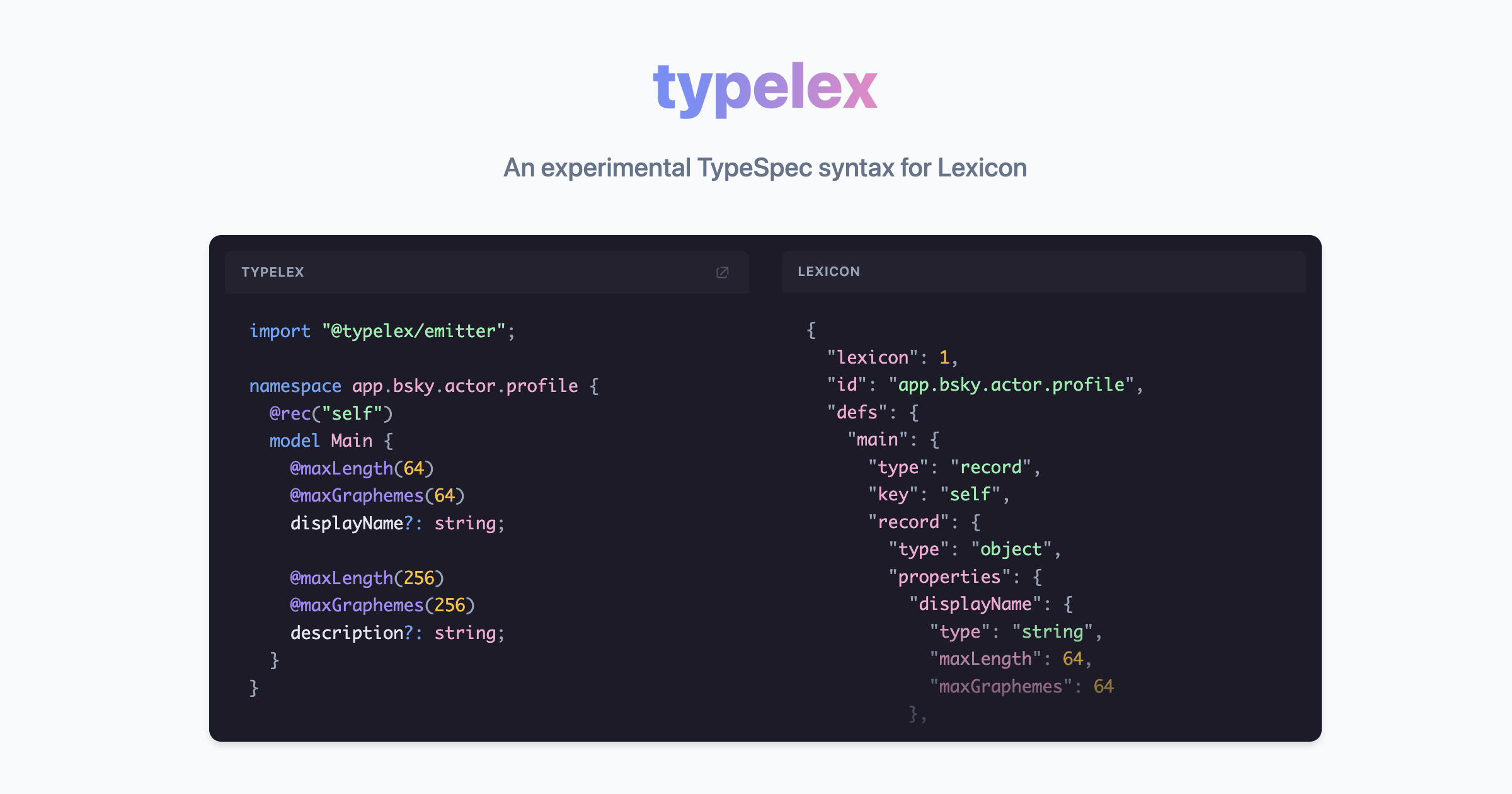
typelex – An experimental TypeSpec syntax for Lexicon
An experimental TypeSpec syntax for AT Protocol Lexicons. Write Lexicons in a more readable syntax using TypeSpec.
Communicating in Types • Kris Jenkins • GOTO 2024
Theorems for free! | Proceedings of the fourth international conference on Functional programming languages and computer architecture
The polymorphic blame calculus integrates static typing, including universal types, with dynamic typing. The primary challenge with this integration is preserving parametricity: even dynamically-typed code should satisfy it once it has been cast to a ...
Syntax and semantics of dependent types
In this chapter we fix a particular syntax for a dependently typed calculus and define an abstract notion of model as well as a general interpretation function mapping syntactical objects to entities in a model. This interpretation function is shown to be sound with respect to the syntax.
A theory of type polymorphism in programming
The aim of this work is largely a practical one. A widely employed style of programming, particularly in structure-processing languages which impose n…
Syntax and Semantics of Linear Dependent Types
A type theory is presented that combines (intuitionistic) linear types with type dependency, thus properly generalising both intuitionistic dependent type theory and full linear logic. A syntax...

Subtyping is Overrated - Caleb Meredith aka @calebmer at @ReactEurope 2018
Slim Lim: "Concrete syntax matters, actually"