


Meet Instinct, Continue's open Next Edit model that's built to predict your next edit and keep you in flow
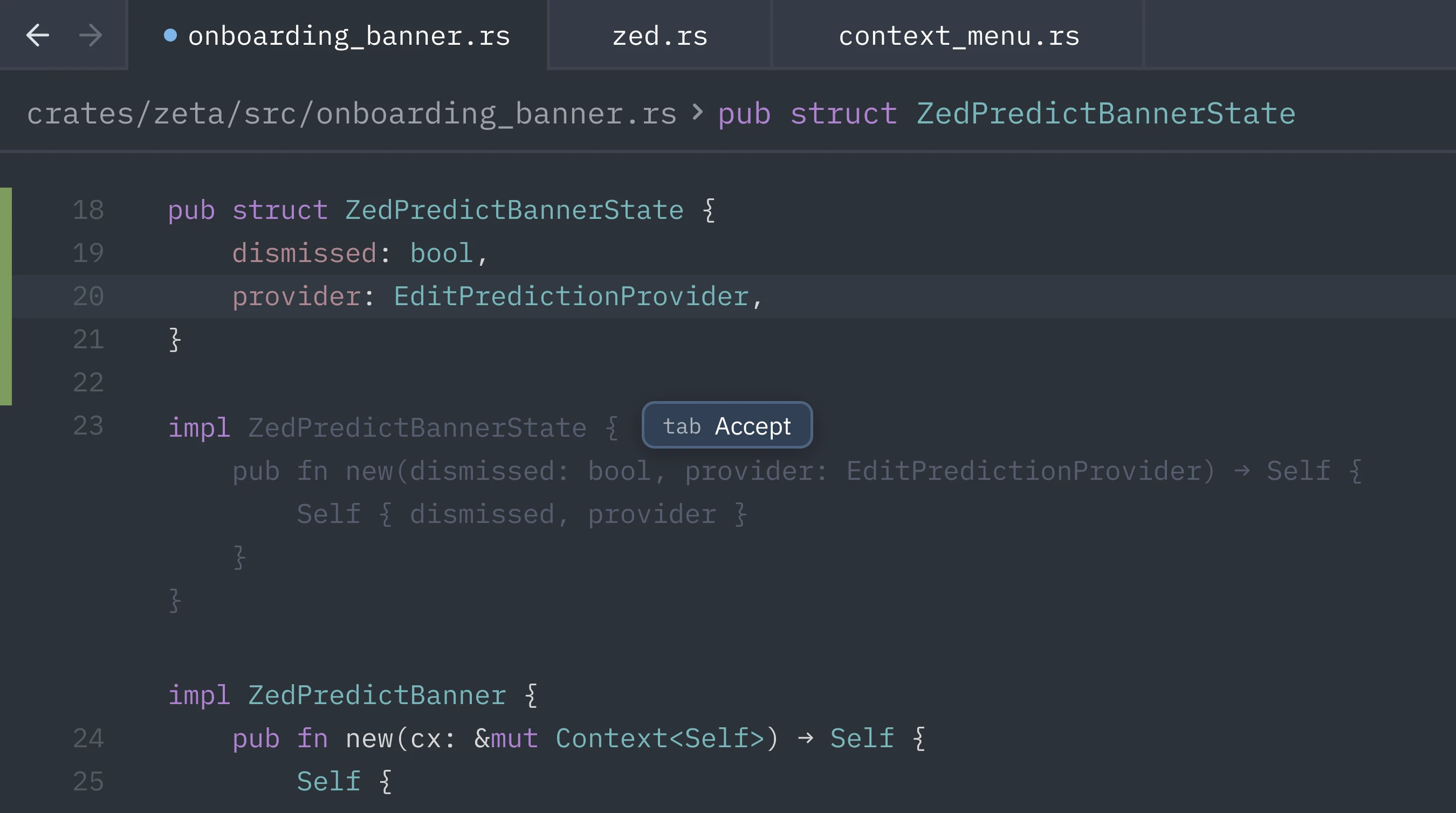
Zed now predicts your next edit with Zeta, our new open model
From the Zed Blog: A tool that predicts your next move. Powered by Zeta, our new open-source, open-data language model.
Introducing LM Studio Bionic: the AI agent for open models
The AI agent made for open models, built to get things done.

Olmo 3: Charting a path through the model flow to lead open-source AI | Ai2
Our new flagship Olmo 3 model family empowers the open source community with not only state-of-the-art open models, but the entire model flow and full traceability back to training data.

Ensō—Write now, edit later.
Ensō is a writing tool that helps you enter a state of flow.

Open models recap: more on Kimi K3, Qwen 3.8, Xi's WAIC speech, distillation, the open-closed gap, and what's next
A podcast with Florian Brand.
Staying on the right side: Best practices in editing
Join for three days of talks, discussions and workshops around the free and open map of the world.
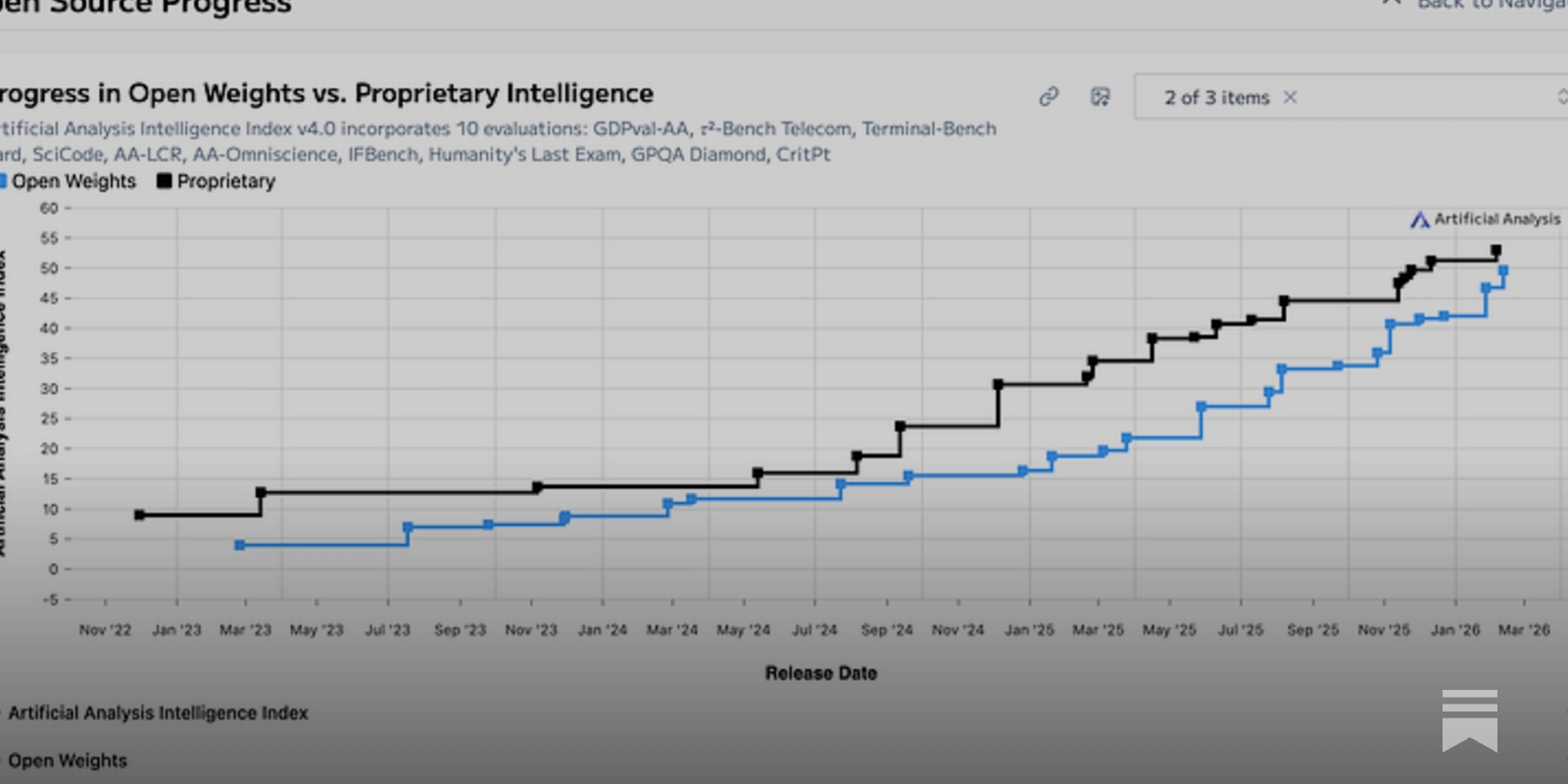
Open models in perpetual catch-up
The open-closed gap, distillation, innovation timescales, how open models win, specialized models, what’s missing, etc.
Memory Models: Towards Agents That Learn
Agents that truly learn from experience will be powered by memory models: models that create and curate token-space memory across model generations, trained with memory-native RL.
The State of Open Models
Synchronized editing: the future of collaborative writing
A growing suite of tools allows teams of researchers to work collectively to edit scientific documents.

continuedev/instinct-data · Datasets at Hugging Face
We’re on a journey to advance and democratize artificial intelligence through open source and open science.

Open-Source AI & Open Models Reading List
How to get up to speed on open models and their implications.
OpenAI on Twitter / X
Our open models are here.Both of them.https://t.co/9tFxefOXcg— OpenAI (@OpenAI) August 5, 2025
SkillOpt: Executive Strategy for Self-Evolving Agent Skills
View recent discussion. Abstract: Agent skills today are hand-crafted, generated one-shot, or evolved through loosely controlled self-revision, none of which behaves like a deep-learning optimizer for the skill, and none of which reliably improves over its starting point under feedback. We argue the skill should instead be trained as the external state of a frozen agent, with the same discipline that makes weight-space optimization reproducible. SkillOpt is, to our knowledge, the first systematic controllable text-space optimizer for agent skills: a separate optimizer model turns scored rollouts into bounded add/delete/replace edits on a single skill document, and an edit is accepted only when it strictly improves a held-out validation score. A textual learning-rate budget, rejected-edit buffer, and epoch-wise slow/meta update make skill training stable while adding zero inference-time model calls at deployment. Across six benchmarks, seven target models, and three execution harnesses (direct chat, Codex, Claude Code), SkillOpt is best or tied on all 52 evaluated (model, benchmark, harness) cells and beats every per-cell competitor among human, one-shot LLM, Trace2Skill, TextGrad, GEPA, and EvoSkill skills. On GPT-5.5 it lifts the average no-skill accuracy by +23.5 points in direct chat, by +24.8 inside the Codex agentic loop, and by +19.1 inside Claude Code. Transfer experiments further show that optimized skill artifacts retain value when moved across model scales, between Codex and Claude Code execution environments, and to a nearby math benchmark without further optimization. Code: this https URL
Believe It or Not: How Deeply do LLMs Believe Implanted Facts?
Knowledge editing techniques promise to implant new factual knowledge into large language models (LLMs). But do LLMs really believe these facts? We develop a framework to measure belief depth and use it to evaluate the success of knowledge editing techniques. We operationalize belief depth as the extent to which implanted knowledge 1) generalizes to related contexts (e.g. Fermi estimates several logical steps removed), 2) is robust to self-scrutiny and direct challenge, and 3) is represented similarly to genuine knowledge (as measured by linear probes). Our evaluations show that simple prompting and mechanistic editing techniques fail to implant knowledge deeply. In contrast, Synthetic Document Finetuning (SDF) - where models are trained on LLM-generated documents consistent with a fact - often succeeds at implanting beliefs that behave similarly to genuine knowledge. However, SDF's success is not universal, as implanted beliefs that contradict basic world knowledge are brittle and representationally distinct from genuine knowledge. Overall, our work introduces measurable criteria for belief depth and enables the rigorous evaluation necessary for deploying knowledge editing in real-world applications.
