


If you think about it, our attention is the only thing we truly own in our lives. Our possessions can go away. Our bodies can be compromised. Our relationships can fall apart. Even our memories and intellectual capacity fade away.
How Social Isolation Is Killing Us (Published 2016)
Research confirms our deepest intuition: Human connection lies at the heart of human well-being.

Does each click of attention cost a bit of ourselves? | Aeon Essays
It costs nothing to click, respond and retweet. But what price do we pay in our relationships and our peace of mind?

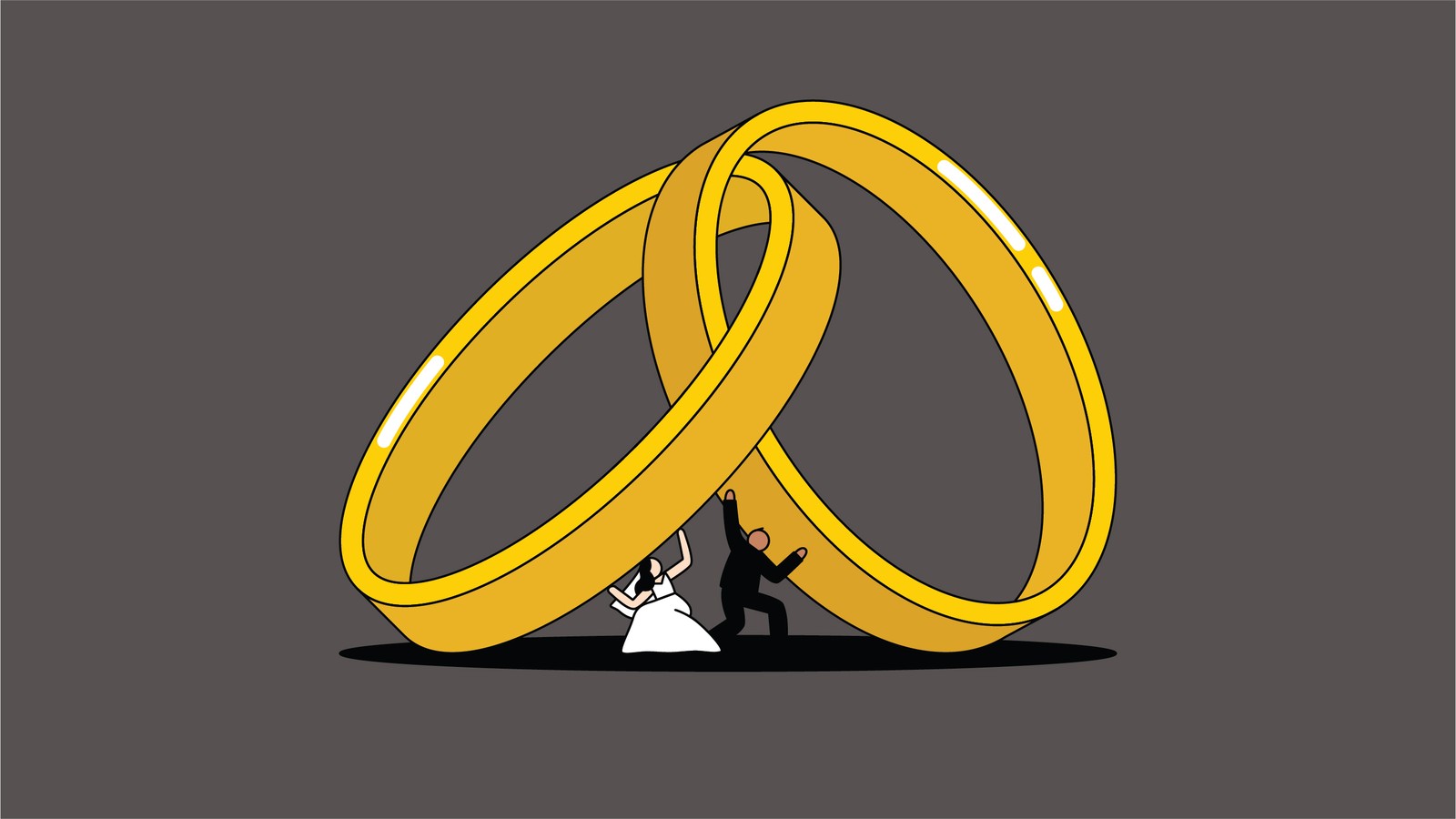
What You Lose When You Gain a Spouse
What if marriage is not the social good that so many believe and want it to be?
The attention market—and what is wrong with it
Attention is described as a “scarce commodity” that is traded in “a marketplace.” This, it is further claimed, contributes to a “widespread sense of attentional crisis.” But is there really an attention market, and if so, what, if anything, is wrong with it? We defend the claim that there are markets in attention. We provide an account of such attention markets and use that account to address what is morally wrong with them. Our account draws on knowledge of how attention works and what roles it plays in the mind. The attention market trades in an ability to influence our attention – somewhat (though not exactly) like the labor market trades in an ability to influence how we use our capacity for work. Specifically, the commodity it trades in is attentional landscaping potential, viz. the ability to systematically influence patterns of attention by changes to the sensory environment individuals are exposed to. Attention markets thus, we argue, commodify influence over a human capacity that plays a central role in shaping individual experience, agency, and belief formation. This feature of attention markets makes them ethically problematic. As markets in access to external influence, attention markets pose a special threat to individual autonomy and escape the classical liberal defense of free markets. Those who value autonomy should worry about the attention markets that exist today.

Empathy, Thick and Thin
When we empathize with someone going through something, we often draw on our past experiences with the someone and the something. These kinds of experiences gro

This column will change your life: just sit down and think
'No wonder we don't dwell on what's inside: that would underline the loneliness of existence,' says Oliver Burkeman

A History of Turning Away
What does it mean, truly, to turn away from something?

Our Future Is Being Devoured By Feral Thought Experiments
Here's a chance to start taking it back.
Nurturing our humanity: how domination and partnership shape our brains, lives, and future
Nurturing Our Humanity offers a new perspective on our …

Six Ways to Think Long-term: A Cognitive Toolkit for Good Ancestors
None of these six ways is enough alone to create a long-term revolution of the human mind — a fundamental shift in our perception of time. But together — and when practised by a critical mass of people and organisations — a new age of long-term thinking could emerge out of their synergy.

How Focus Became More Valuable Than Intelligence
This may be the most important problem of our lifetime.

7. Death, and how tech forgot about mortality / Michael Kibedi / FFConf 2024
We've Lost the Spaces That Foster Friendship
We keep offering individual fixes for loneliness while ignoring the disappearance of the spaces where adults once built real relationships.

Why major life decisions should be approached with ‘epistemic humility’ | Psyche Videos
At a crossroads in life? No matter how much you deliberate, one unknowable remains: the person you will be on the other side

Your Brain Can Only Take So Much Focus
Research has shed light on the power of focus and its role as a hidden driver of success. Yet as helpful as focus can be, research also shows there’s a downside to it: excessive focus exhausts the focus circuits in your brain. It can drain your energy, make you lose self-control, impair your decision-making, and make you less collaborative. The brain operates optimally when it toggles between focus and unfocus. When you unfocus, you engage a brain circuit called the default mode network (DMN). The DMN activates old memories, goes back and forth between the past, present, and future, and recombines different ideas. Using this new and previously inaccessible data, you can imagine creative solutions or predict the future, and more. There are many simple and effective ways to activate this circuit in the course of a day, such as positive constructive daydreaming, napping, and consciously thinking from another person’s perspective.

When we lose shared experiences, we lose humanity Isolationism is the number one issue Isolationism leads to ignorance, ignorance leads to fear, fear leads to hate

Sam Clemente
People are biking by and slowing down as they pass, others walking by stop for a moment to listen, the kids are running around while a big family sits down to dinner The people in cars are oblivious to the purest human experience happening as they drive by