


Paying attention to where you place your attention is a difficult feat in a digital world that's designed to be distracting. But according to Dr. Gloria Mark, it's the key to finding deep focus at work.
Why It's So Hard to Focus at Work (Hint: It's not you, it's your workplace)
The workplace is overloaded with distractions. Here's why (and how) companies should protrect their most important asset – their team's attention.
What if the Attention Crisis Is All a Distraction?
From the pianoforte to the smartphone, each wave of tech has sparked fears of brain rot. But the problem isn’t our ability to focus—it’s what we’re focussing on.
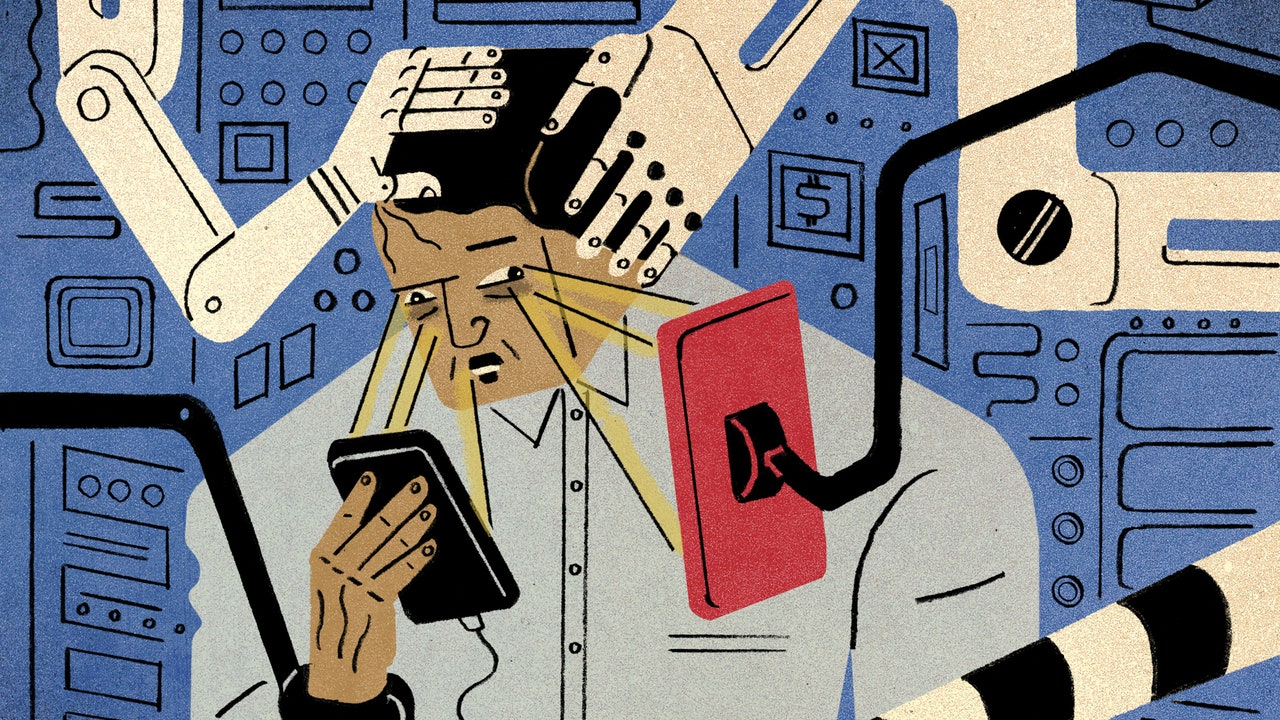
Your Brain Can Only Take So Much Focus
Research has shed light on the power of focus and its role as a hidden driver of success. Yet as helpful as focus can be, research also shows there’s a downside to it: excessive focus exhausts the focus circuits in your brain. It can drain your energy, make you lose self-control, impair your decision-making, and make you less collaborative. The brain operates optimally when it toggles between focus and unfocus. When you unfocus, you engage a brain circuit called the default mode network (DMN). The DMN activates old memories, goes back and forth between the past, present, and future, and recombines different ideas. Using this new and previously inaccessible data, you can imagine creative solutions or predict the future, and more. There are many simple and effective ways to activate this circuit in the course of a day, such as positive constructive daydreaming, napping, and consciously thinking from another person’s perspective.

It's getting harder to focus every day
I’m feeling it right now. I had to set a timer for 15 minute on my computer and block all distractions to write this. If I didn’t force myself to focus I would easily get distracted by something after few minutes. Even when I’m doing things that I’ve been waiting to do it, I still feel the urge to do something else. I don’t know how and when this happened. During the last few years I was always studying, working, and doing open source. And actually got stuff done. Doing all of those at the same time requires paying attention to what I wanted to do and ignore the noise.
Want to be less distracted? Try this: Find the fun in tedious tasks
Most of us blame our phones as the reason we can’t get anything done. But the real culprit often isn’t those shiny devices, which means we can stay focused simply by switching our perspective…

Heavy multitaskers have reduced memory
People who frequently engage with multiple types of media at once performed worse on simple memory tasks, according to the last decade of research. However, it’s still too soon to determine cause and effect, says psychology Professor Anthony Wagner.

Deep work. Essentialism in asynchronous culture
Deep work Nowadays, we are getting accustomed to working in a continuously interrupting environment. Smartphone notifications, hundreds of e-mails, open spaces, and meetings slicing our workday. We are feeling busy, and overworked, but are we more productive? If I am a salesman or project coordinator that way of working can bring good effects and even improve my skills. However, for Software Developers, Designers, and other professionals that need a quiet environment for creative effort, it can lead only to frustration and burnout. They need something that is called deep work. Deep work is a concept popularized by Cal Newport in his book under the same title published in 2016. The author divides mental activity into two categories: shallow work, that does not need intensive concentration like sending e-mails, formatting documents, chatting using communicators, etc. deep work, that demands distraction-free focus on one task like writing a document, learning a new skill, designing a software system, etc.
How to reclaim your attention from the distraction economy | Psyche Videos
Could you watch this video on full screen, 1x speed, with no distractions? Here are five steps to rebuild your attention span
ADHD: a critical analysis
distraction and overstimulation in the attention economy
These 5 Habits Will Help You Stay Focused All Day. A Psychologist Explains Why
Finding it hard to concentrate these days? Here's how to get back on track.

We’ve always been distracted, or at least worried that we are | Aeon Essays
Worried that technology is ‘breaking your brain’? Fears about attention spans and focus are as old as writing itself

Modern work requires attention. Constant alerts steal it - Stack Overflow
Attention—the time and freedom to focus—is your team’s most valuable resource.

How We Pay Attention Changes the Very Shape of Our Brains
Imagine arriving at the airport just in time to catch a plane. Everything in your behavior betrays the heightened concentration of your attention. Your mind on alert, you look for the departures si…

Please stop multitasking. I’m begging you. Please.
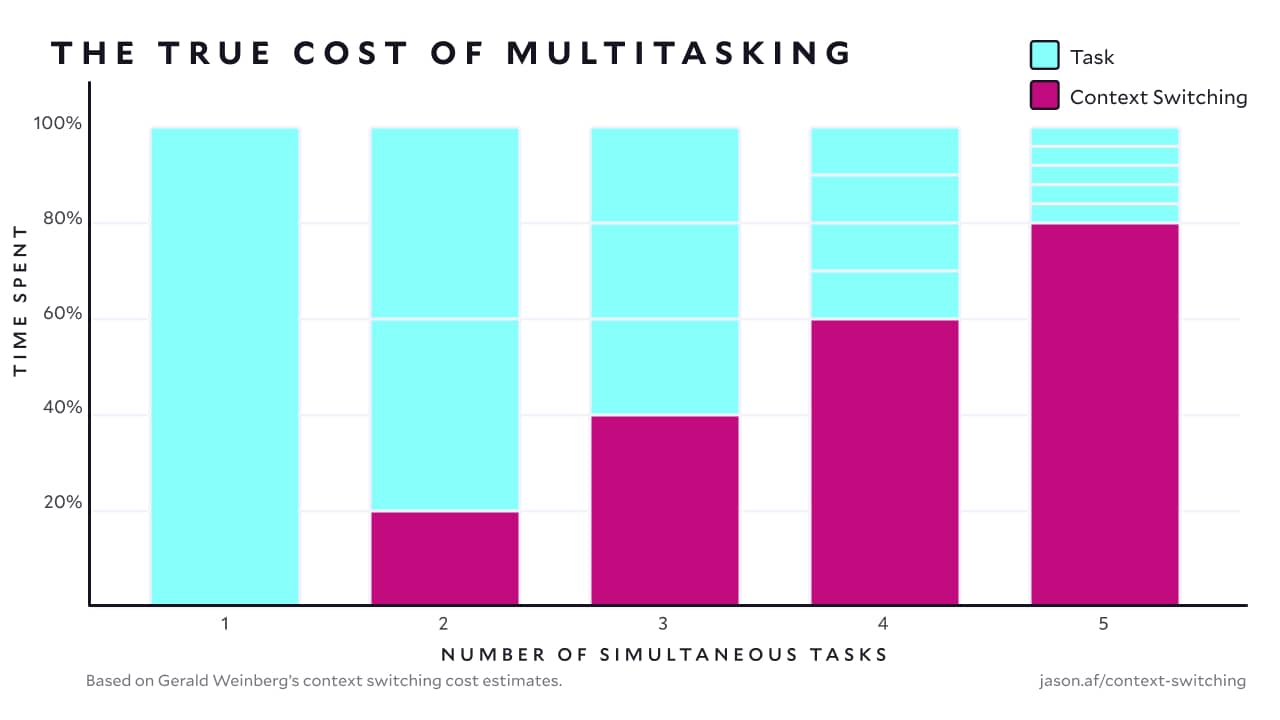
The greatest trick we ever pulled on ourselves as knowledge workers was convincing ourselves we could juggle multiple projects with no consequences.
Attention and the Relevance Problem
ABSTRACT The relevance problem is the problem of how cognitive systems can be sensitive to what is relevant despite relevance being holistic, open‐ended, and context‐sensitive. The problem has typically been applied to higher‐order cognitive processes. In this paper, I argue that there is a hitherto unrecognized relevance problem for perceptual attention. This problem becomes apparent when considering the functions of attention: attention must not only support ongoing task performance but also remain sensitive to opportunities for task switching, latent learning, and context checking. Existing treatments of the relevance problem have largely focused on its task‐relative form: given a task, what is relevant? I argue that attention faces a more general problem that includes sensitivity to factors relevant to other interests and to cues indicating that another activity may be worth pursuing. For such features of the environment to stand out as salient, salience cannot be determined solely by bottom‐up factors and a limited set of occurrent top‐down factors, such as current goals and intentions. Rather, it must reflect the wider (if not the entire) range of an agent's latent interests in a context‐sensitive way. This motivational unencapsulation of attention poses a challenge for both contemporary accounts of attention and suggests that passive attention is much more intelligent than commonly thought.