

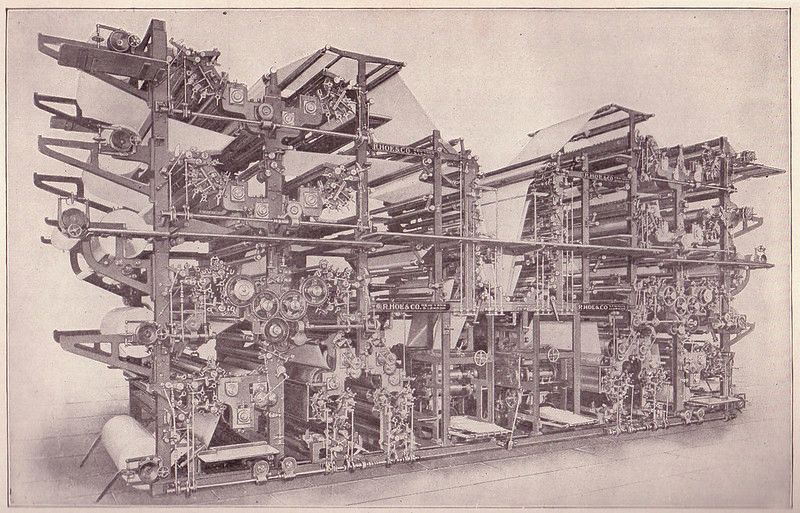
Writing about open & equitable product development
Open Source Explained — Open Indie
Musings on the concept of ‘open source’, in the broadest possible definition of the term. Also an invitation to become a participant in ...
The Product Picnic
Writing on UX and product management to connect today's discourse with classic insights that the industry forgot.

Reframing “Open Source AI” with Meredith Whittaker: AI Impact Summit 2026

Some startups are going ‘fair source’ to avoid the pitfalls of open source licensing | TechCrunch
New alternative category to 'closed source' could help companies monetize software in the open -- without going all-in on open source.

OPEN (Organization for Polyamory and Ethical Non-monogamy)
OPEN is a grassroots advocacy nonprofit working to advance legal rights and cultural acceptance for non-monogamous families and relationships of all varieties.
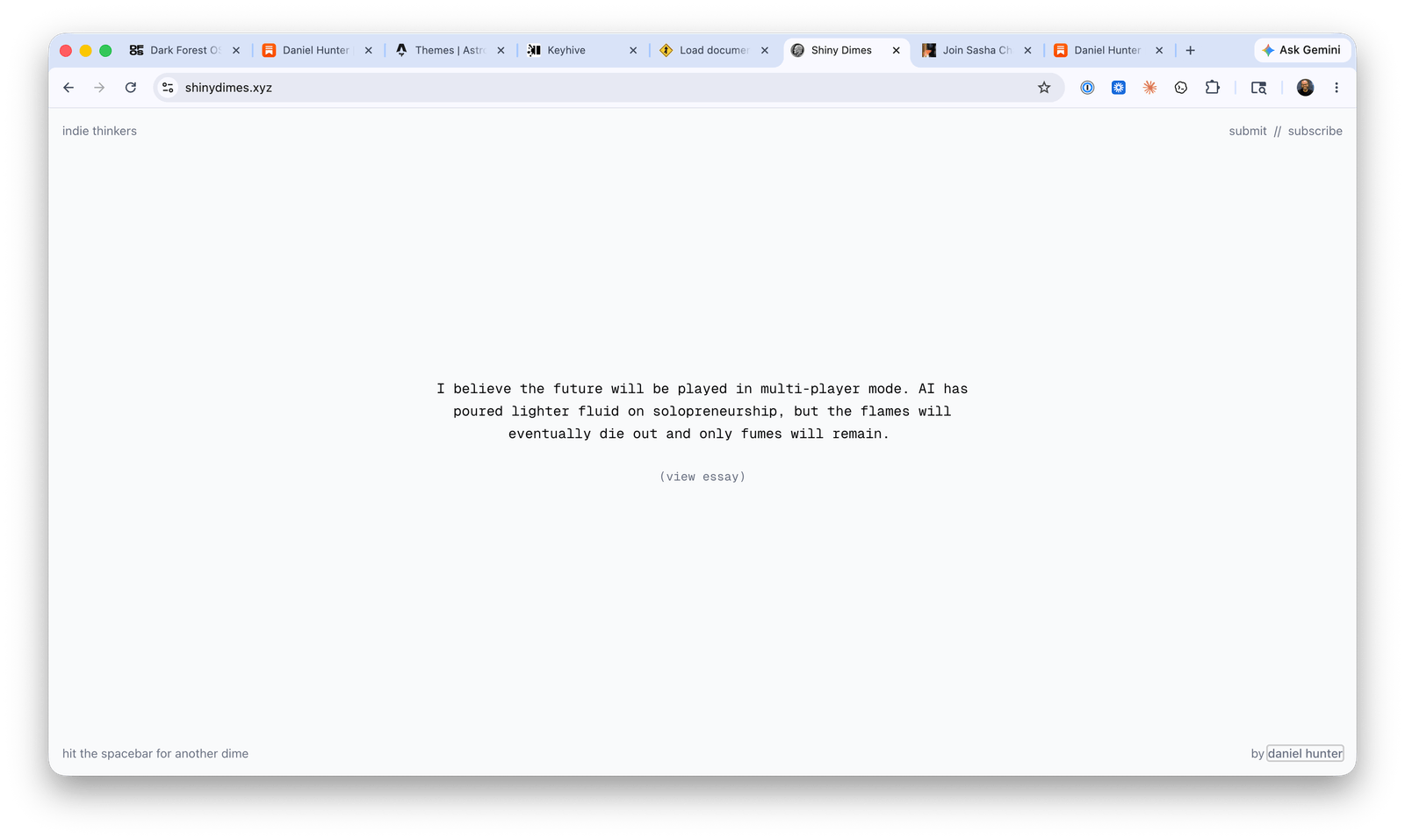
Indie Thinkers
A curated collection of quotes from the brightest minds on the internet.
Minimum Standards of Product Development
Fostering collaboration and continuous innovation

Good, Standard Work: Creating the Commons
A defence of digital stewardship, IndieWeb principles, Blackfoot models of collective flourishing, and what it means to plant seeds in a garden you'll neve…
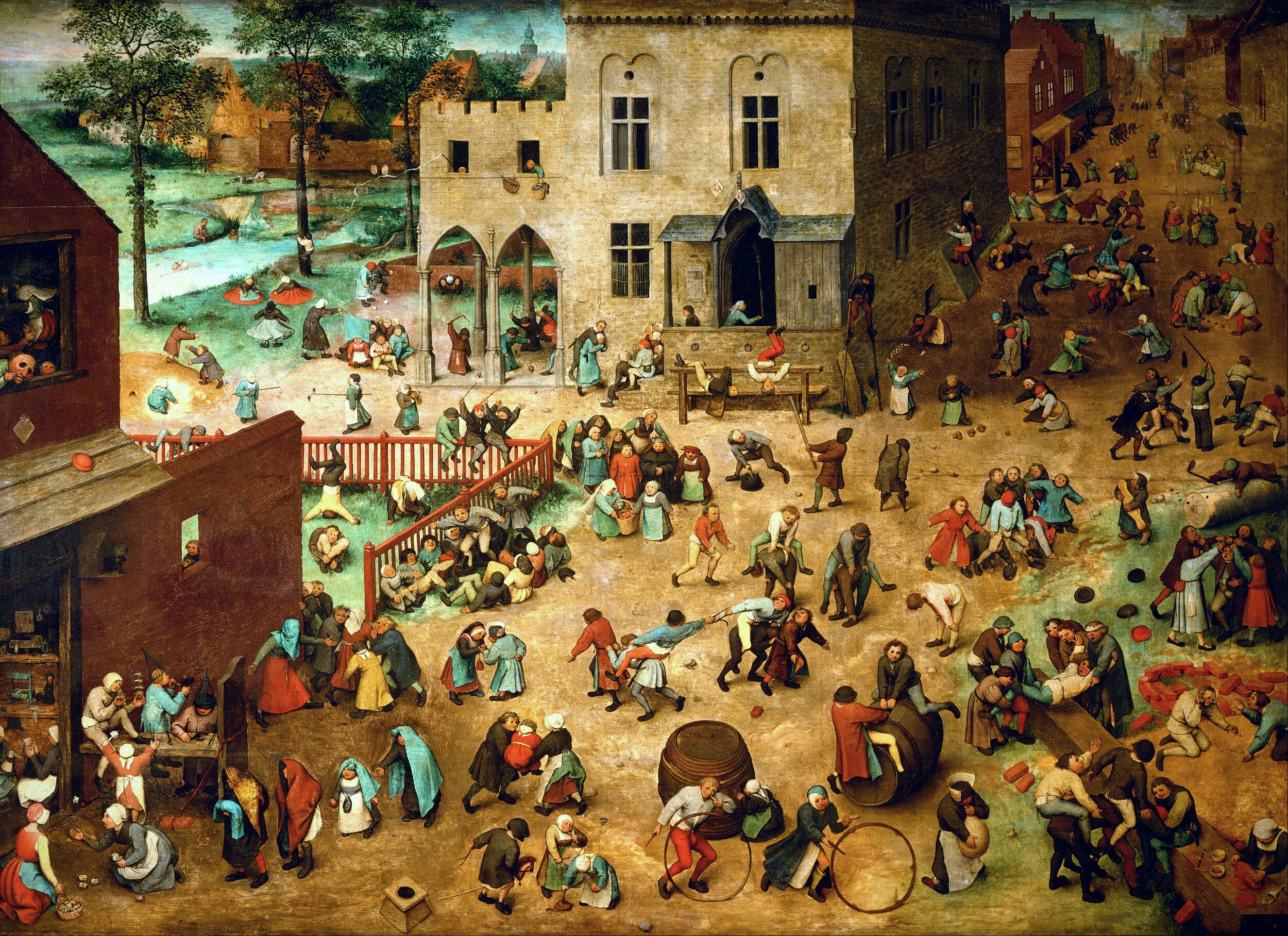
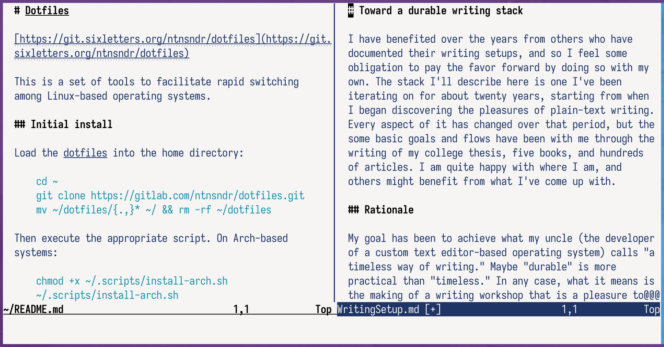
Toward a durable writing stack – Writings and rehearsals by Nathan Schneider
I have benefited over the years from others who have documented their writing setups, and so I feel some obligation to pay the favor forward by doing so with my own. The stack I’ll describe here is one I’ve been iterating on for about twenty years, starting from when I began discovering the pleasures of plain-text writing. Every aspect of it has changed over that period, but the some basic goals and flows have been with me through the writing of my college thesis, five books, and hundreds of articles. I am quite happy with where I am, and others might benefit from what I’ve come up with.
Dirk Riehle's Industry and Research Publications
Best of open source, inner source, and product strategy
Landing — Open Journals Collective
We're a collective of libraries, university presses, and non-profit publishers reshaping academic research.
The open authorial principle: supporting networks of authors in creating externalisable designs
As part of the Digital Library's transition to Open Access, new features for researchers are available in the Premium Edition. Click here to learn more.

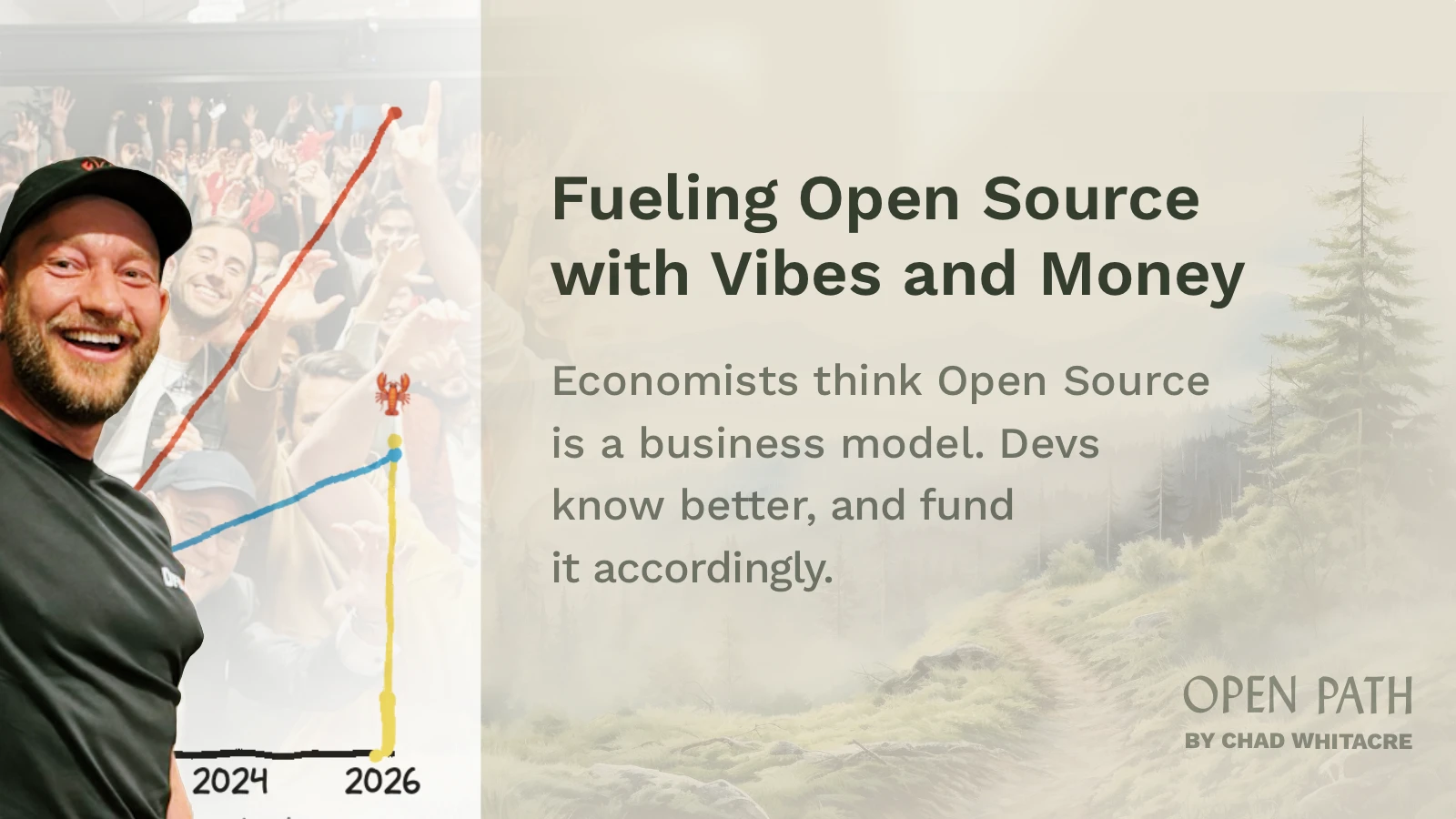
Fueling Open Source with Vibes & Money
Economists think Open Source is a business model. Devs know better, and fund it accordingly.
Publishing Beyond the Market: Open Access, Care, and the Commons
<I>Publishing Beyond the Market</I> argues that the move to open access should focus less on the free accessibility of research outputs and more on who controls the publications and infrastructures for scholarly communication. By deploying theoretical literature on science and technology studies, care ethics, and the commons, the book critically interrogates open access and reimagines a more ethical future for researcher-led publishing. A case study of Plan S—the multifunder European policy for open access publishing—explores its tendency to rehearse all the failures of commercialisation. Through critical engagement with the open access landscape, the book reveals the shortcomings of market-centric and policy-based approaches to open access book and journal publishing, particularly their tendency to reinforce conservatism, commercialism, and private control of publishing.<BR /><BR /> Going forward, <I>Publishing Beyond the Market</I> explores the importance of collectivity and democratic governance within the transition to open access publishing. It suggests that developing a commons-based, scholar-led publishing landscape through a series of presses that are each managed by working academics could offer a productive counterpoint to marketised systems of open access and subscription publishing. In weaving themselves together in order to "scale small" these publishing initiatives would act as a counter-hegemonic project based on mutual reliance and care. By illustrating how these projects build toward a commons-based publishing future, and how they may complement other approaches to publishing within university presses and libraries, the book culminates in an argument for the infrastructures, policies, and forms of governance needed to nurture such a collective vision.

A brief 🧵 for all outside the #atproto bubble on why, from a digital industrial policy perspective, this step is deeply bewildering. There's @eurosky.social – open source, non-profit, fully aligned with the EU's open source strategy. It provides all that W has, & more. And yet, the Commission...

European Commission
We have now joined W, a new European social media network. We’re present on 15+ platforms, and are especially happy to join one based in Europe and with the ambition to foster open and safer online conversations. Keep the conversation going - whether from W, Bluesky or other compatible apps.
