

There’s an increasing obsession with “humanness” these days: Humanness in the age of AI Worldcoin: a solution in search of its problem (...
Our AI Philosophy | Typefully
Social media runs on an implicit contract: I write something, you follow me, you read it, and you trust it came from a human mind. AI writing is curr…

Collective action strategies in the age of AI w/ Nick Vincent from Data Leverage
Podcast Episode · The Blockchain Socialist · March 4 · 1h 3m

The AI future where humans get paid to be creative
For the love of God, stop calling your AI a co-worker | TechCrunch
A growing number of startups are anthropomorphizing AI to build trust fast -- and soften its threat to human jobs.

‘There’s a Value in What We Produce Because We Feel – and an AI Chatbot Can’t Feel’
Byline Times' Editor in Chief meets Kate Devlin, Professor of AI and Society at King’s College London, to explore how relationships with AI companions aren’t particularly new, why she believes the under-16s social media ban is flawed, and why human creativity can't be matched
Human Life in a Post-AGI World - Google DeepMind Talk
Tyler Cowen at Google DeepMind on life after AGI: rebuilding every institution, the rise of "AI maniacs," and why the future will be drenched in meaning.
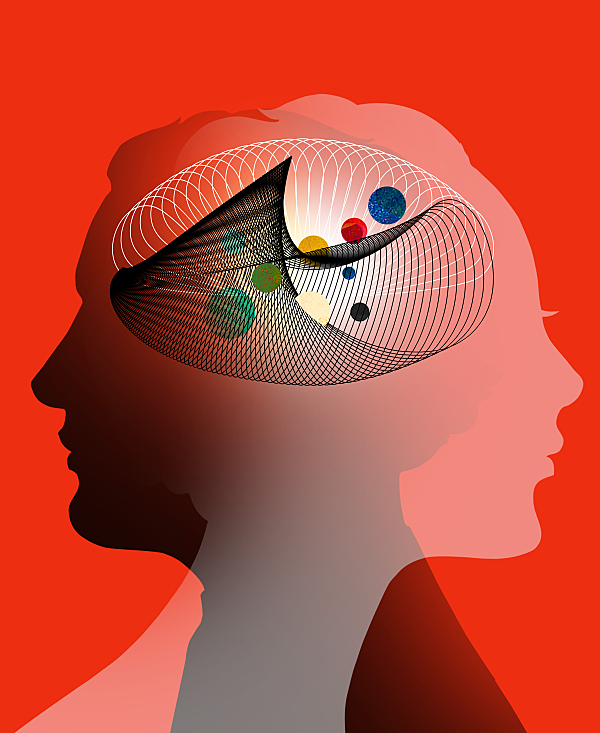
AI as Social Technology
Our debates about ‘AI’ grow out of 1990s science fiction. Back then, Vinge (1993) wrote essays and novels urging us to face up to the oncoming “Singularity”: a moment of rapid change that would fundamentally transform the human condition. On that day, AI would rapidly evolve from merely human-level intelligence, what some now call ‘artificial general intelligence’ (AGI), into something super-intelligent with its own interests and goals. Humanity would then either be casually eliminated by out-of-control machines, or humans would become as gods, with super-human servitors at our command.
The rise of AI ‘civilizations’ and the fall of corporate responsibility
The internet fights over anthropomorphism around the Hugging Face hack.

Humanism without (All) Humans
Microsoft Humanism puts corporate muscle behind an overweening class of bad AI philosophies
Company Offering ‘100% Human-Written, Never AI’ Medical Research Is Entirely AI
Research Gold's team of human methodologists are either AI generated or using the identity of real people without their permission

Company Offering ‘100% Human-Written, Never AI’ Medical Research Is Entirely AI
Research Gold's team of human methodologists are either AI generated or using the identity of real people without their permission

The AI Researcher Who Just Quit Anthropic Says It’s ‘Crunch Time for Humanity’
Jacob Coxon talks to WIRED about the “mini Manhattan project” inside Anthropic, the problem with alignment, and why AI labs have just a few years left to make their systems safe.

Anthropomorphism Is Breaking Our Ability to Judge AI
Tech Policy Press fellow James Ball asks, how should we interact with a technology designed to ‘speak’ with us on what appear to be human terms?
Anthropomorphism in AI: hype and fallacy
This essay focuses on anthropomorphism as both a form of hype and fallacy. As a form of hype, anthropomorphism is shown to exaggerate AI capabilities and performance by attributing human-like traits to systems that do not possess them. As a fallacy, anthropomorphism is shown to distort moral judgments about AI, such as those concerning its moral character and status, as well as judgments of responsibility and trust. By focusing on these two dimensions of anthropomorphism in AI, the essay highlights negative ethical consequences of the phenomenon in this field.

science in the age of AI

What does it mean to be a human researcher in the age of powerful AI?
Claude-shaped science

Agentic Laboratories of the Future: Towards World Models for Scientific Discovery
On the Value of Doing a PhD in the Age of AI

Applied Pure Mathematics

What Next for Academia?

The Age of Wonders and Terrors