


A REE run produces two outputs: the generated text and a receipt. The receipt binds the job inputs to the job output, including the model, prompt, configuration, and generated result.
Reproducible Execution Environment (REE) | Tech | Gensyn
Run AI model inference in a machine-agnostic environment where the same model and inputs produce the same outputs across supported hardware.

REA — Reverse Engineer Anything
Inspect apps, binaries and runtime behavior with your coding agent or terminal. REA connects local analysis tools through CLI and MCP.
Production Is a Compiler Input - The Phoenix Architecture

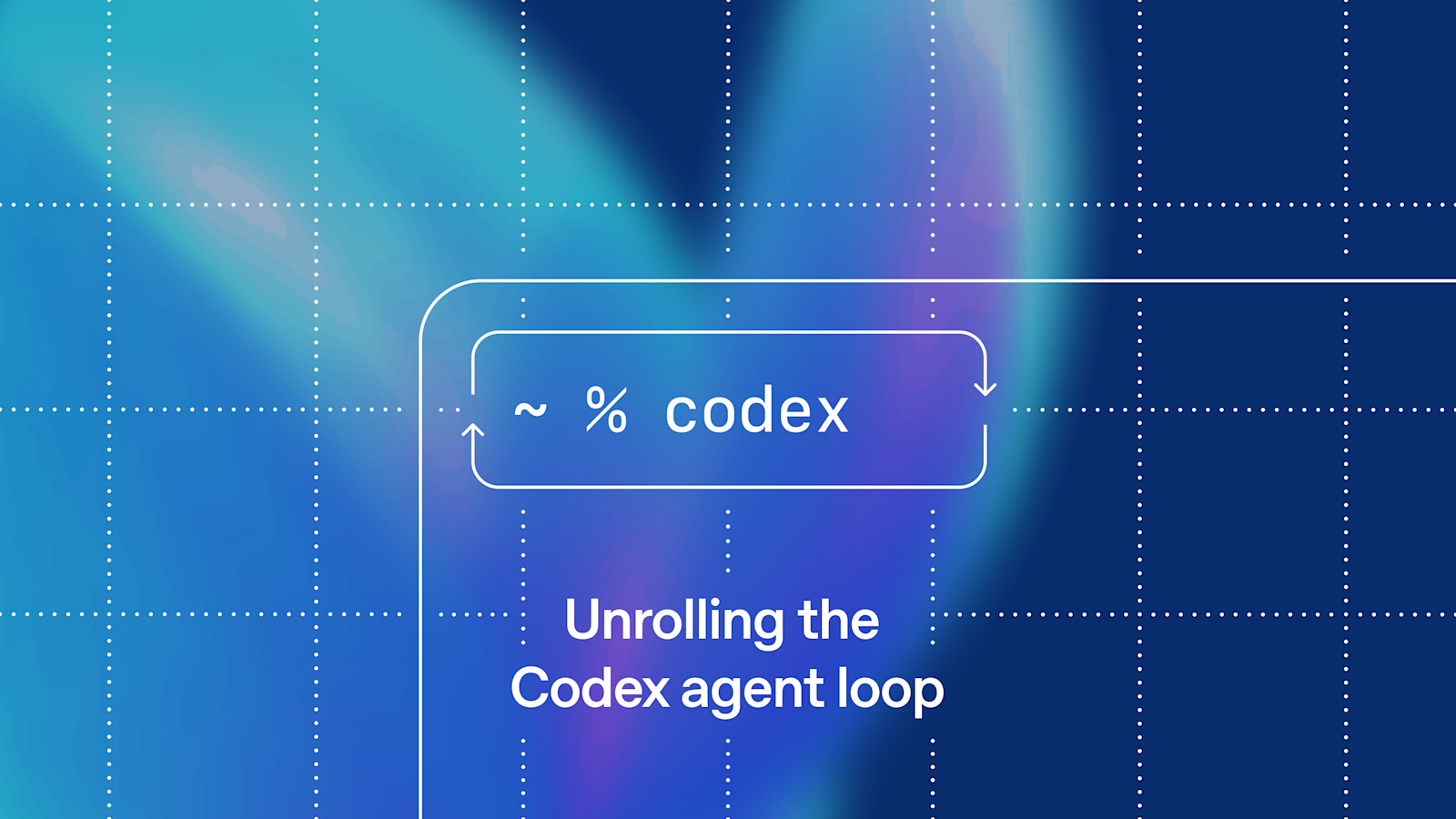
Unrolling the Codex agent loop
A technical deep dive into the Codex agent loop, explaining how Codex CLI orchestrates models, tools, prompts, and performance using the Responses API.
shepherd-agents/shepherd
A runtime substrate that turns an agent's execution into a reversible, Git-like trace, so meta-agents can observe, fork, replay, and revert any run. Couples agent and environments in a copy-on-write fork ~5x faster than docker commit, with ~95% KV-cache reuse on replay. Framework built for meta-agents to supervise, optimize, and train other agents
The Agent Harness
A specification for agent behavior that LLM frameworks leave undefined: error handling, context management, tool execution, and state transitions.
The AI Operating System: Stateful Agents with Letta | Cameron Pfiffer, AI By the Bay25
reladraw/reladraw
Contribute to reladraw/reladraw development by creating an account on GitHub.
Inngest - Durable Execution for Workflows & AI
Build reliable background jobs, workflows, and AI agents without extra infrastructure. Automatic retries, flow control, and step-level observability.
Regenerative Software - The Phoenix Architecture
morluto/rea
Reverse engineer anything with agents, from app behavior down to native binaries.
Evaluations Are the Real Codebase - The Phoenix Architecture
Why behavior outlives implementations
Signals: Toward a Self-Improving Agent | Factory.ai
Traditional product analytics tell you what happened. Session duration, tool calls executed, completion rates. But they...
Doing What They Say, Not What They Reason: Locating the Faithfulness Gap in LLM Agents
Do LLM agents act on the reasoning they state? We study this question of process fidelity in a controlled Texas Hold’em simulator, where each decision can be decomposed into reasoning, stated conclusion, executed action, and an equity-based reference action. This lets us separate two links in the agent decision pipeline: reasoning→conclusion and conclusion→action. We find that agents usually execute what they explicitly state, and that much of the apparent conclusion→action inconsistency comes from free-text conclusion parsing rather than model behavior. The main fidelity gap appears upstream. In a diagnostic that elicits each agent’s stated equity, pot odds, rule, and decision, errors split across input mistakes, borderline cases, and rule misapplications. For Claude Haiku 4.5, rule misapplications are overwhelmingly risk-averse, and a simple instruction to apply the rule mechanically roughly halves their rate. DeepSeek-Reasoner shows a different error composition, suggesting that the upstream gap is model-dependent. These findings suggest that agent evaluations should elicit machine-checkable conclusions and distinguish execution consistency from reasoning validity. We release a reproducible poker-agent harness and live multi-agent demo for studying process fidelity in LLM agents.
Reproducibility in Machine Learning-based Research: Overview, Barriers and Drivers
The concept of reproducibility can have different interpretations across various research fields and even within the same field [39]. To avoid confusion, we first specify our terms, broadly defining reproducibility and then further categorizing it into various types and degrees. The first distinction comes from Goodman et al. [42], who specify a fundamental division between whether we (i) mean reproducible in principle (termed “methods” reproducibility) due to sufficient description/sharing of methodologies, materials, etc., or (ii) whether results/conclusions actually prove to be reproducible when experiments or analyses are re-done. In the second category, they distinguish “results” and “inferential” reproducibility, depending on whether the analyses or inferences to broader conclusions are reproduced.