

Last month, we released UTM 5 which, amongst other things, is the first UTM release to ship accelerated graphics for Linux (Vulkan 1.3) and Windows (DirectX 11-12). In fact, we are the first virtualization product on macOS to ship DirectX 12 (ahead of VMware Fusion and Parallels Desktop). But shipping the driver is just the first step for a free open source PC replacement for macOS. Maintaining, supporting, and patching issues for the library of over 200,000 Windows games is an ongoing challenge. That is why we are launching db.getutm.app, a community driven game compatibility database for UTM. Users can…
InterfaceX26 — Sale & Showcase
InterfaceX26 brings together 150+ developers to tag Fake OS games on Steam, with a week-long sale and a live showcase of exclusive reveals.

Introduction - Vulkan Tutorial
A tutorial that teaches you everything it takes to render 3D graphics with the Vulkan API. It covers everything from Windows/Linux setup to rendering and debugging.
Learn | Vulkan | Cross platform 3D Graphics
In this three part series AMD and Quantic Dream break down the process of porting the hit title Detroit Become Human to PC.
Writing an efficient Vulkan renderer
In 2018, I wrote an article “Writing an efficient Vulkan renderer” for GPU Zen 2 book, which was published in 2019. In this article I tried to aggregate as much information about Vulkan performance as I could - instead of trying to focus on one particular aspect or application, this is trying to cover a wide range of topics, give readers an understanding of the behavior of different APIs on real hardware and provide a range of options for each problem that needs to be solved. At the time of publishing this article, the Kindle edition of the book is available for $2.99 on Amazon - that’s cheaper than a cup of coffee and it’s definitely worth your time and money. It contains many great articles about rendering effects and design. This, however, is the full, free of charge copy of the article - hopefully it will help graphics programmers to understand and use Vulkan to the full of its ability. The article has been lightly edited to mention Vulkan 1.1/1.2 promotions where applicable - fortunately, not much has changed in the last two years for Vulkan performance, so the content should still be mostly accurate. Enjoy!

Diagram of vertex input and multiple bindings
31K subscribers in the vulkan community. News, information and discussion about Khronos Vulkan, the high performance cross-platform graphics API.
Eiríkr Åsheim: Uxn: Permacomputing & Roguelikes
qualcomm/nexa-sdk
Run frontier LLMs and VLMs with day-0 model support across GPU, NPU, and CPU, with comprehensive runtime coverage for PC (Python/C++), mobile (Android & iOS), and Linux/IoT (Arm64 & x86 Docker). Supporting OpenAI GPT-OSS, IBM Granite-4, Qwen-3-VL, Gemma-3n, Ministral-3, and more.
The Virtual OS Museum
Over 1,700 pre-installed operating systems spanning 1948 to today, in a single Linux VM. Bundled QEMU, VirtualBox, and UTM. One-click launchers for Windows and Linux.
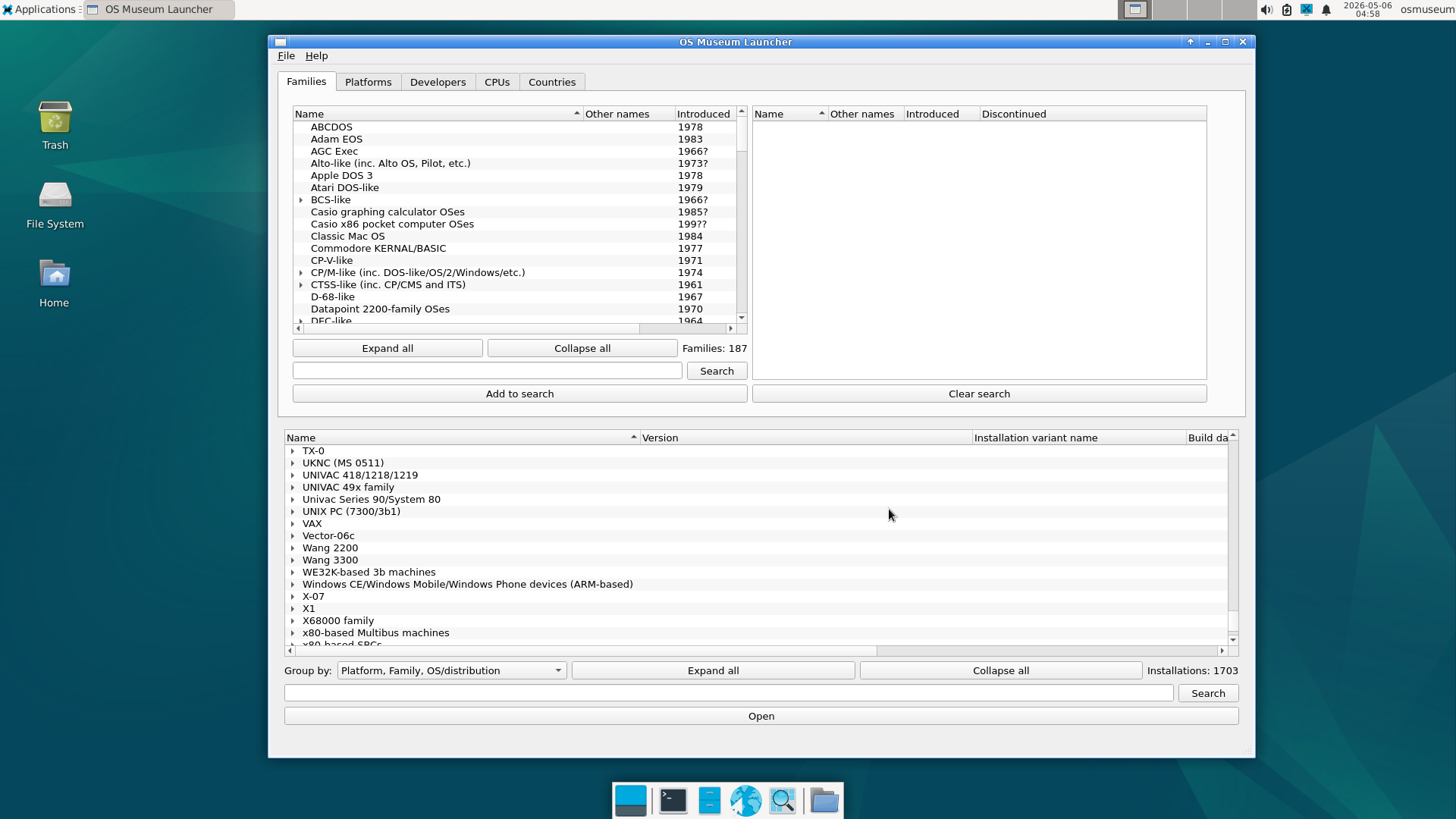
Leveraging Rust and the GPU to render user interfaces at 120 FPS
From the Zed Blog: A deep-dive into the graphical underpinnings of GPUI, the hardware-accelerated framework that powers Zed's user interface.

FOSDEM 2022 - LibVF.IO: vGPU & SR-IOV on Consumer GPUs using Nim
I'd like to showcase LibVF.IO's new LIME Runtime feature (Lime Is Mediated Emulation) and do a deep dive on open source vGPU technology in general.

Tiles version 0.4.18 Alpha 22 has been released. Tiles now supports the Vulkan backend, enabling GPU acceleration beyond NVIDIA across vendors on Linux, with fixes for MTP speculative decoding, Linux tool calls, and an occasional OAuth callback failure during ATproto login. Release notes ↗

Shared chat session by @tiles.run | Tiles
chat.tiles.run
