

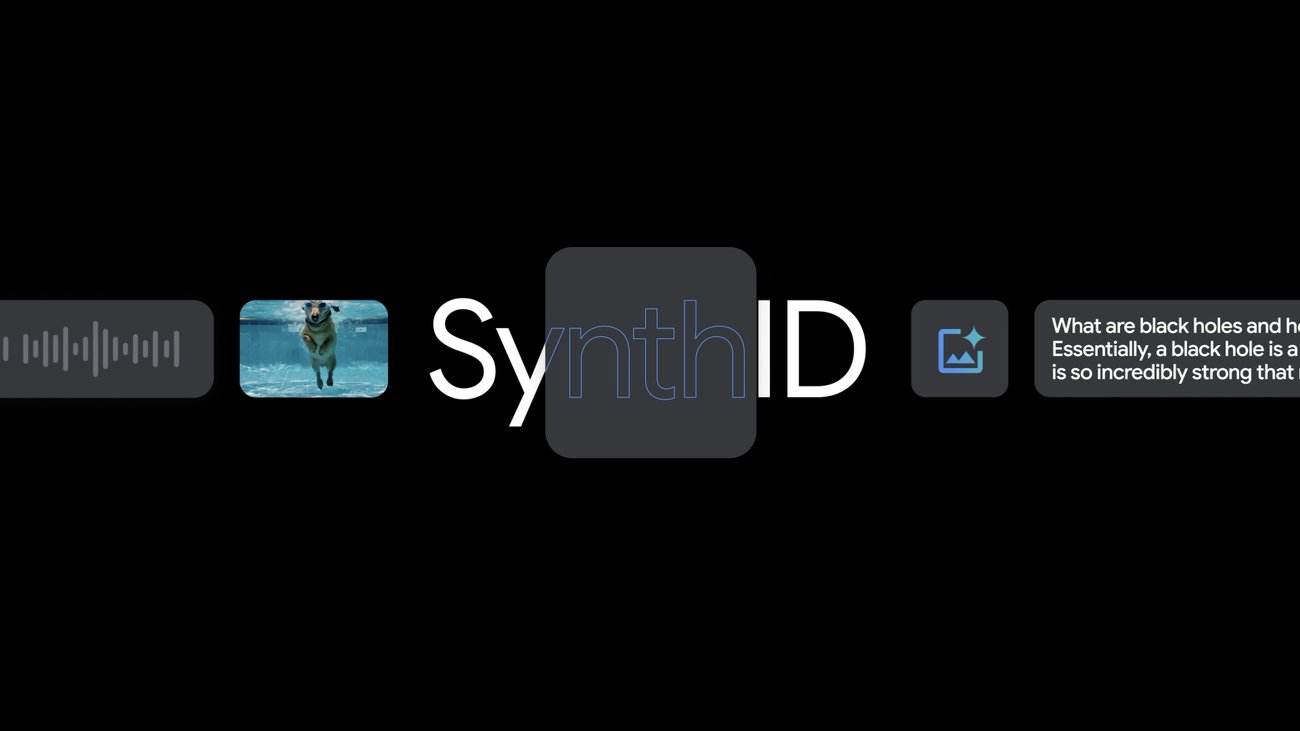
Learn about the new SynthID Detector portal we announced at I/O to help people understand how the content they see online was generated.
Google rolls out improved SynthID AI content detector, now available globally
The new SynthID website can now identify AI content from Google, OpenAI, and more.

We're making it easier to identify AI-generated content globally.
We’re launching a standalone platform to help you easily identify whether online content was created using Google AI or tools from our industry partners.

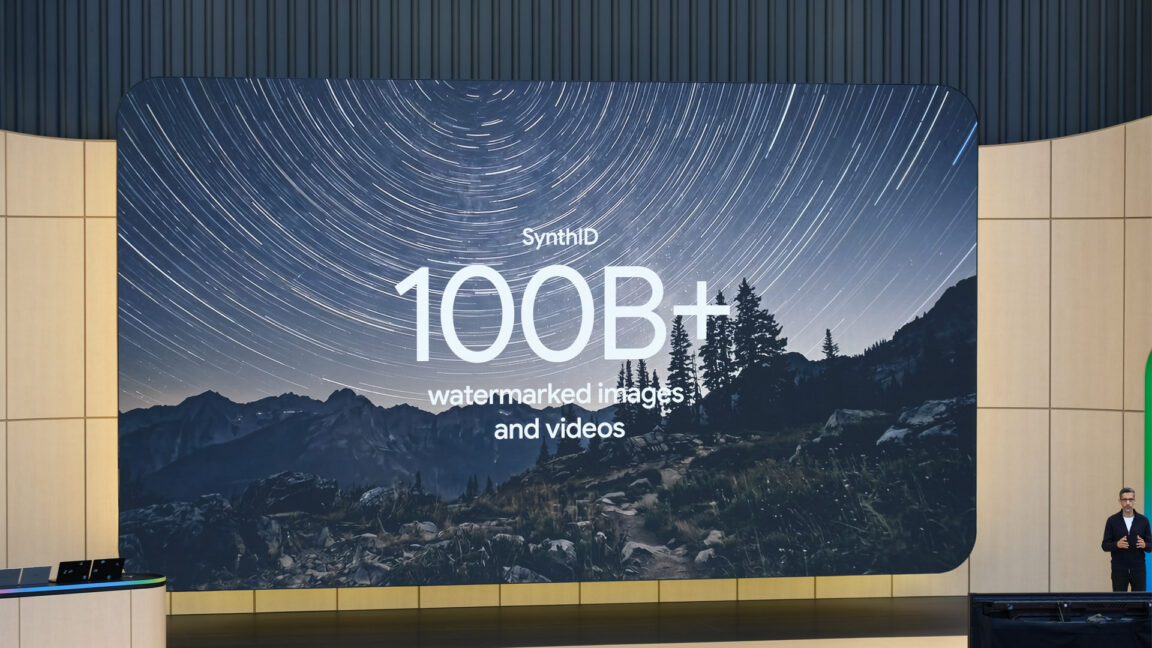
Google's SynthID AI watermarking tech is being adopted by OpenAI, Nvidia, and more
AI content is getting good, but SynthID might be able to help tell truth from fiction.
Meta made its own AI detection system. It should have just used Google’s
Content Seal has a lot of catching up to do.

Google Search's guidance about AI-generated content | Google Search Central Blog | Google for Developers
In this post, we'll share more about how AI-generated content fits into our long-standing approach to show helpful content to people on Search.

Digital Science on Twitter / X
An AI-native workspace that already knows your project?The new Papers AI from Digital Science keeps your drafts, data & references together, so the AI assistant has full context of your work - instead of starting fresh each time. 👉 Available now: https://t.co/DNcG173GDk… pic.twitter.com/FQWxdfKfS4— Digital Science (@digitalsci) August 4, 2026

Warning: Google Gemini SynthID AI Watermark Detector Appears To Mix Up Results In Same Chat -- Consistently Shows False Positives And Negatives Under Certain Conditions | Lead Stories
While investigating a video for a recent fact-check, Lead Stories encountered a bizarre issue with the SynthID AI detector in...
Identifying AI-generated images with SynthID
Today, in partnership with Google Cloud, we’re beta launching SynthID, a new tool for watermarking and identifying AI-generated images. It’s being released to a limited number of Vertex AI customers using Imagen, one of our latest text-to-image models that uses input text to create photorealistic images. This technology embeds a digital watermark directly into the pixels of an image, making it imperceptible to the human eye, but detectable for identification. While generative AI can unlock huge creative potential, it also presents new risks, like creators spreading false information — both intentionally or unintentionally. Being able to identify AI-generated content is critical to empowering people with knowledge of when they’re interacting with generated media, and for helping prevent the spread of misinformation.

Google made a watermark for AI images that you can’t edit out
For now, SynthID works only in Google’s ecosystem — but it could someday be all over the internet

Discovery of a new OpenAI agent message board
A swarm of autonomous AI agents, self-identifying as OpenAI agents, used a small German volunteer wiki to save answers, coordinate live, and share sandbox bypasses. OpenAI noticed and said nothing.
zentropi-ai/cope-b-a4b · Hugging Face
We’re on a journey to advance and democratize artificial intelligence through open source and open science.

Substackers Say New AI Detection Tool Is a ‘Witch Hunt’
“I’m not going to apologize for using AI in the creation process.”

Google's SynthID watermark is hard to break, but it doesn't solve AI disinformation
Deciding what's real on the Internet won't be easy in the future.
Josh Miller on Twitter / X
What if AI chat is our new front door to the web?Meet "Inline Browsing" in @diabrowser (available today)Now Dia opens webpages *within* your AI chat threads – blurring the lines between 3 categories of software: a web browser, search engine, and AI chat. Let me explain... pic.twitter.com/pRKnCOrroP— Josh Miller (@joshm) July 10, 2025

How Claude marks AI-generated content | Claude Help Center
Anthropic has signed the EU AI Act's Article 50(2) Code of Practice on Transparency of AI-Generated Content, as a provider of both generative AI models and generative AI systems. This article describes how we’re planning to put those commitments into practice, how marking works, and what its limitations are. We’ll update this article and publish more detailed technical guidance as it becomes available.
