


Fitbit and Quest Diagnostics are launching a study looking at the impact of wearable devices on metabolic health.
‘I hate the new Google Health app’: Fitbit fans bemoan the ‘end of an era’ as last holdouts are forced to switch to Google’s alternative
The final goodbye for the Fitbit app
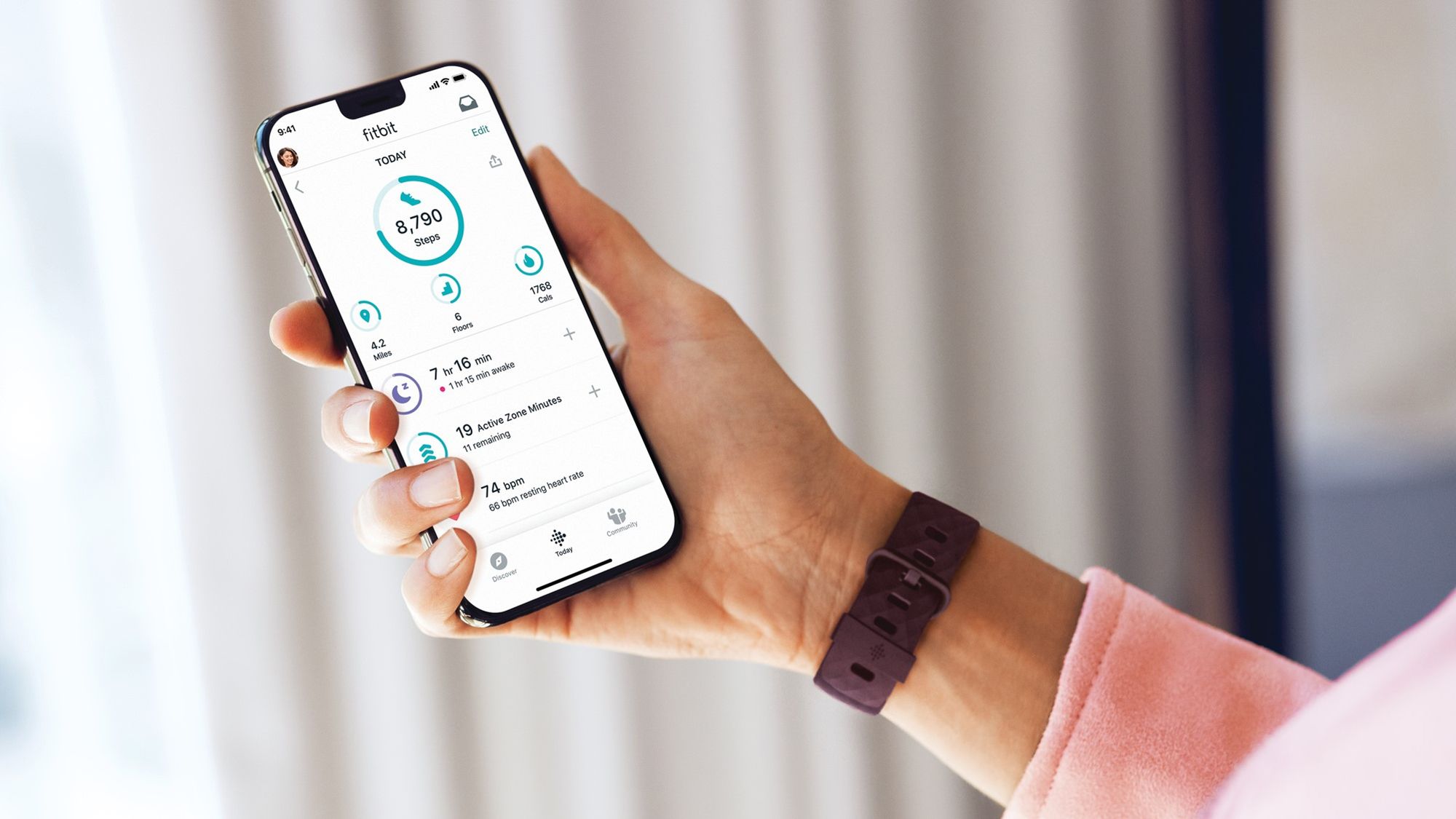
Quantified self
Quantified self is both the cultural phenomenon of self-tracking with technology and a community of users and makers of self-tracking tools who share an interest in "self-knowledge through numbers". Quantified self practices overlap with the practice of lifelogging and other trends that incorporate technology and data acquisition into daily life, often with the goal of improving physical, mental, and emotional performance. The widespread adoption in recent years of wearable fitness and sleep trackers such as the Fitbit or the Apple Watch, combined with the increased presence of Internet of things in healthcare and in exercise equipment, have made self-tracking accessible to a large segment of the population.

Meet the new Fitbit app that’s redesigned with you in mind
The updated Fitbit app, coming later this fall, has a simpler design and more motivating content

Beyond step counting: Making the most of your wearable data
© 2026 Wareable - Latest Tech News, Product Reviews, and Analyses.

Introducing Fitbit Charge 6: Our most advanced tracker yet
Introducing Charge 6, the latest and most advanced fitness tracker from Fitbit.

Association Between Eating Speed and Metabolic Syndrome in a Three-Year Population-Based Cohort Study
Background Metabolic syndrome has received increased global attention over the past few years. Eating behaviors, particularly eating speed, have long been of interest as factors that contribute to the development of obesity and diabetes. The aim of this study was to assess the relationship between eating speed and incidence of metabolic syndrome among middle-aged and elderly Japanese people. Methods A total of 8941 community residents from Soka City in Saitama Prefecture, aged from 40 to 75 years and without a diagnosis of metabolic syndrome, participated in the baseline survey in 2008 and were followed until 2011. Anthropometric measurements and lifestyle factors were measured at baseline and follow-up. The association between eating speed and incidence of metabolic syndrome was evaluated using Cox proportional hazards models adjusted for potential confounding variables. Results During the 3-year follow-up, 647 people were diagnosed with metabolic syndrome (25.0 cases/1000 person-years). The incidence rates of metabolic syndrome among non-fast-eating and fast-eating participants were 2.3% and 3.1%, respectively. The multivariate-adjusted hazard ratio for incidence of metabolic syndrome in the fast-eating group compared to the not-fast-eating group was 1.30 (95% confidence interval [CI], 1.05–1.60) after adjustment for the potential confounding factors. Eating speed was significantly correlated with waist circumference and high-density lipoprotein cholesterol (HDL-C) components of metabolic risk factors. Hazard ratios in the fast-eating group compared with the reference group were 1.35 (95% CI, 1.10–1.66) for waist circumference and 1.37 (95% CI, 1.12–1.67) for HDL-C. Conclusions Eating speed was associated with the incidence of metabolic syndrome. Eating slowly is therefore suggested to be an important lifestyle factor for preventing metabolic syndrome among the Japanese.

The effects of physical activity on sleep architecture and mood in naturalistic environments
Physical activity has been found to alter sleep architecture, but these effects have been studied predominantly in the laboratory and the generalizability of these findings to naturalistic environments and longer time intervals, as well as their psychological effects, have not been evaluated. Recent technological advancements in wearable devices have made it possible to capture detailed measures of sleep outside the lab, including timing of specific sleep stages. In the current study, we utilized photoplethysmography coupled with accelerometers and smartphone ambulatory assessment to collect daily measurements of sleep, physical activity and mood in a sample of N = 82 over multi-month data collection intervals. We found a robust inverse relationship between sedentary behavior and physical activity and sleep architecture: both low-intensity and moderate-to-vigorous physical activity were associated with increased NREM sleep and decreased REM sleep, as well as a longer REM latency, while higher levels of sedentary behavior showed the opposite pattern. A decreased REM/NREM ratio and increased REM latency were in turn associated with improved wellbeing, including increased energy, reduced stress and enhanced perceived restfulness of sleep. Our results suggest that physical activity and sleep account for unique variance in a person’s mood, suggesting that these effects are at least partially independent.

Apple Releases Cardio Fitness Notifications for Apple Watch
Our level of cardio fitness is a strong predictor of our overall health. With yesterday's release of watchOS 7.2 and iOS 14.3, the Apple Watch now supports monitoring and alerting you when your cardio fitness level is too low over time. Per Apple's press release on the feature: With iOS 14.3 and watchOS 7.2, Apple
FitnessSyncer joins your health and fitness clouds into one Dashboard and Stream. Supporting over 50 health and fitness providers, including Strava, Fitbit, Garmin Connect, Samsung Health, Google Health Connect, RunKeeper, and more!
FitnessSyncer joins your health and fitness clouds into one Dashboard and Stream. Supporting over 50 health and fitness providers!
Nikhil Krishnan on Twitter / X
yeah there used to be a company called Eureka that powered these types of observational, more lifestyle style studies (here's an example looking at coffee's effect on different biomarkers/conditions)https://t.co/urQRvTVTb7I think it can work if you have enough people in…— Nikhil Krishnan (@nikillinit) September 14, 2025
Quantifying your body: A how‐to guide from a systems biology perspective
The digital transformation of healthcare is contributing to Leroy Hood's vision of P4 medicine . Using the car analogy, in which car maintenance has been transformed from dealing with symptoms to ide...

Quantifying your body: A how‐to guide from a systems biology perspective
The digital transformation of healthcare is contributing to Leroy Hood's vision of P4 medicine . Using the car analogy, in which car maintenance has been transformed from dealing with symptoms to ide...

Can you be obese and healthy? Maybe, but not for long | Aeon Essays
The medical evidence is overwhelming – obesity is bad for you and it would be a major mistake to give up fighting it

Least resistance weight loss
The weight-loss industry preys on scientific naivete, often conflating good nutrition with the caloric deficit necessary to lose weight.
How to Gamify Wellness Without Missing the Point | Built In
SuperBetter designed a game to support healthy real-world habits. Here’s how its designers combine UX with behavioral science.

❤️🩹 Fitness and Health

Fitness and health related bookmarks, highlights, and comments.
Noise — binaural beats generator
burrito.space/overrun

Summit Bag
Your Fit. Your Way. | A Mobile App That Makes Motivation Easier | Yes.Fit
Wandrer

CityStrides