


Even the simplest human tasks are unbelievably complex. The way we perceive and interact with the world requires a lifetime of accumulated experience and context. For ex…
AI is teaching us to speak like bots, and it’s a problem - Fast Company
AI is creeping into our everyday conversations, making us less patient and teaching us to 'prompt' others instead of talking to them.

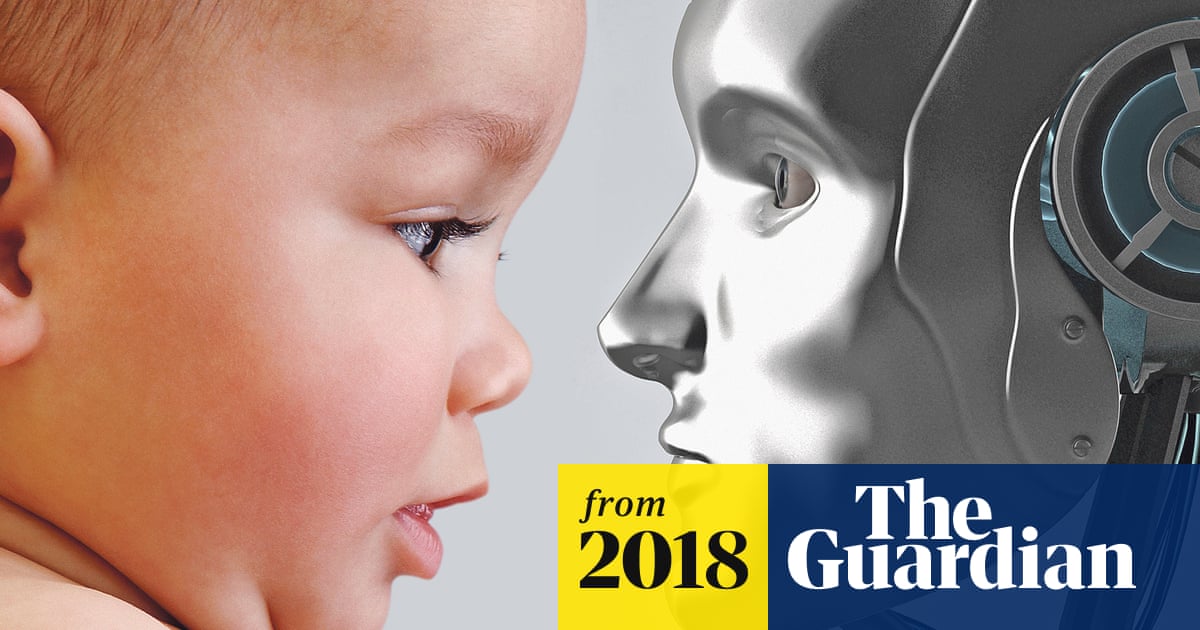
How babies learn – and why robots can’t compete
The long read: If we could understand how the infant mind develops, it might help every child reach their full potential. But seeing them as learning machines is not the answer
Three reasons why AI is not conscious and perhaps never will be
Large language models can mimic thought and feeling with uncanny skill. But evidence from neuroscience suggests that intelligence alone is not enough for subjective experience.

AI learns language from skewed sources. That could change how we humans speak – and think | Bruce Schneier
Large language models aren’t trained on real-life conversations. As we encounter their language, it could affect our own

Human Intelligence, the Secret of Artificial Intelligence
Artificial intelligence is mysterious: we speak to it and it seems to understand what we say. Proof that it understands is that it responds with text or speech that makes sense, and sometimes more …


The Philosophy of Language Models
ABSTRACT The success of large language models (LLMs) across many domains of AI research has generated intense debate. Some attribute their impressive performance on complex tasks to human‐like linguistic and cognitive capacities, whereas others ascribe it to shallow pattern matching. These disputes stem from deep‐seated philosophical disagreements about the nature of language and cognition. We provide an opinionated survey of these disagreements across core topics in the philosophy of mind and language, including syntactic competence, compositionality, linguistic meaning, representation, attitudes, reasoning, agency, and consciousness. We contend that progress on these issues requires not only clarity about background philosophical commitments but also, in many cases, close engagement with emerging empirical evidence.

The path to ubiquitous AI | Taalas
By Ljubisa Bajic Many believe AI is the real deal. In narrow domains, it already surpasses human performance. Used well, it is an unprecedented amplifier of human ingenuity and productivity. Its widespread adoption is hindered by two key barriers: high latency and astronomical cost. Interactions with language models lag far...

AI Is Thirsty
Each chat with a large language-model is like dumping a bottle of water on the ground
machines will never understand language
I thought language was too complicated for machines to understand, until I got sick. a lifelong, meandering journey of parsing, learning, and fixing my broken body.
Will robots give us more "me" time?
Roboticist Daniela Rus's book "The Heart and the Chip" envisions a future where AI and robots handle mundane tasks, freeing us to engage in deeper thinking and creativity.

Sense-making reconsidered: large language models and the blind spot of embodied cognition
Large Language Models (LLMs) demonstrate a kind of linguistic competence that theories of embodied and enactive cognition have long deemed impossible for systems lacking the meaningful perspective of a living being, i.e., the capacity for sense-making. Facing up to this unexpected technological development requires confronting what I propose to call the “AI dilemma”: either frontier LLMs are capable of sense-making despite lacking biological embodiment, or the kind of linguistic competence they exhibit does not necessarily require sense-making. In their chapter on cognition, Frank, Thompson, and Gleiser (2024) maintain that no AI system comes close to realizing relevance, a position that derives much of its motivation from past practical failures. However, frontier LLMs have effectively overcome Dreyfus’ commonsense knowledge problem, such that their dismissal as categorically mindless risks undermining Frank et al.’s central claim that human cognition is deeply intertwined with lived experience. I therefore argue in favor of the alternative side of the AI dilemma: human-level linguistic competence of LLMs should be recognized as a novel non‑biological form of sense‑making, based on a technologically‑mediated embodiment whose enabling properties are in need of further theoretical analysis. This reorientation invites enactive theory to clarify which aspects of sense-making may be universal and which aspects are specifically contingent on organic life, thereby advancing its conceptual framework in dialogue with contemporary AI.

Language and AI: Guy Emerson on using AI with language data | Cambridge Language Sciences
It's a funny time to be working on language and AI. A year ago, this might have seemed like a niche interest, but these days ‘large language model’ is practically a household term. I recently had the chance to speak about language and AI at an event run by the Centre for Science and Policy, and I thought I would write a summary, because it seems a lot of people are interested in learning about how AI can be used with language data.
Artificial intelligences and human scientists exhibit...
We investigate the effectiveness of artificial intelligences (AI)-specifically large language models (LLMs)-relative to human scientists at high-level cognitive tasks in social science such as...
