

As one of the kernel DCO advocates, I’ve written many times about using the DCO instead of a CLA for copyright and patent contributions under open source licences. In spite of my obvious biases, I’ll try to give a factual overview of the cases for the DCO and CLA system. First, it should be noted that both the DCO and any CLA are types of Contribution Agreements (a set of terms by which contributors are agreeing to be bound). It should also be acknowledged that the DCO is a far more recent invention than CLAs. The DCO was first pioneered by the Linux kernel in 2004 (having been designed by Diane Peters, then of OSDL) and was subsequently adopted by a broad range of open source projects. However, in legal terms, the DCO is much less well understood than a standard CLA type agreement between the contributor and some entity, which is largely the reason you find a number of lawyers still advocating for the use of CLAs in various open source projects: because they’d like to stick with something that has more miles on it, or because they’re invested in the older model of community, largely pioneered by Apache. The biggest problem today is that the operation of most CLAs is asymmetrical: they take from the contributor more rights than the open source code actually needs, so lets begin with a summary of each type of Contribution Agreement.

Some startups are going ‘fair source’ to avoid the pitfalls of open source licensing | TechCrunch
New alternative category to 'closed source' could help companies monetize software in the open -- without going all-in on open source.

Toward Copyleft Equality for All
I would not have imagined even two years ago that expansion of copyleft would become such an issue of interest in software freedom licensing. Historically and for good reason, addition of new forms of copyleft clauses has moved at a steady pace. The early 2000s brought network services clauses (such as that in the Affero GPL), which hinged primarily on requiring provision of source to network-remote users. Affero GPL implemented this via copyright-controlled permission of modification. These licenses began as experiments, and were not approved by some license certification authorities until many years later.
Reimagining OSS Licensing and Commercialization with Fair Source - Adam Jacob, System Initiative
Everything an open source maintainer might need to know about open source licensing | Ben Balter
There's lots of internet lore around open source licensing. An attorney and open source developer answers the most common questions.
Contributor Covenant | Contributor Covenant 3
The most widely adopted code of conduct in open source. Stewarded by the Organization for Ethical Source.
Permissive-Washing in the Open AI Supply Chain: A Large-Scale Audit of License Integrity
Permissive licenses like MIT, Apache-2.0, and BSD-3-Clause dominate open-source AI, signaling that artifacts like models, datasets, and code can be freely used, modified, and redistributed. However, these licenses carry mandatory requirements: include the full license text, provide a copyright notice, and preserve upstream attribution, that remain unverified at scale. Failure to meet these conditions can place reuse outside the scope of the license, effectively leaving AI artifacts under default copyright for those uses and exposing downstream users to litigation. We call this phenomenon ``permissive washing'': labeling AI artifacts as free to use, while omitting the legal documentation required to make that label actionable. To assess how widespread permissive washing is in the AI supply chain, we empirically audit 124,278 dataset $\rightarrow$ model $\rightarrow$ application supply chains, spanning 3,338 datasets, 6,664 models, and 28,516 applications across Hugging Face and GitHub. We find that an astonishing 96.5\% of datasets and 95.8\% of models lack the required license text, only 2.3\% of datasets and 3.2\% of models satisfy both license text and copyright requirements, and even when upstream artifacts provide complete licensing evidence, attribution rarely propagates downstream: only 27.59\% of models preserve compliant dataset notices and only 5.75\% of applications preserve compliant model notices (with just 6.38\% preserving any linked upstream notice). Practitioners cannot assume permissive labels confer the rights they claim: license files and notices, not metadata, are the source of legal truth. To support future research, we release our full audit dataset and reproducible pipeline.

Open Source Saturation
In Supporting Open Source Software I discussed the critical need for better support for contributors to open source projects. Now, Quo Vadi...

The CRA is not about open source
The CRA created an open-source steward role, then left maintenance unfunded.
Open Source is Not Enough
by James Halliday // The open source movement has fundamentally changed how software gets written. But in the process, corporations have been given a vast gift of free labor.
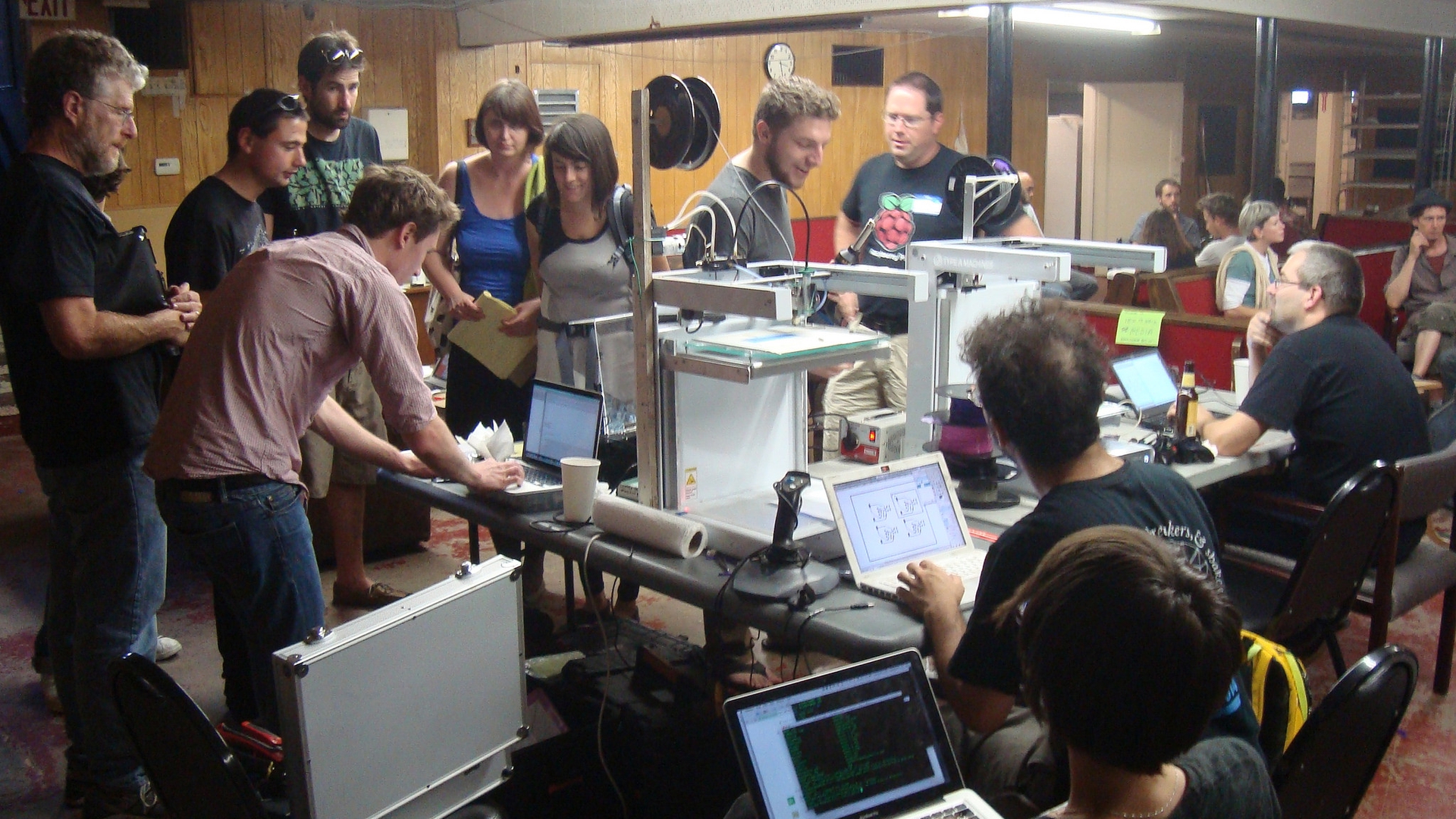
The struggles of an open source maintainer - <antirez>
Time for Net Giants to Pay Fairly for the Open Source on Which They Depend | Linux Journal
Licensing lies at the heart of open source. Arguably, free software began with the publication of the GNU GPL in 1989. And since then, open-source projects are defined as such by virtue of the licenses they adopt and whether the latter meet the Open Source Definition. The continuing importance of licensing is shown by the periodic flame wars that erupt in this area. Recently, there have been two such flarings of strong feelings, both of which raise important issues.
"AI makes it cheaper to contribute to Open Source, but it's not making life easier for maintainers. More contributions are flowing in, but the burden of evaluating them still falls on the same small group of people. That asymmetric pressure risks breaking maintainers." also relevant to slop science
