


Recently I found myself playing Tactical Breach Wizards, the new tactics game by Tom Francis. I really liked it! I enjoy tactics games, and this one felt fresh and interesting, with good mechanical hooks and nuanced abilities. But at some point along the way, it began to feel stale to me. It was putting out a steady trickle of new powers, new mechanics, new problems, but foundationally it’s all pretty similar: you enter a room full of bad guys, then you clear the room of bad guys. I began to feel the old pull in my heart that maybe it was time for me to stop playing this game; and then, after beating a boss, the game declared in big bold letters: “Act 2 out of 5 COMPLETE.” My god…3 more acts and I’m already tired! So I put it aside and went on with my life.
INDIE GAME DEV: DEATH LOOPS
In this article, I will identify two traps that many indie game developers fall into that either prevent them from finishing their projects or extend the length of the development to a point where there is tremendous pressure for the game to succeed. I call these traps "death loops" because of the fatigue and burnout they can cause (and how easy it is to get stuck in them). The article will also offer some suggestions on how to break out of these loops.
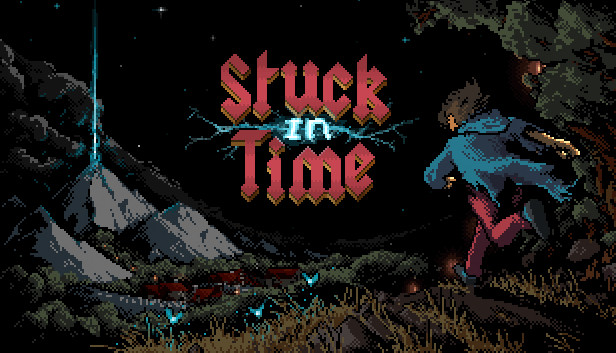
Stuck In Time
A unique mix of adventure and idle game. Plan and optimise your loops carefully and let the grind happen automatically. Explore this unique world, meet strange characters and escape the loop. A high-quality idle game that elevate the mechanics through an old school pixel-art adventure.
» The Goldilocks Principle in Fantasy Strategy The Digital Antiquarian
Although I’ve played way too many games for way too many hours over the way too many years I’ve been writing these histories, it’s safe to say that I haven’t spent more time with any one game than Heroes of Might and Magic II. Partly this was down to circumstance. Heroes II showed up on the syllabus just as I was embarking on one of my periodic digressions, a long series about international communications networks and how they culminated in the World Wide Web. Without the need to write in detail about a new game every fortnight, I was freer than I usually am just to play whatever I felt like playing. And what I felt like playing at that time was Heroes II. I beat every single Heroes II scenario in my Heroes of Might and Magic Millennium Edition set, some alone, some in multiplayer mode with my wife Dorte, who became almost as obsessed as I was. I must confess that my usual rule of no more than two hours of gaming per day was strained at times, shattered completely at others. But we were still in the midst of the pandemic then and there wasn’t much else for me to do with my free time, so I figured it was okay to set self-discipline aside for a while. Maybe it was even good experiential research, in that it re-familiarized me with that strange hungover feeling you get when you’ve spent hours and hours peering into an imaginary world behind your monitor screen — like butter that’s been scraped over too much bread, to steal a phrase from Tolkien. (For what it’s worth, I’ve found that the best cure for this condition is the same as that for a conventional hangover: a long walk in nature.)
The Human-in-the-Loop is Tired
On reward functions, dopamine, and what it actually feels like when the code starts writing itself
Why we're bullish on loops
WTF are loops, why is everyone arguing about them, and why do they actually matter?

Strategy Is a Loop, Not a Plan | Ragan McGill
Most strategies don't fail because they were wrong. They fail because the world moved and the strategy didn't. Here is how I combine John Boyd's OODA loop with Richard Rumelt's strategy kernel to build strategy that keeps learning.

̶B̶a̶d̶ Good Game Design - Clicker Games (Idle Games, Incremental Games)
Clockwork Criteria: 6 Guidelines for Ideal Strategy Game Design
What are the criteria that make something a good “Clockwork Game”? The Clockwork Game Design model is something I have been working on for the last five years or so. It is specifically …
Jevons Paradox: A personal perspective
What if the most game-optimal play in the new system is actually to become relentlessly, unapologetically you?
To Anyone Who Thinks They're Falling Behind In Life
You don't need more motivation. You don't need to be inspired to action. You don't need to read any more lists and posts about how you're not doing enough. There's a magic beyond us that works in ways we can't understand.

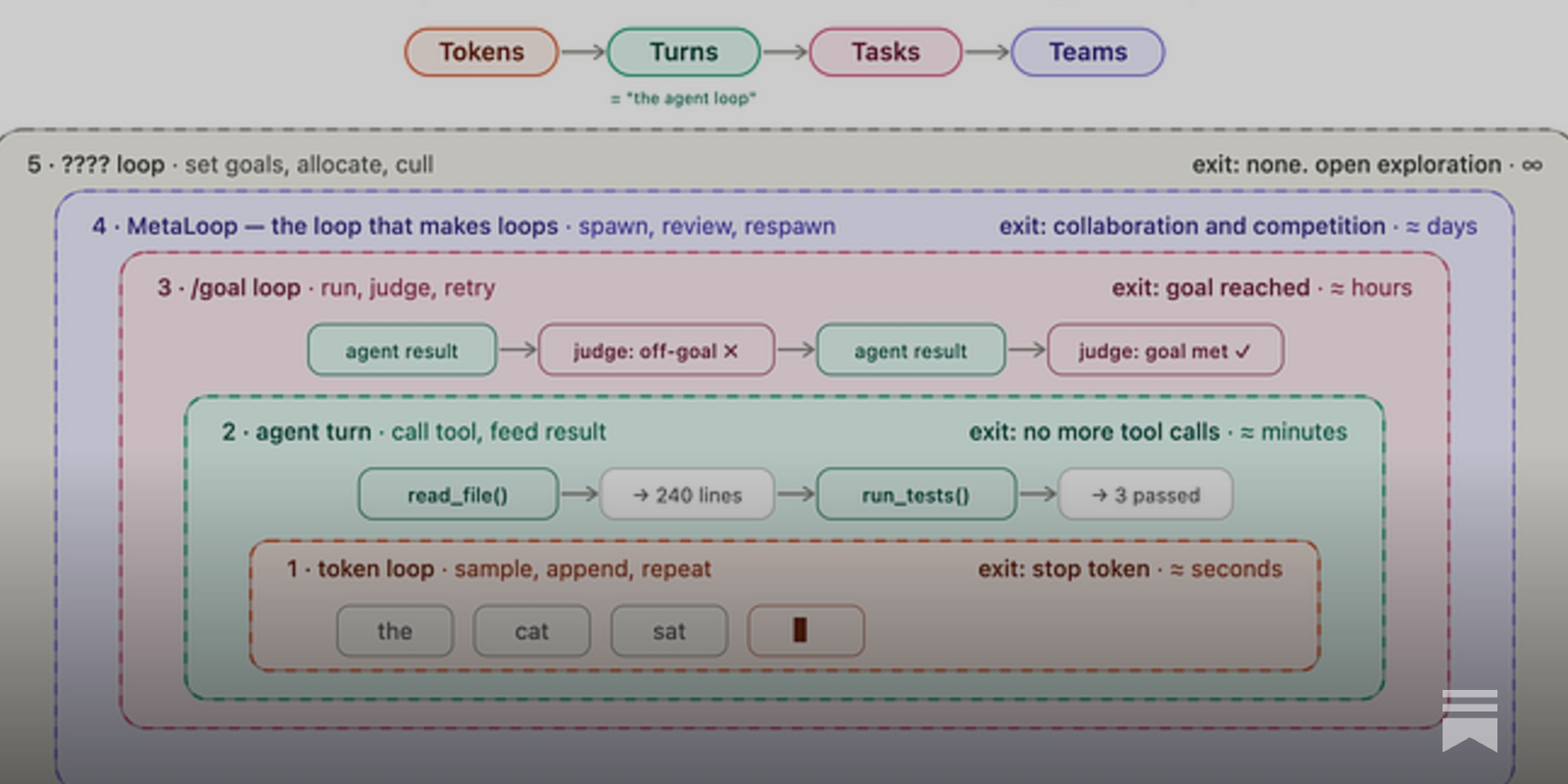
[AINews] Loopcraft: The Art of Stacking Loops
a quiet day lets us highlight a great concept from Peter Steinberger, Boris Cherny, and Andrej Karpathy
» The Space Sim’s Last Hurrah The Digital Antiquarian
Amidst so much else, the 1990s saw the rise and fall of the narrative-driven space sim. The sub-genre was effectively invented in 1990, when Wing Commander dared to add a set-piece story line to the sturdy foundation of the more open-ended British classic Elite. It reached a peak of commercial and critical acceptance in 1994 with Wing Commander III and TIE Fighter, only to fall off the big publishers’ radar completely by shortly after the turn of the millennium. As you regular readers know, I’ve been writing the final installments to a lot of stories recently, a symptom of the period of churn and consolidation in which these histories currently find themselves. Now I’m on the verge of writing my last words on not just a company but a whole category of games as a mainstream commercial force — almost, I’m tempted to say, a whole subculture of gaming, one of the oddest of them all when you stop to think about it.
Knowing When to Stop: The Art of Making a Loop Converge | Andreessen Horowitz
The systems that matter will not be the ones that can keep going. They all can.
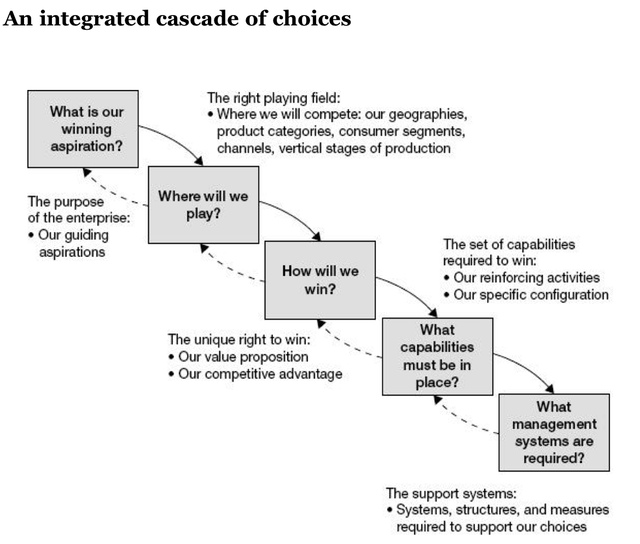
Playing to Win: How Strategy Really Works
How Strategy Really Works. This approach grew out of the strategy practice at Monitor Company and subsequently became the standard process at P&G.
Strategy in Life
What is Strategy? Why is it easy to get wrong and so hard to get right? Strategy Structures in Life Concept-Space Getting from one point to another In a predefined direction Stars as Concept-space analogy By predefined actions Strategy in Life Know your surroundings Creating Strategies Using Strategies Summary Strategy...

How to Get Things Done When You Don’t Feel Like It: Five strategies for pushing through: Queue: Vol 16, No 4
If you want to be successful, then it serves you better to rise to the occasion no matter what. That means learning how to push through challenges and deliver valuable results.
