Is it ethical to use hyper-scaled GenAI?
Why so many game developers don't want to use generative AI
With credits ranging from Dispatch and Marvel Rivals to Uncharted and Dragon Age, over 30 devs share their thoughts on gen AI

Ars Technica's policy on generative AI
How Ars Technica uses, and doesn't use, generative AI.
AI Angst
My input stream is full of it: Fear and loathing and cheerleading and prognosticating on what generative AI means and whether it’s Good or Bad and what we should be doing. All the channels: Blogs and peer-reviewed papers and social-media posts and business-news stories. So there’s lots of AI angst out there, but this is mine. I think the following is a bit unique because it focuses on cost, working backward from there. As for the genAI tech itself, I guess I’m a moderate; there is a there there, it’s not all slop. But first…

The abstraction you didn't ask for
When I say 'generative AI isn't going away,' people hear 'and you have to like it.' You don't, and you might be right not to. But the is-ought divide here is real and we should all be preparing for both outcomes.
AI is turning research into a scientific monoculture
Generative AI deserves scientific attention. But the rush to study it is producing a feedback loop of topical and methodological convergence, flattening scientific imagination and crowding out the pluralism needed to keep research adaptive, resilient, and intellectually generative.

Generative artificial intelligence: The Times and Sunday Times editorial guidelines
As we explore the potential of generative artificial intelligence our commitment is to uphold our high editorial standards.
Guest Post - The Perils of Using Generative AI to Perform Research Tasks: Editors’ and Publishers’ Viewpoints - The Scholarly Kitchen
Today's guest post offers a review of a panel of publishers and editors discussing the pros and cons of using Generative AI, along with ethical and policy implications.

Gen Z Is Turning Against AI in an Incredible Way
The AI backlash is particularly apparent among Gen Z, a demographic that's at the epicenter of the industry's push for AI adoption.

Find an Artist Who Doesn't Use Generative AI | Hire Human Artists
Looking for an artist for your next project? Our human artist directory is full of over 400 artists who have pledged not to use gen AI.

Prof. Lee Cronin on Twitter / X
It is easy to see that biology does things that cannot be computed in advanced because the future is not controlled by statistics, it is controlled by creative actions. This means today’s statistically-driven GenAI is fundamentally unintelligent.— Prof. Lee Cronin (@leecronin) March 28, 2026
Meet the academics refusing to use generative AI
Researchers say they have their reasons for avoiding AI tools — and they’re sick of arguing about it.
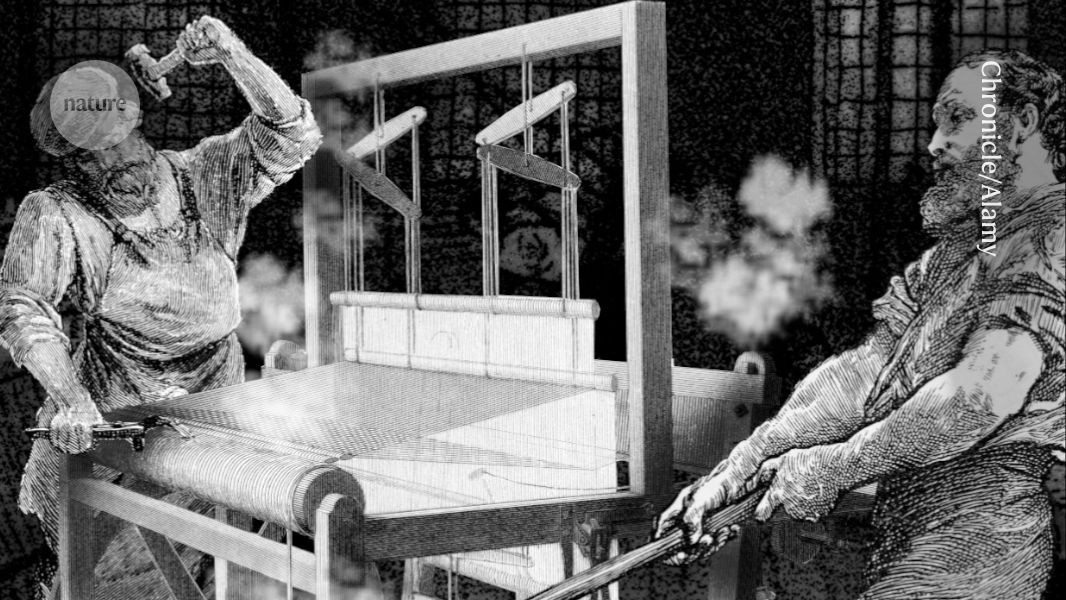
Meet the academics refusing to use generative AI
Researchers say they have their reasons for avoiding AI tools — and they’re sick of arguing about it.
The gen AI gender gap
Generative artificial intelligence (gen AI) is expected to increase productivity. But if unequally adopted across demographic groups, its proliferation risks exacerbating disparities in pay and job opportunities, leading to greater inequality. To investigate the use of gen AI and its drivers we draw on a representative survey of U.S. household heads from the Survey of Consumer Expectations. We find a significant "gen AI gender gap": while 50% of men already use gen AI, only 37% of women do. Demographic characteristics explain only a small share of this gap, while respondents' self-assessed knowledge about gen AI emerges as the most important factor, explaining three-quarters of the gap. Gender differences in privacy concerns and trust when using gen AI tools, as well as perceived economic risks and benefits, account for the remainder. We conclude by discussing implications for policy to foster equitable gen AI adoption.

An Elegant Solution to AI Slop: Tax It, and Use the Resulting Billions of Dollars to Fund Cultural Institutions, Artists, and Researchers
A technologist proposes slapping a "slop tax" on companies that use or create generative AI content.

The Future of AI
The Parents’ Paradox: AI, Ethics, and the Limits of Machine Morality This post is based on a talk I gave at The AI & Automation Conference in London on February 25, 2026, and my slides. A…