

New programming languages are probably invented every day, and even those that get developed and published are too numerous to mention. New programming languages developed specifically for science and engineering are very rare, however, and that's why such a rare event deserves some publicity. A while ago, I saw an announcement for Julia, which announces itself as "a fresh approach to technical computing". I couldn't resist the temptation to download, install, and test-drive it. Here are my first impressions.
Julia vs. Python: A comprehensive comparison
The debate between Julia and Python sparks intense discussions. Julia, known for its compiled nature, boasts remarkable speed, while…
Turing: Probabalistic Programming in Julia | Cameron Pfiffer | JuliaCon 2019
The Next 7000 Programming Languages
Landin’s seminal paper “The next 700 programming languages” considered programming languages prior to 1966 and speculated on the next 700. Half-a-century on, we cast programming languages in a Darwinian ‘tree of life’ and explore languages, their features (genes) and language evolution from the viewpoint of ‘survival of the fittest’.
Its Time for a New Programming Language
Today, when compared to any other point in programming history, we find ourselves spoiled for choice when it comes to programming…
The Story of C++: The World's Most Consequential Programming Language | The Official Story
Supersonic Labs on Twitter / X
Introducing Julia-1:Our first classification model that runs on almost anything.Learn more 👇https://t.co/YJCdEeIBSo pic.twitter.com/3cizsbG9ZB— Supersonic Labs (@supersonicai) September 26, 2026
Thomas Yu on Twitter / X
Yesterday @supersonicai released an open weight jev-like model called julia-1This demo shows julia-1 running locally on my M5 Macbook Pro doing ~1500 tokens/sec calculating a live call's scam risk and risk types.Even for this moderately complex task, julia-1 was able to do… pic.twitter.com/VYHRvrjyIS— Thomas Yu (@thommyyu) September 27, 2026

Forgotten Programming Ideas That Could Change Everything #shorts
The Rise and Fall of Visual Basic
After 28 years, are we are finally seeing the beginning of the end for one of the world’s most popular languages?

Linking the world's research to the code it runs on - OpenAlex blog
Research relies on software. Software written by scientists, for science, runs through the entire modern research stack: NumPy and SciPy, R and ggplot2, Jupyter, BLAST, ImageJ, AlphaFold. Yet in the scholarly record, that software is nearly invisible. Software is not usually cited formally in publications and is usually just mentioned in the text, which means […]

"An approach to computing and sustainability inspired from permaculture" by Devine Lu Linvega
Where is all the new, good software?
Here's a question we see, especially from AI skeptics: if AI coding is so great, shouldn't we be seeing more new, good software by now? Here are some answ...

When compilers surprise you — Matt Godbolt’s blog
Sometimes compilers can surprise and delight even a jaded old engineer like me
The future of programming and computing

Trends and adjacent possibles for the future of how computers are used and programmed
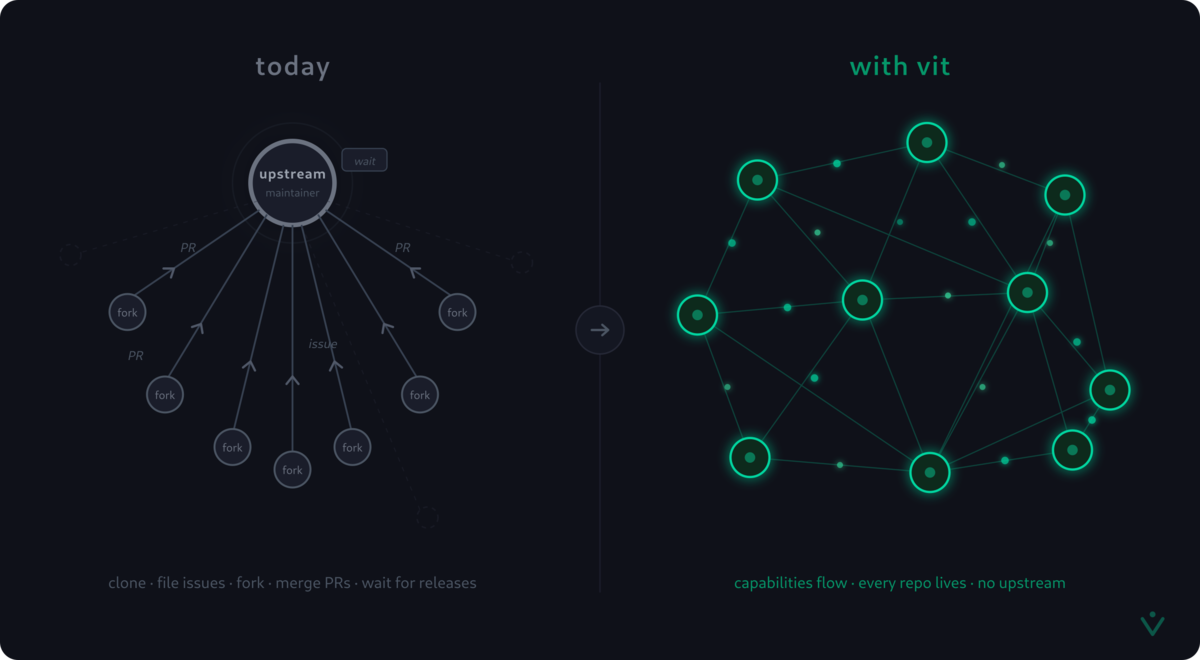
vit — open source is social

Humans approve intent, machines prove conformance
Introducing System One Models and Jev - TypeSafe AI Blog

Message from our CEO: After co-inventing ChatGPT, I kept asking myself: why have superhuman chat models not led to AGI? I’ve spent the last…
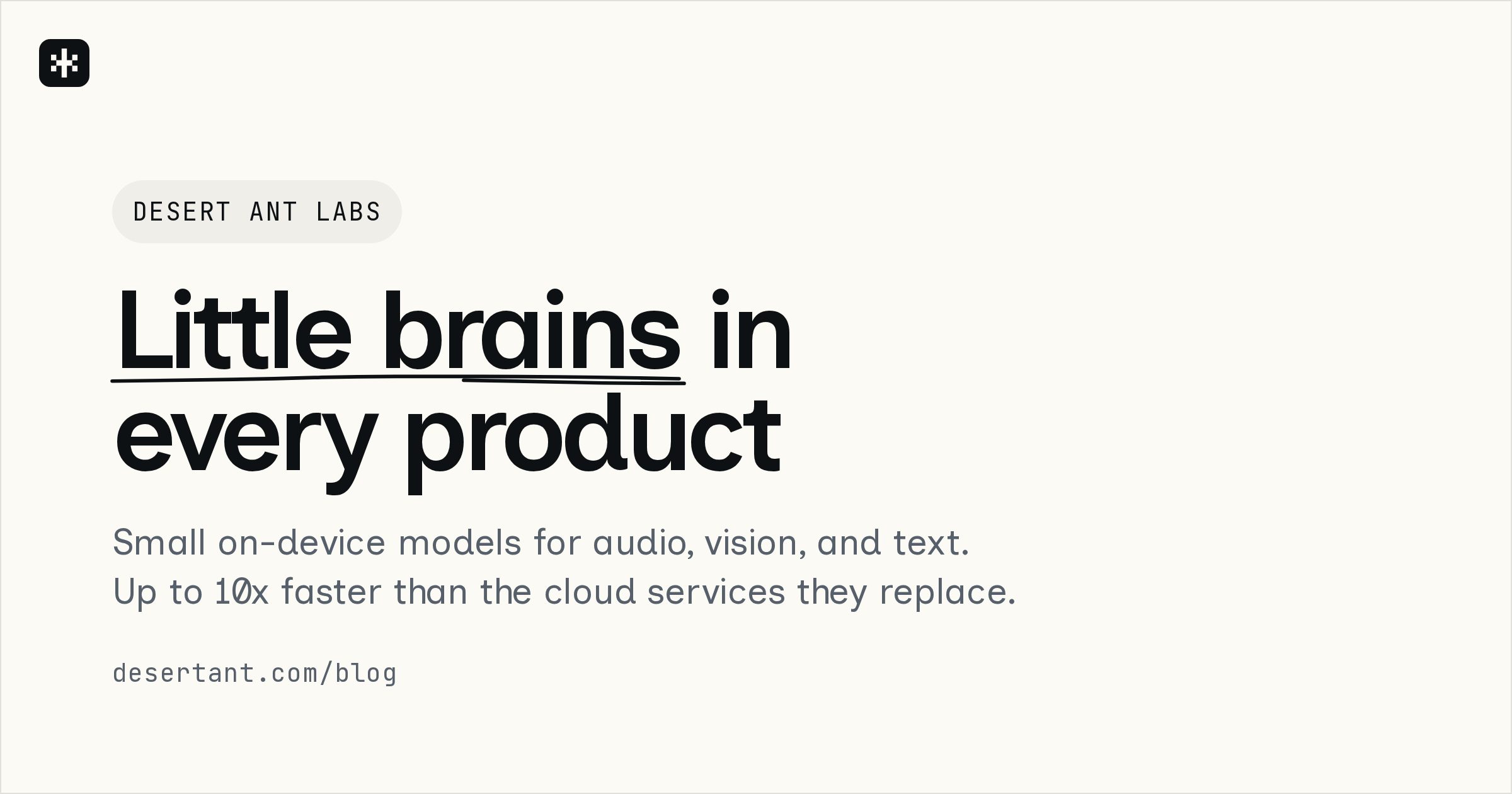
On-device intelligence for every product
SaaS Isn’t Dead. Sameness Is. - The Phoenix Architecture