

The other day I was looking at the release notes for the recently published release 1.8 of NumPy, the library that is the basis for most of the Scientific Python ecosystem. As usual, it contains a list of new features and improvements, but also sections such as "dropped support" (for Python 2.4 and 2.5) and "future changes", to be understood as "incompatible changes that you should start to prepare for". Dropping support for old Python releases is understandable: maintaining compatibility and testing it is work that needs to be done by someone, and manpower is notoriously scarce for projects such as NumPy. Many of the announced changes are in the same category: they permit removing old code and thus reduce maintenance effort. Other announced changes have the goal of improving the API, and I suppose they were more controversial than the others, as it is rarely obvious that one API is better than another one.
The Story of Python and how it took over the world | Python: The Documentary
uv is the best thing to happen to the Python ecosystem in a decade - Blog - Dr. Emily L. Hunt
Released in 2024, uv is hands-down the best tool for managing Python installations and dependencies. Here's why.

OpenAI to acquire Astral
Accelerates Codex growth to power the next generation of Python developer tools

Investing in the Python ecosystem
Vercel welcomes the Gel Data team and deepens support for the Python ecosystem through PSF sponsorships, community funding, and improved Python developer tools.
Python Tutorial | Learn Python Programming Language - GeeksforGeeks
Your All-in-One Learning Portal: GeeksforGeeks is a comprehensive educational platform that empowers learners across domains-spanning computer science and programming, school education, upskilling, commerce, software tools, competitive exams, and more.

Forgotten Programming Ideas That Could Change Everything #shorts
Introducing any-llm: A unified API to access any LLM provider
When it comes to using LLMs, it’s not always a question of which model to use: it’s also a matter of choosing who provides the LLM and where it is deployed. Today, we announce the release of any-llm, a Python library that provides a simple unified interface to access the most popular providers.
Linking the world's research to the code it runs on - OpenAlex blog
Research relies on software. Software written by scientists, for science, runs through the entire modern research stack: NumPy and SciPy, R and ggplot2, Jupyter, BLAST, ImageJ, AlphaFold. Yet in the scholarly record, that software is nearly invisible. Software is not usually cited formally in publications and is usually just mentioned in the text, which means […]

Ten quick tips to SNIFF out sustainable and secure scientific software
Modern computational biology depends heavily on open-source software tools, analysis pipelines, and containerized workflows developed and shared by the research community. While there is extensive guidance (including Quick Tips and Simple Rules articles) on how to build robust and sustainable scientific software, far less has been written for researchers in the role of software users evaluating whether an existing tool is reliable, secure, and sustainable enough for their work. Here we present ten quick tips to help researchers critically assess the tools they adopt. Our tips are organized around a framework that centers on key evaluation features: source, network, interaction, fit, and fragility (SNIFF). These dimensions prompt researchers to consider who maintains a tool and why, whether it is embedded in a broader ecosystem, how actively its developers and users engage, whether it matches the intended use case and licensing requirements, and how robust its dependencies and security practices are. By applying these tips, researchers can make more informed decisions, reduce the risk of relying on abandoned or insecure software, and contribute to a more sustainable scientific software ecosystem.
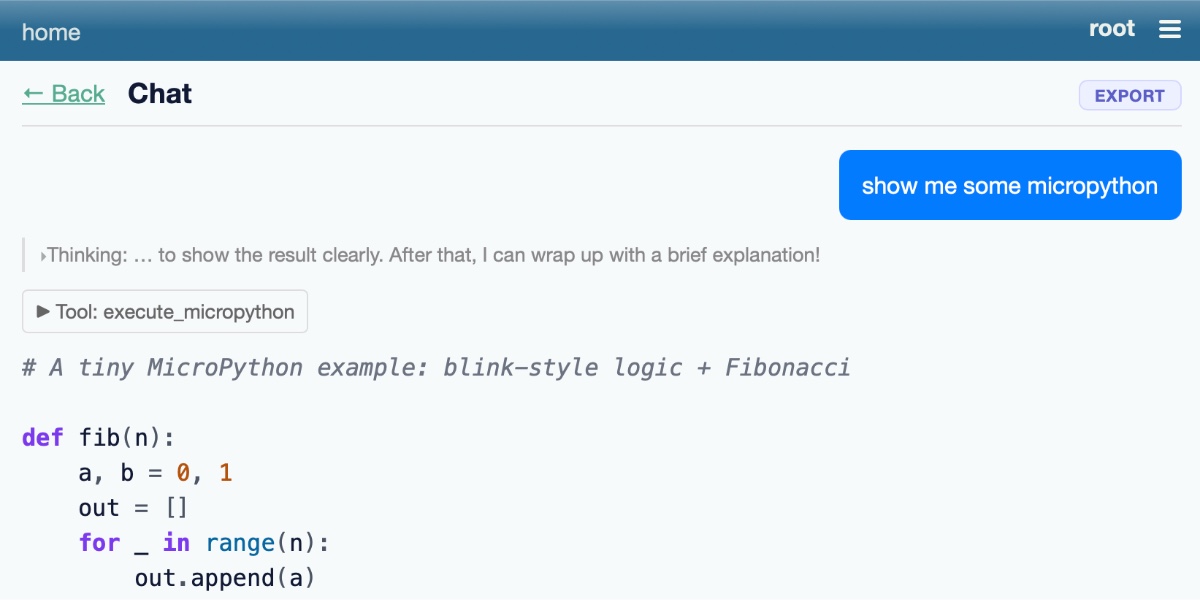
Running Python code in a sandbox with MicroPython and WASM
I’ve been experimenting with different approaches to running code in a sandbox for several years now, but my latest attempt feels like it might finally have all of the characteristics …
Explosive MCP Adoption in 2 Years
Den Delimarsky, lead maintainer of the Model Context Protocol and Claude Code engineer at Anthropic, delivers a keynote on MCP's two-year journey from a basic protocol with two SDKs to the industry standard powering half a billion downloads per month. - **MCP's Origin Story** - Launched in November 2024 with a spec, two transports (STDIO and HTTP), two SDKs (Python and TypeScript), and a handful of clients including Claude Desktop - **Five Spec Releases** - Every revision was driven by community input, improving security, adding OAuth support, and simplifying the developer experience for building MCP clients and servers - **The March 2025 Inflection Point** - A 14-day window when major industry players publicly backed MCP, signaling enterprise adoption beyond the early enthusiast community - **MCP 2.0 Release** - The biggest spec update since launch, removing sessions for stateless deployment on AWS Lambda and Cloudflare Workers, and introducing the extensions framework - **Extensions Framework** - MCP Apps, Tasks, and Enterprise managed apps can now be tested as extensions before being added to the core specification - **Explosive Growth** - SDK downloads grew 13x year-over-year, reaching 500 million per month and 3.06 billion cumulative across Python, TypeScript, and C# alone - **Registry Scale** - The open-source MCP server registry surpassed 20,000 entries, a 45x increase since its September launch - **10 Official SDKs** - From the original two, MCP now supports Go (Google), C# (Microsoft), Kotlin (JetBrains), Swift, Rust, and more, each sponsored by major platform companies - **Community Momentum** - 184,000 GitHub stars, 2,500+ unique committers, 736 PRs merged and 600+ issues solved last month alone Whether you are building your first MCP server or scaling agent infrastructure across your organization, this keynote lays out exactly where the protocol stands and where it is heading. Links and Resources - MCP Specification: https://spec.modelcontextprotocol.io - MCP Blog: https://blog.modelcontextprotocol.io - MCP GitHub: https://github.com/modelcontextprotocol - Agentic AI Foundation: https://agenticaifoundation.org - Anthropic: https://www.anthropic.com Timestamps (approximate - adjust as needed) 00:00 Introduction 01:04 Two years of MCP: the origin story 02:43 MCP in 2024: the early days 03:40 Five spec releases in under two years 04:42 The 14 days that changed MCP adoption 05:39 MCP 2.0: the biggest release since launch 06:37 The extensions framework 07:04 MCP as enterprise agentic substrate 08:06 SDK download growth and registry scale 09:51 GitHub ecosystem metrics 11:04 From 2 SDKs to 10 11:55 Community momentum and contribution stats 12:16 Thank you to the MCP community #ModelContextProtocol #AgenticAI #MCPDevSummit

Did Claude Increase Bugs in rsync?
In late May 2026, rsync blew up. GitHub, Hacker News, Lobsters: hundreds of people arguing about whether open-source maintainers can ship AI-written code and have it be reliable — and whether the people taking the code for free get to demand how it is made.
Deep Learning with Python
Start building deep learning applications with Python and Keras today!

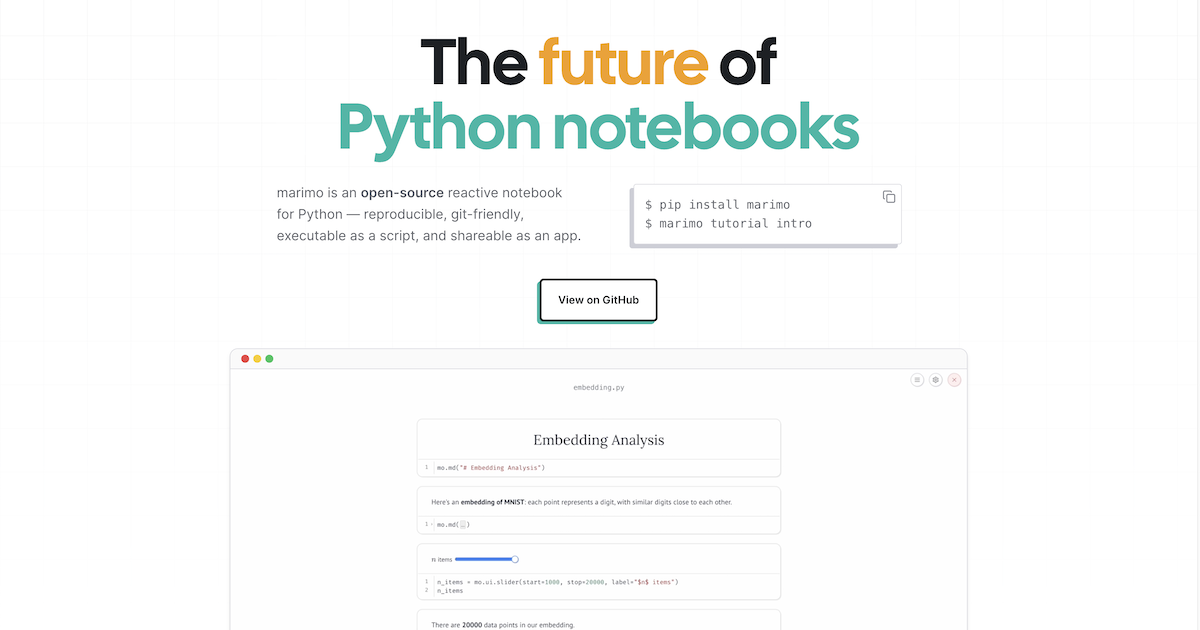
marimo | a next-generation Python notebook
Explore data and build apps seamlessly with marimo, a next-generation Python notebook.
Direnv - Pixi
Pixi Documentation — Next-gen package manager for reproducible development setups