

Data science is usually considered a very recent invention, made possible by electronic computing and communication technologies. Some consider it the fourth paradigm of science, suggesting that it came after three other paradigms, though the whole idea of distinct paradigms remains controversial. What I want to point out in this post is that the principles of data science are much older than most of today's practitioners imagine. Let me introduce you to Apollonius, Hipparchus, and Ptolemy, who applied these principles about 2000 years ago.
Data Feminism
Today, data science is a form of power. It has been used to expose injustice, improve health outcomes, and topple governments. But it has also been used to d...
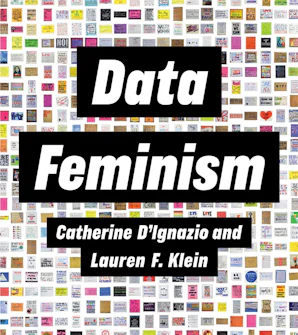
Data Feminism
A new way of thinking about data science and data ethics that is informed by the ideas of intersectional feminism.

A Very Early History of Algebraic Data Types
Been quiet around here! I’ve been putting almost all of my writing time into Logic for Programmers and my whole brain is book-shaped. Trust me, you do not want to read my 2000-word rant on Sphinx post-build LaTeX customization. But I spent the past week in a historical rabbit hole and had to share what I found. It started with Algebraic [Data] Types are not Scary, Actually. The post covers AlgDTs1 in more detail, but a quick overview is:
Living in Data: A Citizen's Guide to a Better Information Future (Paperback)
Jer Thorp’s analysis of the word “data” in 10,325 New York Times stories written between 1984 and 2018 shows a distinct trend: among the words most closely associated with “data,” we find not only its classic companions “information” and “digital,” but also a variety of new neighbors—from “scandal” and “misinformation” to “ethics,” “friends,” and “play.”To live in data in the twenty-first century
A Data Utopia for Science-of-Science
Here I want to briefly sketch out a vision for how to solve a key set of problems facing science-of-science researchers, using the relatively new idea of a ‘data trust.’ In my ideal wor…

MyData
The human-centric approach to data is aimed at a fair, sustainable, and prosperous digital society. In such a society, people get value from their data and set the agenda on how it is used. And for organisations, the ethical use of data is always the most attractive option.

What makes something data?
This is a question I posted on BlueSky on Friday 11/21/25, inspired by a talk I recently attended about evaluation of “AI” systems. I think…

Governing by dismantling: tech oligarchy and the stifling of public data infrastructure
Published in Science as Culture (Ahead of Print, 2026)

The Oxymoron of “Data-Driven Innovation”
Once upon a time, in the dawn of the internet era, web products came from college dudes. The dudes were almost always wealthy and well-connected, but they weren’t usually market-savvy. These …

Digital Socialism?
What opportunities does the new feedback infrastructure of data capitalism offer for non-market forms of social coordination? Hayek and the Calculation Debate revisited in the age of big data.

Computer: A History of the Information Machine
Computer: A History of the Information Machine is a history of computing written by Martin Campbell-Kelly and William Aspray first published in 1996. It follows the history of "information machines" from Charles Babbage's difference engine through Herman Hollerith's tabulating machines to the invention of the modern electronic digital computer. A revised 2nd edition published in 2004 included new material on the Internet and World Wide Web, while the updated 3rd edition published in 2013 includes contributions from historians Nathan Ensmenger and Jeffrey Yost. The 3rd edition extends the story to include recent phenomena such as social networking and revises the discussion of early history to reflect new insights from the literature.

The Limits of Data
Policymakers want to make decisions based on clear data, but important factors are lost when we rely solely on data. A philosopher writes:
Kari Jordan, Ph.D.
Advancing the power of data to improve the social and economic lives of all people.


Introduction to the Field of Data Engineering - 📖 Patterns of Data Engineering
Explore the evolution and challenges of data engineering from its roots in business intelligence to its current status as a critical field in technology. This chapter offers a comprehensive introduction, covering the historical development, current trends, and future directions of data engineering, alongside personal insights from the author's journey in the field.

Danielle Robinson, PhD
Advancing the power of data to improve the social and economic lives of all people.