


Are you looking for a practical, reproducible way to take a machine learning project from raw data all the way to a deployed, production-ready model? This post is your blueprint for the AI/ML lifecycle: you’ll learn how to use Kubeflow and open source tools such as Feast to build a workflow you can run on your laptop and adapt to your own projects.
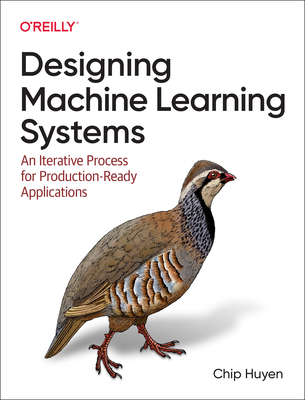
Designing machine learning systems: an iterative process for production-ready applications
"Machine learning systems are both complex and unique. Complex because they consist of many different components and involve many different stakeholders. Unique because they're data dependent, with data varying wildly from one use case to the next. In this book, you'll learn a holistic approach to designing ML systems that are reliable, scalable, maintainable, and adaptive to changing environments and business requirements. Author Chip Huyen, co-founder of Claypot AI, considers each design decision--such as how to process and create training data, which features to use, how often to retrain models, and what to monitor--in the context of how it can help your system as a whole achieve its objectives. The iterative framework in this book uses actual case studies backed by ample references."--Amazon.com
Model Context Protocol - MLOps Community
The MLOps Community fills the swiftly growing need to share real-world Machine Learning Operations best practices from engineers in the field.

Models.dev — An open-source database of AI models
Models.dev is a comprehensive open-source database of AI model specifications, pricing, and features.

The future of Kubernetes and cloud infrastructure
New development approaches and open-source tools are set to address the complexity and scaling challenges of Kubernetes and evolve cloud infrastructure as we know it today.
Getting Started with ML and AI in Research Software | Software Sustainability Institute
Getting started with ML in research software means embracing a shift in how results are produced and reproduced. Instead of a fixed execution path, research software teams work with systems whose behaviour emerges from data, configuration, and training dynamics. Reproducibility becomes a matter of capturing the process rather than relying solely on the code. The tools and techniques outlined here can be adopted incrementally into existing projects, and together they provide a practical foundation for reproducible ML research.
AI native industrial data platform for manufacturing | UMH
Standardize industrial data across sites and systems to reduce costs, improve efficiency and accelerate execution. Open-source, deployed at production sites across Europe, live in weeks.

Cloudflare Workers AI | Open-source AI inference
Workers AI facilitates the scalable development & deployment of AI applications at the edge.

Im going back to writing code by hand
I vibe-coded a GPU-aware Kubernetes TUI for 7 months, archived it, and started over. Here's what AI gets wrong when projects grow complex.

Running a PDS in Kubernetes for fun & profit - at://hayden.moe
The trials and tribulations of running a PDS on self-hosted Kubernetes with the Gateway API and other such fun things
n8n.io - AI workflow automation tool
n8n is a free and source-available workflow automation tool

Introducing dtoolAI — dtoolAI 0.1.0 documentation
dtoolAI is a Python library to make reproducible AI model training and use easier. The dtoolAI package provides:
Anatomy of a Machine Learning Ecosystem: 2 Million Models on Hugging Face
Generative artificial intelligence (AI) and machine learning (ML) models are being adopted across a variety of domains. As these technologies develop, there is notable diversity in their levels of availability and paths of diffusion. For example, fully closed-source models may be available through chatbots and API calls, but their weights, source code, training data, and other artifacts remain hidden from view. In contrast, open models make some or all of these materials publicly available for developers and downstream users.
GradientHQ/parallax
Parallax is a distributed model serving framework that lets you build your own AI cluster anywhere
containers/ramalama
RamaLama is an open-source developer tool that simplifies the local serving of AI models from any source and facilitates their use for inference in production, all through the familiar language of containers.
Data Shapley in One Training Run
Data Shapley offers a principled framework for attributing the contribution of data within machine learning contexts. However, the traditional notion of Data Shapley requires re-training models on various data subsets, which becomes computationally infeasible for large-scale models. Additionally, this retraining-based definition cannot evaluate the contribution of data for a specific model training run, which may often be of interest in practice. This paper introduces a novel concept, In-Run Data Shapley, which eliminates the need for model retraining and is specifically designed for assessing data contribution for a particular model of interest. In-Run Data Shapley calculates the Shapley value for each gradient update iteration and accumulates these values throughout the training process. We present several techniques that allow the efficient scaling of In-Run Data Shapley to the size of foundation models. In its most optimized implementation, our method adds negligible runtime overhead compared to standard model training. This dramatic efficiency improvement makes it possible to perform data attribution for the foundation model pretraining stage. We present several case studies that offer fresh insights into pretraining data's contribution and discuss their implications for copyright in generative AI and pretraining data curation.