


As early digital pioneers close their virtual doors, we examine the vital importance of preserving thirty years of online journalism through archives.
My journey to the heart of the forgotten internet
Slowly but surely, huge swaths of the internet are vanishing. But the artefacts of the early web are still out there, and they have lessons for the future.

It's time to rebuild the web
The web was never supposed to be a few walled gardens of concentrated content owned by a few major publishers; it was supposed to be a cacophony of different sites and voices.

Preserving The Web Is Not The Problem. Losing It Is.
Recent reporting by Nieman Lab describes how some major news organizations—including The Guardian, The New York Times, and Reddit—are limiting or blocking access to their content in the Internet Ar…

Archiving web sites
I recently took a deep dive into web site archival for friends who were worried about losing co [...]
Locking the Web Open, a Call for a Decentralized Web - Internet Archive Blogs
Presentation by Brewster Kahle, Internet Archive Digital Librarian at Ford Foundation NetGain gathering, — a call from 5 top foundations to think big about prospects for our digital future. (More detailed version) Hi, I’m Brewster Kahle, Founder of the Internet Archive. For 25 years we’ve been building this fabulous thing—the Web. I want to talk

Archival | Content-First Websites
Archival is the simplest way to build an easy-to-maintain website for your business, product, or brand.

Building trust in the open
How Protocols for Publishers points to the future of journalism – and the web
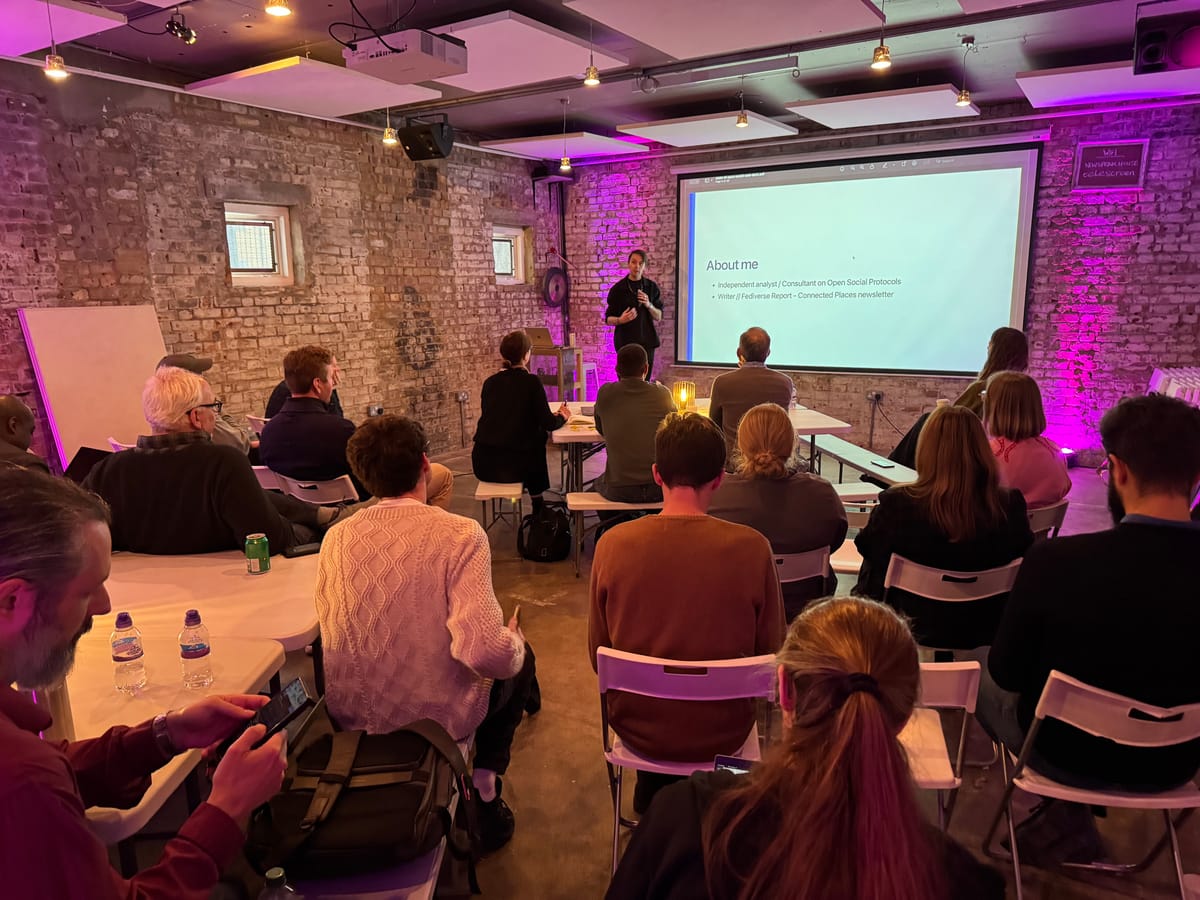
Building Trust in the Open
How Protocols for Publishers points to the future of journalism — and the web

We can have a different web
Many yearn for the “good old days” of the web. We could have those good old days back — or something even better — and if anything, it would be easier now than it ever was.

Overview and key findings of the 2025 Digital News Report
This year’s report comes at a time of deep political and economic uncertainty, changing geo-political alliances, not to mention climate breakdown and continuing destructive conflicts around the world. Against that background, evidence-based and analytical journalism should be thriving, with newspapers flying off shelves, broadcast media and web traffic booming. But as our report shows the reality is very different. In most countries we find traditional news media struggling to connect with much of the public, with declining engagement, low trust, and stagnating digital subscriptions.

Content creators surge past legacy media as news hits a tipping point…
archived 31 Oct 2023 23:43:53 UTC

Scholarly Context Not Found: One in Five Articles Suffers from Reference Rot
The emergence of the web has fundamentally affected most aspects of information communication, including scholarly communication. The immediacy that characterizes publishing information to the web, as well as accessing it, allows for a dramatic increase in the speed of dissemination of scholarly knowledge. But, the transition from a paper-based to a web-based scholarly communication system also poses challenges. In this paper, we focus on reference rot, the combination of link rot and content drift to which references to web resources included in Science, Technology, and Medicine (STM) articles are subject. We investigate the extent to which reference rot impacts the ability to revisit the web context that surrounds STM articles some time after their publication. We do so on the basis of a vast collection of articles from three corpora that span publication years 1997 to 2012. For over one million references to web resources extracted from over 3.5 million articles, we determine whether the HTTP URI is still responsive on the live web and whether web archives contain an archived snapshot representative of the state the referenced resource had at the time it was referenced. We observe that the fraction of articles containing references to web resources is growing steadily over time. We find one out of five STM articles suffering from reference rot, meaning it is impossible to revisit the web context that surrounds them some time after their publication. When only considering STM articles that contain references to web resources, this fraction increases to seven out of ten. We suggest that, in order to safeguard the long-term integrity of the web-based scholarly record, robust solutions to combat the reference rot problem are required. In conclusion, we provide a brief insight into the directions that are explored with this regard in the context of the Hiberlink project.
Dropshipping journalism
<p>No one working at <i>Newsweek</i> can tell me why it still exists</p>

Back into blogging and just published something I've been thinking about for a while now – making archival content more resilient and discoverable on atproto. Oral history, interactive transcripts, content addressing, and keeping important stories from being quietly erased. maboa.it/resilient-archives-on-the-at-…

Keeping Archives Alive: Resilience and Discovery on ATProto
maboa.it