


The following post is based on a talk I presented at MozFest about interviewing users. I recently had a conversation with a former colleague who now works for a major ...
Interviewing Users (2nd Edition) | Free EBook with Purchase | Steve Portigal
Expert researcher Steve Portigal updates his classic Interviewing Users to provide fresh guidance on interviewing techniques.

Contextual Inquiry: Inspire Design by Observing and Interviewing Users in Their Context
Through observation and collaborative interpretation, contextual inquiry uncovers hidden insights about customer’s work that may not be available through other research methods.
When to Use Which User-Experience Research Methods
20 user-research methods: where they fit in the design process, whether they are attitudinal or behavioral, qualitative or quantitative, and their context of use.
Is replication <i>possible</i> in qualitative research? A response to Makel et al. (2022)
There has been much debate in recent years about how open research practices, which have been promoted in efforts to improve research robustness, may (not) be appropriate for qualitative methodolog...

The Conversation: In-depth analysis, research, news and ideas from leading academics and researchers.
Curated by professional editors, The Conversation offers informed commentary and debate on the issues affecting our world. Plus a Plain English guide to the latest developments and discoveries from the university and research sector.
(PDF) Building a Conceptual Framework: Philosophy, Definitions, and Procedure
PDF | In this paper the author proposes a new qualitative method for building conceptual frameworks for phenomena that are linked to multidisciplinary... | Find, read and cite all the research you need on ResearchGate
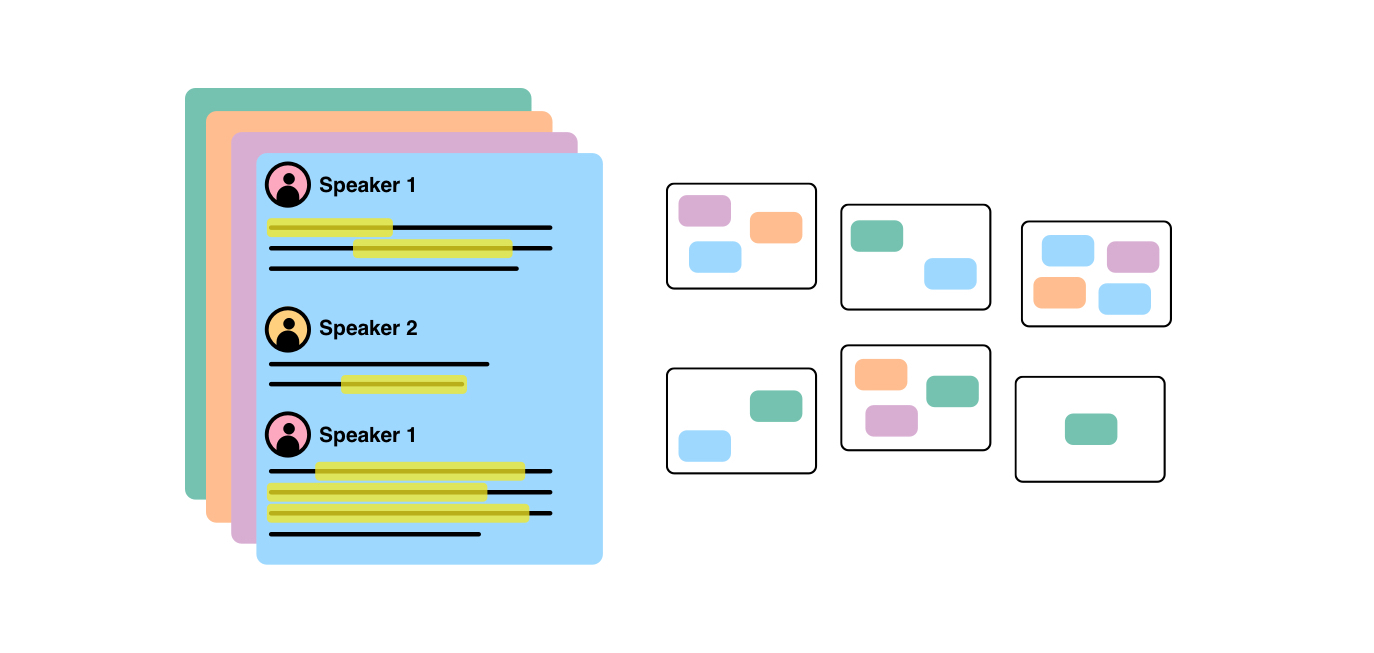
Address research questions fast • Gems
Your qualitative study in one place, enhanced by AI.
Lecture 16 - How to Run a User Interview (Emmett Shear)
Document Analysis as a Qualitative Research Method
This article examines the function of documents as a data source in qualitative research and discusses document analysis procedure in the context of actual research experiences. Targeted to research novices, the article takes a nuts‐and‐bolts approach to document analysis. It describes the nature and forms of documents, outlines the advantages and limitations of document analysis, and offers specific examples of the use of documents in the research process. The application of document analysis to a grounded theory study is illustrated.

Lessons I've Learned from Millions of People - by Jinghua Zhang
Applying user research to product development
5 questions for Amy Silvers: Implementing, embedding, and championing user research in design teams.

Meta Research News | Meta Research
At Meta, research permeates everything we do. We believe the most interesting research questions are derived from real world problems.

Qualitative research: standards, challenges, and guidelines
Qualitative research methods could help us to improve our understanding of medicine. Rather than thinking of qualitative and quantitative strategies as incompatible, they should be seen as complementary. Although procedures for textual interpretation differ from those of statistical analysis, because of the different type of data used and questions to be answered, the underlying principles are much the same. In this article I propose relevance, validity, and reflexivity as overall standards for qualitative inquiry.

Conducting a Qualitative Document Analysis
Document analysis has been an underused approach to qualitative research. This approach can be valuable for various reasons. When used to analyze pre-existing texts, this method allows researchers to conduct studies they might otherwise not be able to complete. Some researchers may not have the resources or time needed to do field research. Although videoconferencing technology and other types of software can be used to reduce some of the obstacles qualitative researchers sometimes encounter, these tools are associated with various problems. Participants might be unskillful in using technology or may not be able to afford it. Conducting a document analysis can also reduce some of the ethical concerns associated with other qualitative methods. Since document analysis is a valuable research method, one would expect to find a wide variety of literature on this topic. Unfortunately, the literature on documentary research is scant. This paper is designed to close the gap in the literature on conducting a qualitative document analysis by focusing on the advantages and limitations of using documents as a source of data and providing strategies for selecting documents. It also offers reasons for using reflexive thematic analysis and includes a hypothetical example of how a researcher might conduct a document analysis.
Identity, positionality and reflexivity: relevance and application to research paramedics
This article introduces the reader to the concepts of identity, positionality and reflexivity and outlines their relevance to research paramedics. We outline how a researcher’s identity and positionality can influence all aspects of research, including the research question, study design, data collection and data analysis. We discuss that the ‘insider’ position of paramedics conducting research with other paramedics or within their specific clinical setting has considerable benefits to participant access, understanding of data and dissemination, while highlighting the difficulties of role duality and power dynamics. While positionality is concerned with the researcher clearly stating their assumptions relating to the research topic, the research design, context and process, as well as the research participants; reflexivity involves the researcher questioning their assumptions and finding strategies to address these. The researcher must reflect upon the way the research is carried out and explain to the reader how they moved through the research processes to reach certain conclusions, with the aim of producing a trustworthy and honest account of the research. Throughout this article, we provide examples of how these concepts have been considered and applied by a research paramedic while conducting their PhD research studies within a pre-hospital setting, to illustrate how they can be applied practically.
How Using a Team Charter Helps Our Distributed Firefox User Research Team Connect and Align
About the Firefox User Research (UR) Team at Mozilla
