
Fighting bad networks with good networks.
Knowledge Networks and the Politics of Protocols
Harmony without loss of Variety; Variety without loss of Harmony.

Disrupting Dark Networks
Disrupting Dark Networks focuses on how social network analysis can be used to craft strategies to track, destabilize and disrupt covert and illegal networks. The book begins with an overview of the key terms and assumptions of social network analysis and various counterinsurgency strategies. The next several chapters introduce readers to algorithms and metrics commonly used by social network analysts. They provide worked examples from four different social network analysis software packages (UCINET, NetDraw, Pajek and ORA) using standard network data sets as well as data from an actual terrorist network that serves as a running example throughout the book. The book concludes by considering the ethics of and various ways that social network analysis can inform counterinsurgency strategizing. By contextualizing these methods in a larger counterinsurgency framework, this book offers scholars and analysts an array of approaches for disrupting dark networks.

AT Protocol - AT Protocol
The AT Protocol is an open, decentralized, and high-performance network for building social applications.

Introduction to AT Protocol
Walkthrough of the various parts and concepts in Bluesky's AT Protocol (ATProto), the types of servers involved and how it all fits together

Introduction to AT Protocol
Walkthrough of the various parts and concepts in Bluesky's AT Protocol (ATProto), the types of servers involved and how it all fits together
The AT Protocol's interesting design - LittleBit
Bluesky's backend was made to be more than a social network
atproto.energy
Energy networks built on open protocols — from a Bluesky post about AI emissions to a case for open protocols in the energy sector, built on the AT Protocol.

What I Wish Someone Had Told Me About AT Protocol and Bluesky - Stuff Rob Wrote
I've been interested in atproto (the protocol that Bluesky, Blacksky, and many other applications - including pckt, where this blog is hosted! - run on) for abo...

The Unreasonable Sufficiency of Protocols Web
The Unreasonable Sufficiency of Protocols Venkatesh Rao, Tim Beiko, Danny Ryan, Josh Stark, Trent Van Epps, and Bastian Aue 1. Introduction Complex coordination problems have an air of doomed intractability about them. We speak in fatalistic terms of economics being a “dismal” science, of sociological phenomena being dominated by the

Nobody Cares About Your Protocol | John ✦° | Offprint
Nobody joins a social network for its architecture. An honest look at why Bluesky lags Threads, plus real ideas to close the gap.

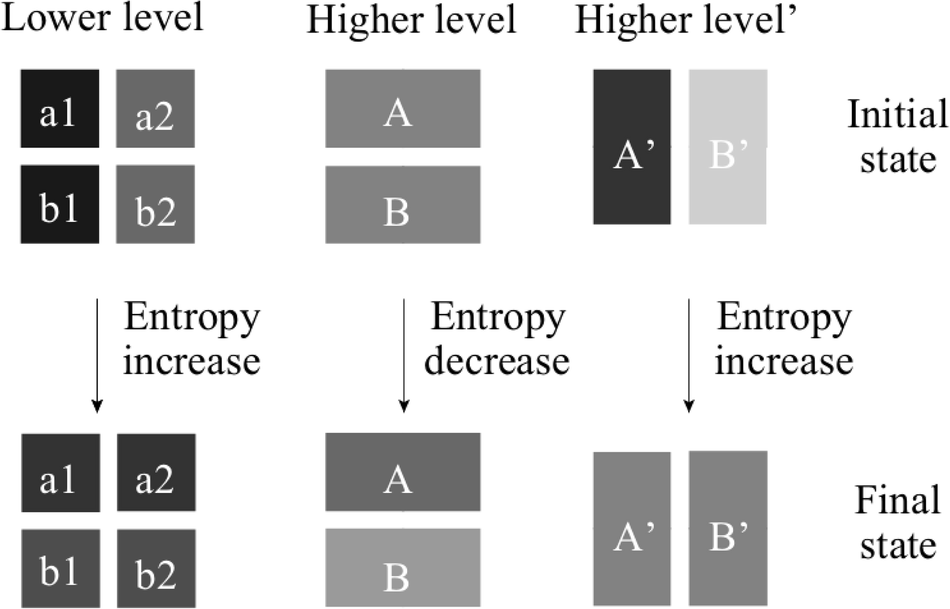
Self-organizing systems: what, how, and why?
I present a personal account of self-organizing systems, framing relevant questions to better understand self-organization, information, complexity, and emergence. With this aim, I start with a notion and examples of self-organizing systems (what?), continue with their properties and related concepts (how?), and close with applications (why?) in physics, chemistry, biology, collective behavior, ecology, communication networks, robotics, artificial intelligence, linguistics, social science, urbanism, philosophy, and engineering.
KOI-net Protocol Specification Draft v1.0
The KOI-net protocol defines the standard communication patterns and coordination norms needed to establish and maintain Knowledge Organization Infrastructure (KOI) networks. KOI networks are heterogeneous compositions of KOI nodes, each of which is capable of autonomously inputting, processing, and outputting knowledge. The behavior of each node and configuration of each network can vary greatly; therefore, the protocol is designed to be a simple, flexible, and interoperable foundation for future projects to build on. The protocol only governs communication between nodes, not how they operate internally. As a result we consider KOI-nets to be fractal-like, in that a network of nodes may act like a single node when viewed from outside.
Call for Abstracts — NetSci Dresden 2027
Submit your work on any topic in network science as a one-page abstract. Deadline: 1 December 2026.