


Keep it simple, stupid! Explaining RoPE, 2D-RoPE, M-RoPE in a simple way.
BetterExplained – Math lessons that click
BetterExplained teaches math the intuitive way: clear, visual lessons on imaginary numbers, exponents, calculus, trigonometry and more, with an Aha! moment before the details.
How to do hard things
A fully general system for learning to do things you currently find difficult, only somewhat tongue-in-cheek.
Learnable Programming
Here's a trick question: How do we get people to understand programming?
Teaching how to code is broken
Typically: * Chapter 1: Types * Chapter 2: Variables * Chapter 3: Operators/Math * Chapter 4: Control structures * Chapter 5: Arrays * Chapter 6: Functions * Chapter 7: Structs * Chapter 8: Classes and Objects * Chapter 9: Methods * Chapter 10: Inheritance and Polymorphism * Chapter 11: Some advanced thing X * Chapter 12: Some esoteric thing Y * Chapter

Mathematics in the Library of Babel — Daniel Litt
Mathematics isn't only about saying true things. It's about asking the right questions, being confused, stumbling about, getting distracted, being wrong, recognizing when you're wrong, being stuck. Mostly being stuck. It's about clinging to a giant edifice and feeling it out until you understand som

It Is Fun to Pretend That Hard Things Are Easy!
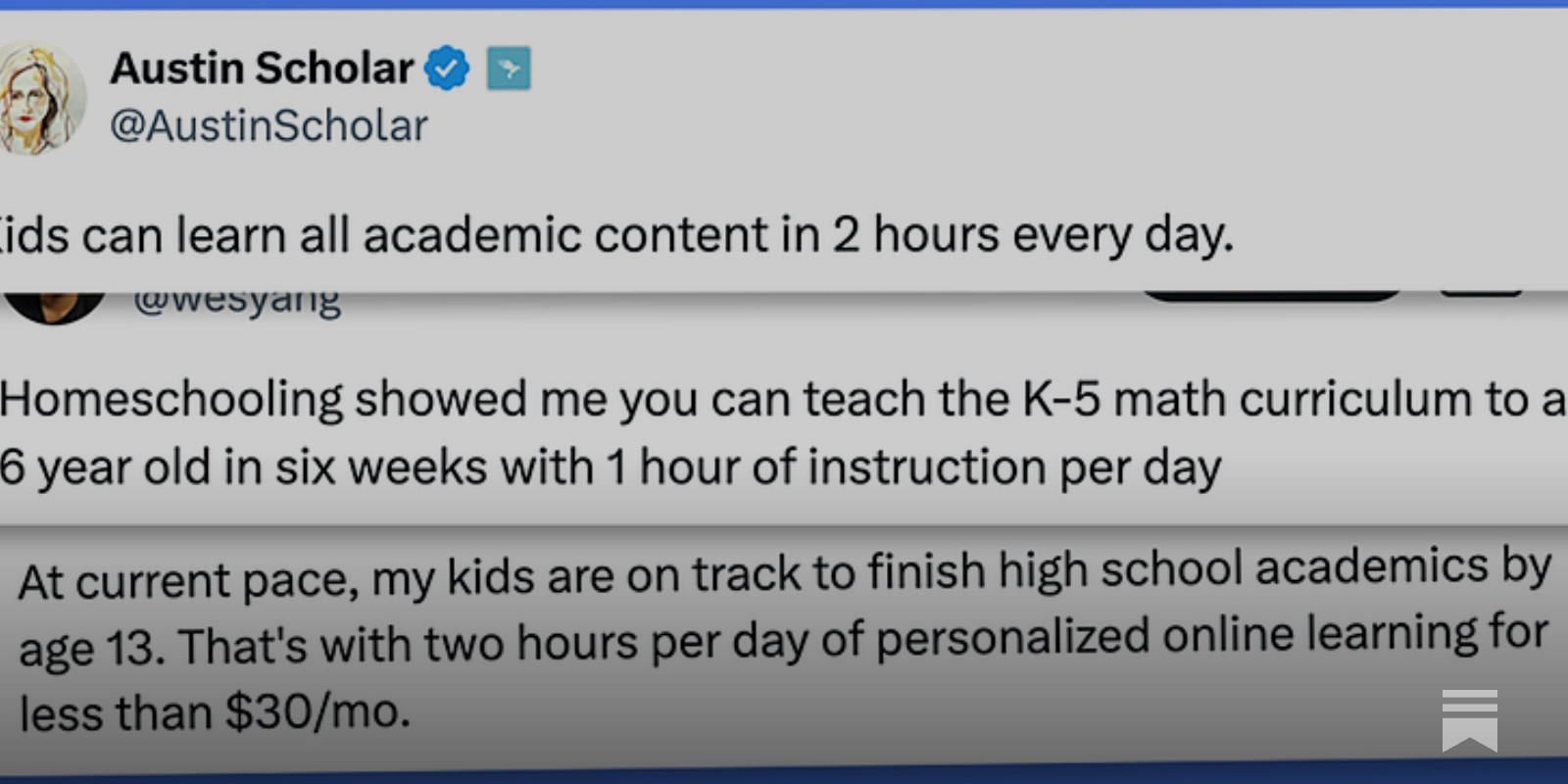
A new online math platform promises to teach math 4x faster. Here is how!
Why You Should Keep Listening Even If You Don’t Understand | AJATT | All Japanese All The Time
Like I’ve said before…the set of tools/methods described on this site…I don’t know why it all works; looking at and thinking about how people learn their native language, it just all seemed obvious to me. In other words, I knew what I needed to do to achieve fluency…but not much more.
Visually stunning math concepts which are easy to explain
Since I'm not that good at (as I like to call it) 'die-hard-mathematics', I've always liked concepts like the golden ratio or the dragon curve, which are easy to understand and explain but are

4 Rules for Intuitive UX
Obey the Law of Locality · ABD: Anything But Dropdowns · Pass the Squint Test · Teach by example
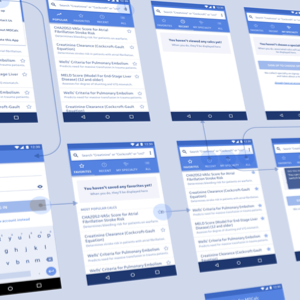
Brilliant | Your Personal Tutor for Math and Coding
Visual, interactive tutoring in math and coding, from 5th grade through college. Master concepts in algebra, calculus, Python, computer science, and more.
Unlocking Scientific Concepts: How Effective Are LLM-Generated Analogies for Student Understanding and Classroom Practice?
Teaching scientific concepts is essential but challenging, and analogies help students connect new concepts to familiar ideas. Advancements in large language models (LLMs) enable generating analogies, yet their effectiveness in education remains underexplored. In this paper, we first conducted a two-stage study involving high school students and teachers to assess the effectiveness of LLM-generated analogies in biology and physics through a controlled in-class test and a classroom field study. Test results suggested that LLM-generated analogies could enhance student understanding particularly in biology, but require teachers’ guidance to prevent over-reliance and overconfidence. Classroom experiments suggested that teachers could refine LLM-generated analogies to their satisfaction and inspire new analogies from generated ones, encouraged by positive classroom feedback and homework performance boosts. Based on findings, we developed and evaluated a practical system to help teachers generate and refine teaching analogies. We discussed future directions for developing and evaluating LLM-supported teaching and learning by analogy.


Introduction – Learn Japanese
This guide was created as a resource for those who want to learn Japanese grammar in a rational, intuitive way that makes sense in Japanese. The explanations are focused on how to make sense of the grammar not from English but from a Japanese point of view.
The Blockchain Explained to Web Developers, Part 1: The Theory
It sounds exciting but it's complicated. Read on to understand the what, the how and the why of blockchains.

The Laws of Simplicity
John Maeda's book, The Laws of Simplicity, proposes ten laws for simplifying complex systems in business and life. Think of it as simplicity 101.

Introducing beginners to the mechanics of machine learning – Miriam Posner
Every year, I spend some time introducing students to the mechanics of machine learning with neural nets. I definitely don’t go into great depth; I usually only have one class for this. But I try to unpack at least some of the major concepts, so that ML isn’t quite such a black box.