

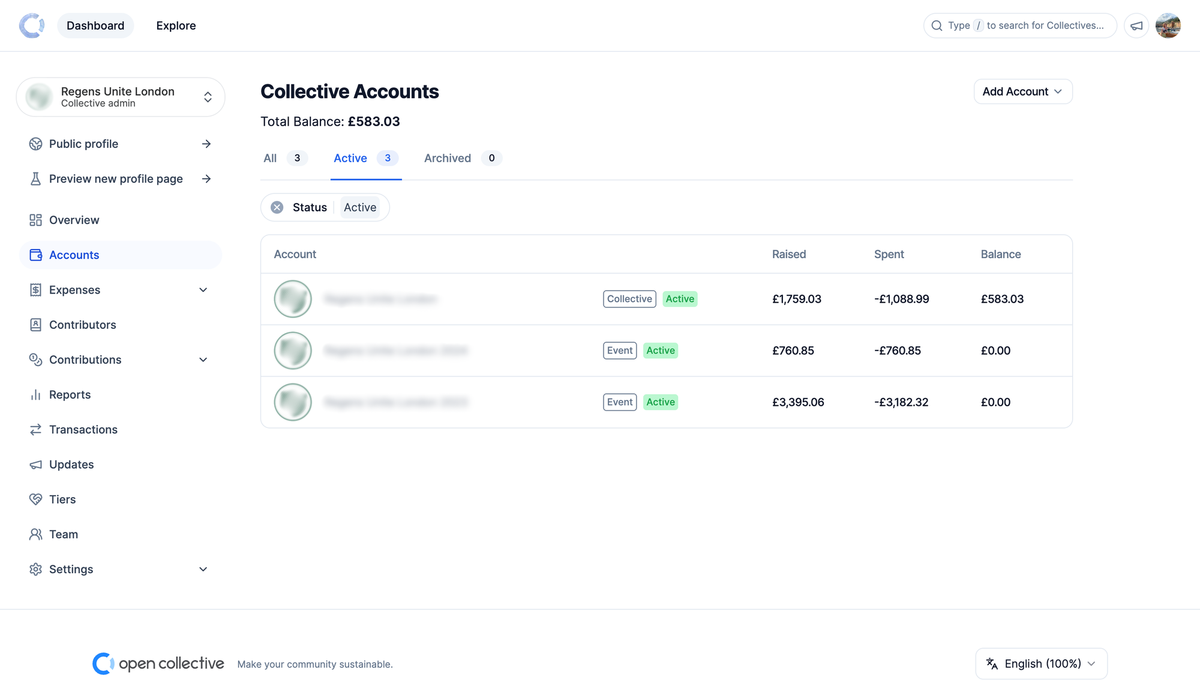
During engineering cycle four we built a few prototypes to demonstrate our intentions for the crowdfunding redesign project. We built these prototypes so that you could experience these new designs directly with your own Collectives, projects and events (instead of sharing static screenshots of demo Collectives). 🚩These tools are preview
Design notes on the 2023 Wikipedia redesign
Exploring the unique challenges of making changes within an open-source, volunteer-led environment. Plus: the importance of prototyping.
Design notes on the 2023 Wikipedia redesign
Exploring the unique challenges of making changes within an open-source, volunteer-led environment. Plus: the importance of prototyping.
gordonbrander/dreams-prototype
Contribute to gordonbrander/dreams-prototype development by creating an account on GitHub.
Call for Participation: Open Source Design Devroom at FOSDEM 2027 | Open Source Design
Call for Participation: Open Source Design and Open User Research Devroom at FOSDEM 2027 TL;DR: Submit session proposals for the Open Source Design Devroom of …
So You Wanna Build a Crowdfunding Site? – Mozilla Hacks - the Web developer blog
The tools to get funded by the crowd should belong to the crowd. That's why I want to show you how to roll your own crowdfunding site, in less than ...

Feature / Product / Business: A Framework for Sustainable ATProto Projects | ATmosphereConf VODs
The ATProto community built a ton of great features and products over the past year! For our next trick, let's mature them into products and businesses. In this talk, you'll get a practical framework for understanding whether what you're building should be a feature, product, or business, plus concrete funding models at each layer to keep your work going and growing. (More in this thread: https://bsky.app/profile/mosh.bsky.social/post/3mckiat2ne22q)

A New Vision for Consumer Hardware | Framework
Builder Workshop — B.C.'s Innovation Ecosystem, Mapped
46 players, 27 venues on the asset map, curated pathways, open data.

High-Tech Anthropology® Process Tour
Come learn about the benefits of observing end users, creating and mapping personas, and assessing iterative designs. Additionally, see the other tools we use and visuals we create to capture and distill information that will help us mitigate the risk of a failed end product. These steps build the foundation for user-friendly designs tailored to target persona(s) – for products that are actually adopted (and even enJOYed!) rather than tossed to the side or treated like paperweights.

An introduction to radical participatory design: decolonising participatory design processes
Outside of community-led design projects, most participatory design processes initiated by a company or organisation maintain or even strengthen power imbalances between the design organisation and the community on whose purported behalf they are designing, further increasing the absencing experience. Radical participatory design (RPD) is a radically relational answer to the coloniality inherent in participatory design where the community members’ disappointment is greater due to the greater expectations and presencing potential of a ‘participatory design’ process. We introduce the term RPD to show how research and design processes can be truly participatory to the root or core. Instead of treating participatory design as a method, a way of conducting a method, or a methodology, we introduce RPD as a meta-methodology, a way of doing any methodology. We explicitly describe what participation means and compare and contrast design processes based on the amount of participation, creating a typology of participation. We introduce ‘designer as community member’, ‘community member as designer,’ and ‘community member as facilitator’ models and provide characteristics for the meta-methodology of RPD.

An introduction to radical participatory design: decolonising participatory design processes
Outside of community-led design projects, most participatory design processes initiated by a company or organisation maintain or even strengthen power imbalances between the design organisation and the community on whose purported behalf they are designing, further increasing the absencing experience. Radical participatory design (RPD) is a radically relational answer to the coloniality inherent in participatory design where the community members’ disappointment is greater due to the greater expectations and presencing potential of a ‘participatory design’ process. We introduce the term RPD to show how research and design processes can be truly participatory to the root or core. Instead of treating participatory design as a method, a way of conducting a method, or a methodology, we introduce RPD as a meta-methodology, a way of doing any methodology. We explicitly describe what participation means and compare and contrast design processes based on the amount of participation, creating a typology of participation. We introduce ‘designer as community member’, ‘community member as designer,’ and ‘community member as facilitator’ models and provide characteristics for the meta-methodology of RPD.
DesignABetterBusiness.tools | Tool Overview
Search and download all of the tools from the book Design A Better Business
Citizenfund: Doughnut Design Case Study | DEAL
The Citizenfund is a participatory citizen investment fund that uses collective intelligence to support impact projects.

Designing for IndiaFOSS 2026
Collection of experiences, observations, and learnings from managing and contributing to the design of IndiaFOSS 2026.
Next big thing for Leaflet: helping creators monetize! 💸 First step = paid memberships for your publications Next, exploring other things like one-off payments — tell us what you need! Almost ready & we'd love to find some early partners, please fill out the linked form if you're interested!

Piloting paid memberships for the open social web!
lab.leaflet.pubSemble Product Inspiration

Products we take design, functionality or organizational inspiration from for semble

Elicit: AI for scientific research

Alerts | Elicit: Al for scientific research

Embed Bsky

Skysquare — Public conversation, anchored to the web

alphaXiv
Hark, a link blog! - Boris Mann Tech Blog
