


A how-to guide on irresponsible in-game gambling.
You don't have to gamble for gambling to ruin your life
How gambling is eroding empathy, destroying relationships, and changing our culture — even for people who never bet.
ADDICTION BY DESIGN: Machine Gambling in Las Vegas – Natasha Dow Schüll
Slot machines, revamped by evermore compelling digital and video technology, have unseated traditional casino games as the gambling industry’s revenue mainstay. Drawing on fifteen years of field research in Las Vegas, anthropologist Natasha Dow Schüll explores the dark side of machine gambling—a solitary, rapid, continuous form of play that has less to do with the competitive thrill of winning than with the pull of “the machine zone,” as gamblers call the trancelike state they enter.
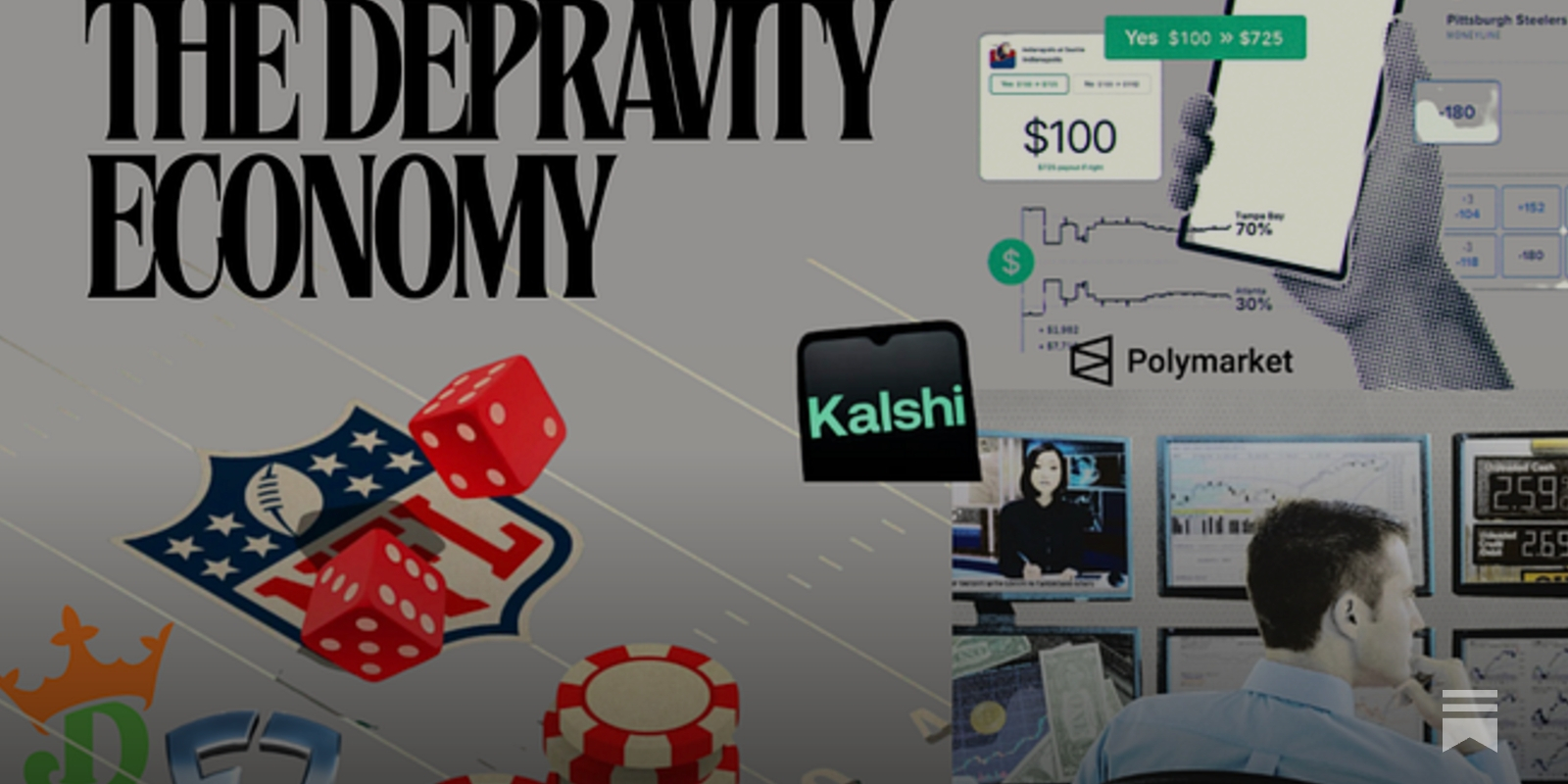
How Everything Became Gambling
It’s not just DraftKings and Polymarket — the logic of gambling undergirds everything coming out of Silicon Valley.

End the harms of gambling – Victorian Socialists
Gambling is an industry built on addiction and misery. We’re fighting to phase out all pokies and ban gambling industry advertising and political donations.
Common Loot (Playable RPG Lyric Video)
A song about when 'IT' happens. And also inventory management.
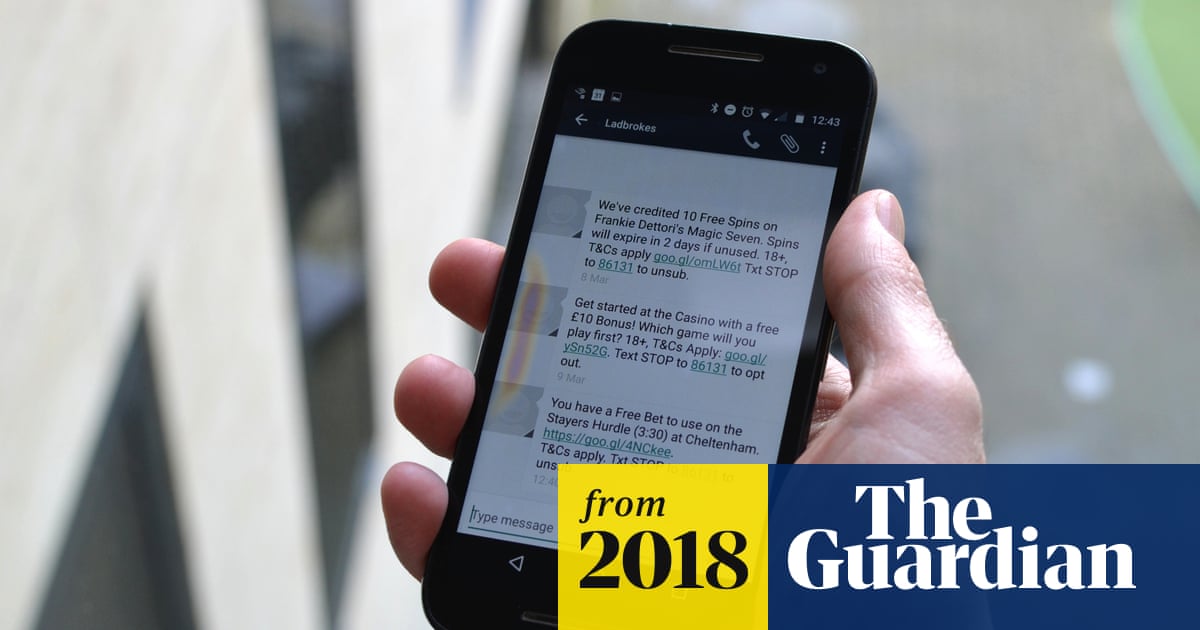
Revealed: how bookies use AI to keep gamblers hooked
Artificial intelligence is being used to predict behaviour in ‘frightening new ways’ despite condemnation from MPs and campaigners
From Pill Mills to Prop Bets: Prediction Markets and Mobile Sports Betting Apps Are Fueling America’s Next Addiction Crisis
Against the gamblification of the world.

More Than a Quarter of Americans Gamble Online Daily, But Frequent Gamblers Likely to Self-Impose Br
As millions of Americans log on to track their college basketball pools, more than half (58%) of adults who gamble online daily say that they have intentionally taken a break or limited the amount of time they spend gambling, new poll data from the American Psychiatric Association (APA) shows.

Gambling - Platform | The Australian Greens
Gambling costs Victoria billions every year – in financial costs, family breakdowns, losing jobs and mental health impacts.

Exploitative Game Design: Beyond the F2P Debate
The past few months have seen a torrent of articles about Free-to-Play business models, often discussed alongside issues of ethics in games (for example: 1, 2, 3, 4, 5). These pieces have addressed the effect on addiction-prone players or children, the possibility of corrupting artistic intent, the sheer amount of money being spent, and other advantages and dangers of F2P. While all of this is relevant, I fear that we’re focusing too much on F2P and glossing over the wider ethical issues in game design.
Generative AI runs on gambling addiction — just one more prompt, bro!
You’ll have noticed how previously normal people start acting like addicts to their favourite generative AI and shout at you like you’re trying to take their cocaine away. Matthias Döpm…
A Mega-Replication of the Effect of Cash Versus Card Payment on Pain of Paying: Magnitude, Behavioral Outcomes, and Moderators
Abstract We revisit the widely accepted finding that paying with cash is more painful than paying with card by conducting the first systematic mega-replication (including 13 large-scale preregistered replications; a total of 32,371 participants, 65 products, and 57 price points ranging from $1.09 to $400). The aggregate evidence reveals four insights: (1) leveraging a broad set of established paradigms, we replicate the finding that paying with cash is more psychologically painful than paying with card, even among today’s consumers who own multiple cards, digital wallets, and virtual currencies; (2) comparing two outcome variables—amount spent and willingness-to-pay (WTP), we find a more reliable and larger overall direct effect of payment method on amount spent than on WTP; (3) these direct effects of payment method on outcome variables are mediated by pain of paying; (4) the mode-of-payment effect on pain of paying (and thereby on outcome variables) is moderated by individual differences, particularly the relative frequency of using cash versus card. We outline actionable guidance and future directions for researchers and practitioners interested in examining mode-of-payment effects, and discuss the value of and suitable approaches for future theory-driven large-scale replications.

“We Own You” – Confessions of an Anonymous Free to Play Producer – TouchArcade
When it comes to discussions surrounding free to play, people often focus on monetization tactics based on their experiences as a player. Folks commonly get upset based on the disruption of the historical precedent that games should have a price tag, that you pay, then get the game.
The Secret Ways Social Media Is Built for Addiction
They're using manipulative tricks from casinos, among other things.

Integrative experiments identify how punishment affects welfare in public goods games
Despite decades of research, the conditions under which punishment promotes cooperation remain unclear. Through an integrative experiment varying 14 design parameters of public goods games across 360 experimental conditions (147,618 decisions from 7100 participants), we reveal substantial heterogeneity in punishment effectiveness: Its impact on welfare ranges from 43% improvement to 44% reduction depending on the game parameters. To characterize these patterns, we developed models that outperformed human forecasters in predicting punishment effectiveness in new experiments. Communication emerges as the most important factor, followed by contribution framing (opt out versus opt in), contribution type (variable versus all-or-nothing), game length, and outcome visibility, though these factors often interact. The results reframe the debate from whether punishment works to when it does, demonstrating how integrative experiments enable discovery of generalizable patterns in social phenomena. , Editor’s summary People face conflicts between maximizing personal gain versus supporting collective interests. If we cooperatively recycle or donate to charities, it benefits society, but it also costs us time and resources that could be selfishly preserved for ourselves. We impose penalties to deter those undesirable or selfish behaviors, but under what conditions do punishments or penalties effectively modify behavior to benefit group welfare? Alsobay et al . systematically and simultaneously varied 14 factors together instead of in isolation. Punishment was unequivocally most effective when paired with consistent communication, particularly over time. Another effective factor was “opting out” or withdrawing some, but not all, endowments already in the public fund. These methodological advances revealed when, rather than whether, punishment works. —Ekeoma Uzogara , INTRODUCTION Human societies face many situations where individual and collective interests conflict, often referred to as social dilemmas. Costly peer punishment has been studied for more than 25 years in public goods games (stylized behavioral experiments in which individuals decide how much to contribute to a shared pool that benefits everyone) as a mechanism to promote cooperation. Prior research has identified many contextual factors that moderate punishment’s effectiveness, including game length, communication, group size, punishment cost, and so on. However, the specific conditions under which punishment improves group welfare remain unclear. RATIONALE We argue that this lack of clarity derives from the dominant experimental paradigm, in which any given study manipulates only one or a few theoretically informed factors. Because such studies differ in many ways (different experimental procedures, populations), their results are often difficult to compare or integrate. Consequently, one can list many factors that have some effect, but cannot say how much each matters relative to the others, or how they work together, and as a result, cannot predict when punishment will help or harm welfare in new settings. To address this fundamental knowledge gap, we use an integrative experimental design and systematically vary 14 parameters across 360 conditions (147,618 decisions from 7100 participants) to elucidate when punishment improves versus undermines welfare in public goods games, which factors matter most, and how they interact. RESULTS The effect of punishment on welfare ranged from 43% improvement to 44% reduction depending on the specific combination of game parameters. To characterize this heterogeneity, we trained a model that outperformed all 553 human forecasters (laypeople and experts) in predicting whether punishment would help or harm welfare in new experiments. Communication emerged as roughly three times more important than any other factor, followed by contribution framing (opt in versus opt out), contribution type (variable versus all-or-nothing), game length, and peer outcome visibility (whether participants can see others’ earnings). These factors often interact. For example, longer games enhance punishment’s effectiveness only when communication is available, and contribution framing effects depend on both contribution type and outcome visibility. CONCLUSION Many phenomena in social science are shaped by many factors whose interactions are consequential, yet the dominant experimental paradigm often limits its inquiry to “does a given effect exist?” and examines hypothesized factors in isolation. As a result, research programs can accumulate many partial explanations without a clear picture of how they combine to determine outcomes across settings. Knowing that factors matter individually is fundamentally different from knowing how much each matters and how they interact. The integrative approach implemented here offers one way forward. It varies many factors simultaneously within a shared design space, evaluates models by their predictive accuracy on new experiments, and probes those models to constrain and develop theory. Our hope is that integrative experiment designs, combined with models that integrate prediction and explanation, represent a path toward more cumulative social science. Integrative experiment reveals when punishment helps versus harms. We systematically varied 14 design parameters across 360 experimental conditions. The effect of punishment on cooperation efficiency ranged from −44% to +43% depending on the specific game parameters. Communication emerged as three times more important than any other factor, followed by contribution framing, contribution type, and game length.

Hey, ProPublica reporter Jake Pearson here. I’m taking over the account to tell you about my new story. For months, I posed as a problem gambler on DraftKings to test the company's "responsible gaming" safeguards. Spoiler alert: They made me a VIP — and I lost $10K. Here's how it all went down. 🧵
