Actually no, the results will probably not surprise you.
Does Bionic Reading actually work? Test for yourself!
As a hackathon project at our recent team offsite, Mati and I hacked together a quick experiment to test whether Bionic Reading actually works. Initial results suggest not, but there are some glimmers in the data justifying a revised experiment correcting the mistakes of our pilot study. If you have 10 minutes to read two Paul Graham essays, you can test Bionic Reading for yourself!

Scientific Speed Reading: How to Read 300% Faster in 20 Minutes - The Blog of Author Tim Ferriss
How much more could you get done if you completed all of your required reading in 1/3 or 1/5 the time? Increasing reading speed is a process of controlling fine motor movement—period. This post is a condensed overview of principles I taught to undergraduates at Princeton University in 1998 at a seminar called the “PX […]
How and When to Involve Crowds in Scientific Research | James Evans
The lone academic in a basement lab is an endangered species. Years ago I asked Paul Ginsparg, who founded arXiv, what features his machine-learning filter used to flag speculative submissions. The top three: single-authored, submitted on a weekend, and heavy citation of Newton and Einstein. Science is a contact sport now. Marion Poetz and Henry Sauermann's How and When to Involve Crowds in Scientific Research (https://lnkd.in/g5pwVbfD) is the field manual. What crowds can do: Volume. Zooniverse mobilizes 2.7 million people to classify galaxies and court records. Galaxy Zoo's co-founder hand-classified 50,000 galaxies in one week before concluding that isolation would break him. Reach. NASA spent years failing to predict solar flares, then broadcast the problem. The winner was a semi-retired radio engineer in rural New Hampshire who swapped satellite data for radio data. Experience. Patients and caregivers asked to generate research questions produced 826 that scientists had missed, including the link between aging and wound healing. Bench-to-bedside runs backward. One caution the book underplays: an open call is not an inclusive one. Participation costs in time, money, and access screen people out. Self-selection can narrow the very diversity that makes crowds thrive. As AI floods the labor supply of routine, homogeneous cognition, human crowds become more valuable, not less. Machines process. People notice what nobody thought to ask. Check out my review @ https://lnkd.in/gkzvWrRC and the book @ https://lnkd.in/g5pwVbfD!

What I Learned About the Future by Reading 100 Science Fiction Books
Over the past two years I’ve read 100 science fiction books, averaging about one per week. See the full list here, with my favorites.

Can You Read a Book in a Quarter of an Hour?
Phone apps now offer to boil down entire books into micro-synopses. What they leave out is revealing.

Decolonising Science Reading List
In the last couple of weeks, a lot of people have been asking me about what I’ve been reading as reference points for my commentary on the…
Why We're Bootstrapping Readwise
Our mission here at Readwise is to improve the practice of reading through technology by an order of magnitude. While we have some strong opinions and good ideas (we think) on how to build such a product (indeed, we've already started!), what was less obvious was: How do we fund
Are Scientific Papers Bad?
BeeLine Reader: helping readers finish what they start
BeeLine Reader's award-winning technology helps readers stay focused for longer. Available for publishers, schools, and individual readers.
Reading Supply 0.5.0
Reading Supply should be one of the best places in the world for Agents and Humans to publish research and form deep conclusions that humans can read and participate in.

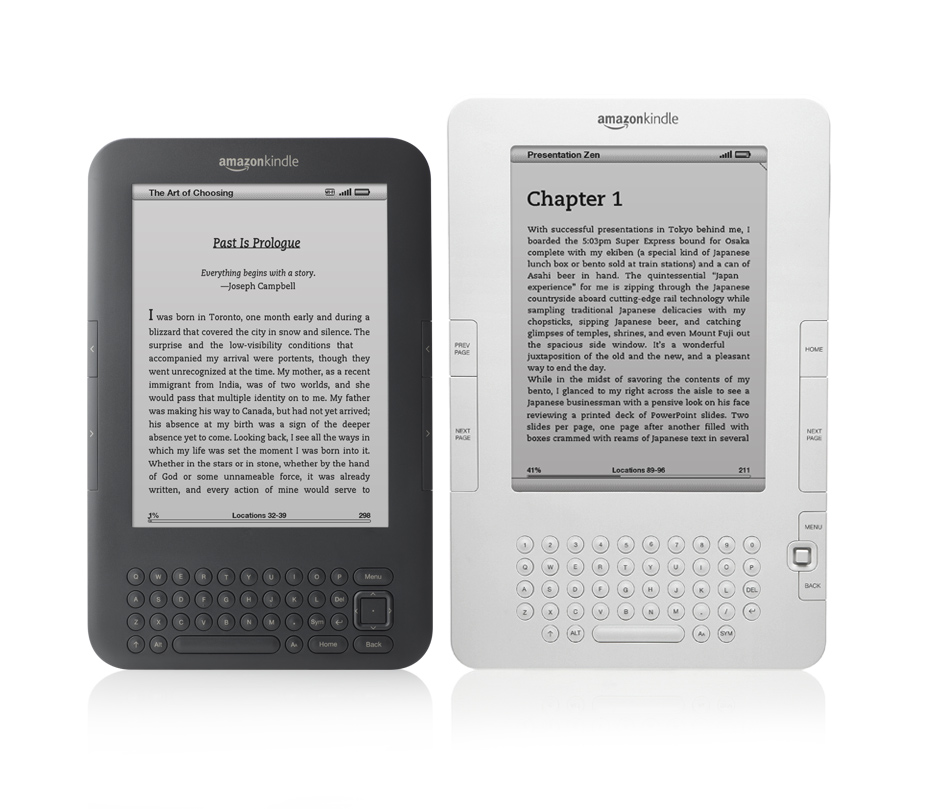
E-reader innovation has stalled | TechCrunch
Next month marks 10 years since the first Kindle debuted. It’s a virtual lifetime in consumer electronics terms, but compared to its mobile brethren, e-readers’ pace of innovation has been glacial. Why has the e-reader stagnated?
How science found a way to help coma patients communicate
The long read: After suffering serious brain injuries, Scott Routley spent 12 years in a vegetative state. But his family were convinced that he was still aware – could a pioneering ‘mind-reading’ technique prove them right?
The Secret Power of ‘Read It Later’ Apps
The Secret Power of ‘Read It Later’ Apps By Tiago Forte of Forte Labs At the end of 2014 I received an email informing me that I had read over a million words in the ‘read it later’ app …

The Secret Power of ‘Read It Later’ Apps
The Secret Power of ‘Read It Later’ Apps By Tiago Forte of Forte Labs At the end of 2014 I received an email informing me that I had read over a million words in the ‘read it later’ app …
Jason Shepherd on Twitter / X
I have quite a lot of thoughts on this..that won't fit in a tweet. Bottomline is that there are issues scientists in the US would love to improve - faster review, less grant writing, more stability and freedom to do risky science. The folks celebrating this doc are mostly../1 https://t.co/xlPAH9XYNC— Jason Shepherd (@JasonSynaptic) July 23, 2026
Ultra-Processed Minds: The End of Deep Reading and What It Costs Us
A reflection on the reading life. What formed it, what threatens it, and what remains.